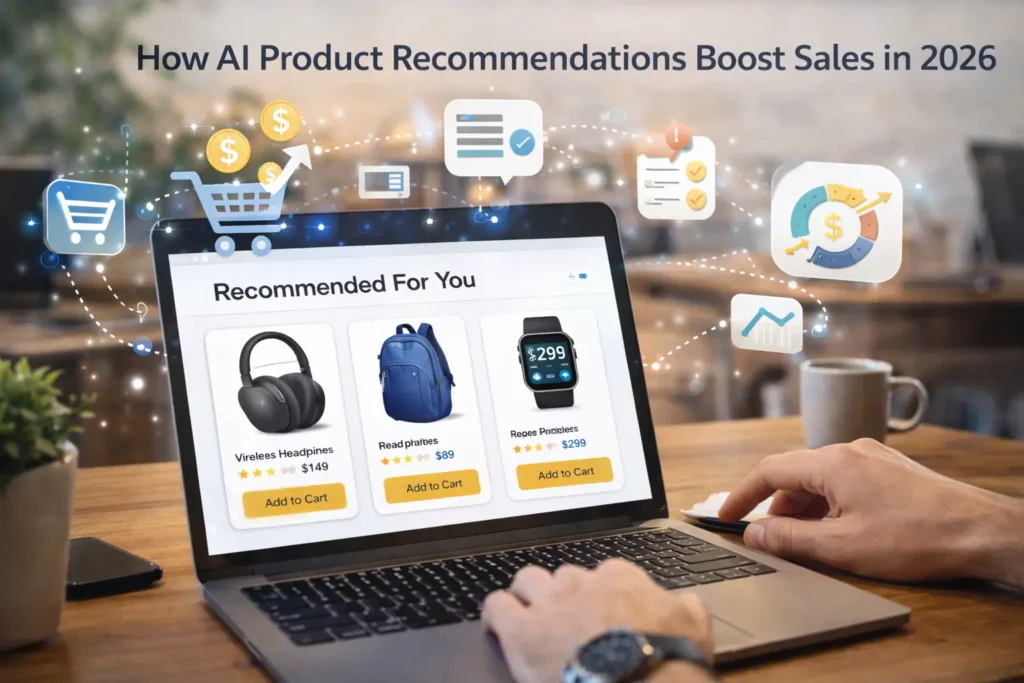

How AI Product Recommendations Boost Sales in 2026
AI product recommendations are personalized suggestions that online stores show to shoppers based on their behavior, preferences, and previous interactions. Instead of generic “related items,” these recommendations use advanced algorithms to guess what a customer might like next, making every visit feel tailored and relevant. This matters because showing the right products at the right time can influence buying decisions, improve engagement, and lead to measurable revenue growth. In today’s competitive e‑commerce landscape, AI recommendations aren’t just nice to have; they’re essential for increasing conversions, order value, and customer satisfaction.
How AI Understands Shopper Behavior
At the heart of any AI recommendation engine is data. AI processes large amounts of information about what shoppers view, click on, and buy to identify patterns in behavior. This helps the system create a prediction of what the customer might want next. The more a customer interacts with a site, the more accurate the recommendations become because the AI continually learns from new actions. Unlike basic rule‑based suggestions, AI can factor in complex signals like page visit sequences, time spent per product, and previous purchases for richer predictions.
Data Behind AI Product Recommendation Engines
AI recommendation engines rely on multiple layers of data to make effective suggestions. They analyze browsing history, search queries, purchase records, and contextual signals like device type or location. Real‑time behavior also feeds into the system, letting recommendations change dynamically as a shopper navigates a page. Clean, structured data is essential because bad inputs lead to weak recommendations that feel irrelevant or repetitive. With robust data pipelines, AI can continuously refine its predictions, ultimately turning customer insights into powerful, revenue‑boosting conversions.
Types of AI Recommendation Models

AI recommendation systems aren’t one‑size‑fits‑all. Different models power personalization depending on the data and goals of a business. Some systems focus on comparing customer behavior across users, while others look only at individual histories. Advanced approaches combine multiple methods to improve accuracy. These models determine how the AI chooses which products to show, and each has unique strengths and limitations depending on the context of the shopping journey. The best performing systems usually blend several algorithms for deeper relevance and improved results.
Collaborative Filtering Explained
Collaborative filtering is a recommendation method that looks at similarities between users. If one shopper’s behavior resembles another’s, the system suggests products favored by similar users. It’s like “Customers who bought this also bought that,” but based on patterns across large groups. This method helps uncover unexpected but relevant products that a shopper might otherwise miss, increasing the chances of engagement and purchase without relying solely on that shopper’s own history.
Content-Based Filtering: How It Works
Content‑based filtering compares product attributes and a shopper’s past interactions to recommend similar items. For instance, if a customer viewed several waterproof jackets, the AI might suggest other outdoor gear with similar features. This model is very useful when a user’s personal history is strong, letting the system refine suggestions based on what’s already known about that individual. It keeps recommendations aligned with the shopper’s tastes without relying on any other user’s behavior.
Hybrid AI Recommendation Systems
Hybrid models mix collaborative and content‑based approaches to get the strengths of both systems. By combining insights from user similarity and product attributes, hybrid systems often generate more accurate and diverse recommendations. Many top e‑commerce brands use hybrid approaches because they adapt better to changing customer behavior and reduce problems like cold starts for new users or products. Blending multiple models helps ensure the suggestions feel thoughtful rather than random.
Real‑Time Personalization and Context Awareness
Real‑time personalization means the AI adjusts suggestions instantly as the shopper interacts with the store. Context awareness adds another layer, letting the system factor in conditions like time of day, device, or active promotions. For example, a shopper browsing on mobile during a lunch break might see different recommendations than someone browsing at night on a desktop. These on‑the‑fly adjustments keep the shopping experience fresh, relevant, and more likely to convert.
How AI Recommendations Increase Sales
AI product recommendations don’t just enhance user experience; they directly impact revenue. By suggesting products a shopper is likely to buy, AI guides them through their journey from browsing to checkout. This increases conversions because the system surfaces items the customer genuinely wants. Even subtle suggestions, like showing complementary products or trending items, can trigger purchases the shopper may not have considered. Companies that leverage AI recommendations consistently see higher sales, repeat purchases, and improved customer loyalty, proving that smart personalization isn’t just a feature, it’s a revenue engine.
👉 You might also like: What Is Trucofax? Complete Guide for Businesses in 2026
Upselling and Cross-Selling Strategies
Upselling and cross-selling are natural fits for AI-driven recommendations. By analyzing a customer’s preferences, AI can suggest a premium version of a product or complementary items that enhance the main purchase. For example, a shopper adding a laptop to their cart might see suggestions for a laptop bag or software subscriptions. These strategies increase the average order value without appearing pushy because the recommendations feel tailored. When implemented thoughtfully, upselling and cross-selling turn casual shoppers into bigger spenders while keeping the experience helpful and relevant.
Boosting Average Order Value (AOV)
AI recommendations are highly effective at boosting AOV by showing items that naturally complement a shopper’s selection. When a customer sees relevant suggestions alongside their intended purchase, they are more likely to add extra products to their cart. These personalized recommendations feel intuitive, rather than forced, making the shopping experience smoother and more satisfying. Data shows that stores leveraging AI for product suggestions often see AOV increase significantly, sometimes contributing a major portion of total revenue. Personalization is the key: the more relevant the recommendation, the more likely customers will buy more.
Studies show personalized recommendations can increase conversion rates by 15–30% and contribute up to 35% of total revenue for top e-commerce stores. AI systems help identify high-potential products, timing, and placement for recommendations. Even small tweaks, like changing which items appear on the homepage or during checkout, can impact revenue. Benchmarking these metrics allows businesses to track ROI and refine strategies, ensuring recommendations are continually optimized to maximize both sales and customer satisfaction.
Reducing Cart Abandonment Through Smart Suggestions
Cart abandonment is a major challenge for online retailers, but AI product recommendations can help recover lost sales. By presenting complementary or high-interest products in real time, shoppers are reminded of items they might otherwise forget. Dynamic recommendations during checkout, or even follow-up emails featuring personalized suggestions, make it easier for customers to complete purchases. AI not only increases revenue but also improves the overall shopping experience by keeping engagement high and helping shoppers feel understood.
How Browsing History Influences Product Suggestions
AI uses browsing history to detect patterns in shopper behavior. Pages visited, time spent per item, and search queries inform the system which products are likely to appeal to the individual. By analyzing these signals, AI can display highly relevant items, increasing the likelihood of clicks and purchases.
Purchase History vs. Real-Time Behavior Signals
Past purchases provide a foundation for AI suggestions, while real-time behavior offers context. For instance, a shopper revisiting a site may see products aligned with previous orders, but AI can also adjust recommendations based on current activity, such as trending products or seasonal items.
AI Recommendations in Email Marketing Campaigns

AI doesn’t just influence on-site shopping, it powers highly effective email campaigns. Personalized emails with recommended products encourage repeat purchases, re-engage inactive customers, and boost click-through rates. By analyzing purchase history and browsing patterns, AI selects items a customer is most likely to buy, turning each email into a targeted sales opportunity rather than generic messaging.
Aligning Recommendations With Seasonal Campaigns
Recommendations become even more powerful when aligned with seasons or promotions. During holidays or special sales, AI can highlight products that fit current trends or events, increasing relevance and motivating timely purchases.
Recommendations on Product Pages
Placing AI suggestions directly on product pages encourages shoppers to explore complementary items without leaving the page. These contextual recommendations feel natural, guide decision-making, and reduce friction. Smart product pages often increase engagement metrics and order size by showing items that resonate with a customer’s immediate interests.
Recommendations in Mobile Apps and Push Notifications
AI recommendations extend beyond the website to mobile apps and push notifications. Personalized alerts for deals, product updates, or abandoned carts create engagement opportunities outside the traditional browsing experience. Context-aware suggestions like time of day or location ensure recommendations are relevant, convenient, and timely, encouraging repeat interaction.
Context signals make AI recommendations feel intuitive. For example, a user on mobile during lunch hour might see quick-purchase items, while a desktop user at home receives broader suggestions. This alignment increases the likelihood of clicks and conversions.
Personalization Across Customer Lifecycle
AI personalization isn’t limited to one-time interactions. Recommendations can adapt as customers progress from first-time visitors to loyal buyers. From onboarding to repeat orders, AI ensures every touchpoint offers relevant suggestions, enhancing satisfaction, building trust, and maximizing lifetime value.
Customer Retention and Lifetime Value With AI
By consistently providing relevant product suggestions, AI increases customer retention. Satisfied customers are more likely to return, make repeat purchases, and even advocate for the brand. Over time, this translates to higher lifetime value, demonstrating that AI product recommendations impact both short-term sales and long-term business growth.
👉 You might also like: How Technology Changes Online Education in 2026
Case Studies
Amazon’s Recommendation Engine Impact
Amazon’s recommendation engine is a benchmark for AI-driven sales growth. Reports show that over 35% of their revenue comes from personalized suggestions. By analyzing vast amounts of user data, Amazon presents highly relevant products, boosting conversions and encouraging larger purchases.
Small and Mid-Size Store AI Success Stories
Even smaller businesses benefit from AI recommendations. Mid-sized retailers using AI personalization have seen 10–25% increases in sales, improved repeat purchase rates, and more efficient marketing campaigns. Tailored recommendations help level the playing field against larger competitors.
Ethical Use of AI Recommendations
AI personalization is powerful, but ethical use is critical. Shoppers trust brands to handle their data responsibly. Recommendations should never feel manipulative or invasive. Respecting privacy, avoiding dark patterns, and providing transparency in how data is used builds credibility. Ethical AI practices ensure long-term customer relationships and protect a brand’s reputation. When shoppers feel that suggestions genuinely help rather than pressure them, engagement rises, satisfaction improves, and trust grows, proving that ethical AI isn’t just moral, it’s smart business.
Common Mistakes to Avoid in AI Product Recommendation
Even advanced AI systems can underperform if not implemented thoughtfully. Overloading shoppers with too many suggestions, using irrelevant products, or ignoring context can frustrate users and lower conversion rates. Failing to update recommendation logic or neglecting seasonal trends are other pitfalls. The key is balance: enough suggestions to spark interest without overwhelming, and dynamic algorithms that adapt to changing behavior. Avoiding these mistakes ensures AI recommendations add value rather than distract, keeping shoppers engaged and more likely to complete purchases.
Balancing Too Many vs. Too Few Recommendations
Showing too many options can overwhelm customers, while too few can limit choice. AI should find the sweet spot where recommendations feel helpful and natural, maximizing clicks and conversions without causing decision fatigue.
How AI Helps Reduce Decision Fatigue
Decision fatigue occurs when shoppers face too many options. AI filters and ranks products based on relevance, making it easier for users to choose quickly and confidently, improving the likelihood of purchase.
How to Avoid Irrelevant or Intrusive Suggestions
AI should never feel random or intrusive. Proper training, filtering, and continuous testing ensure recommendations are always relevant and supportive, not distracting or annoying to the shopper.
How to Measure ROI on AI Recommendation Tools
Implementing AI is just the first step; measuring impact is crucial. Track metrics like conversion rate, average order value, click-through rate, and repeat purchase frequency to evaluate effectiveness. A/B testing different recommendation placements or algorithms helps refine strategies. Monitoring ROI ensures that AI investment translates to measurable growth and revenue while informing ongoing optimization. By quantifying impact, businesses can confidently scale AI personalization, knowing it directly supports their bottom line.
Choosing the Right AI Recommendation Platform
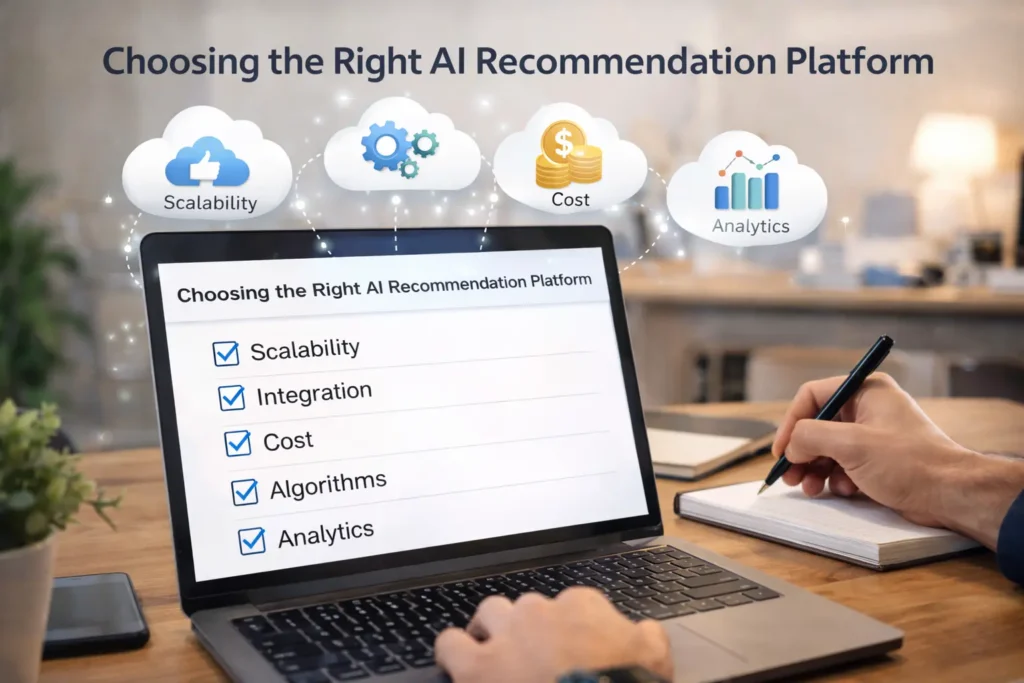
Selecting an AI platform is critical to success. Factors like scalability, ease of integration, cost, algorithm sophistication, and analytics capabilities should guide the decision. Some platforms focus on e-commerce, while others serve broader industries. Choosing the right tool ensures that recommendations are timely, accurate, and actionable, aligning with business goals. A well-chosen AI platform makes setup seamless and results measurable, ensuring personalization drives growth without technical or operational friction.
Future Trends in AI-Driven Product Discovery
AI recommendations are evolving rapidly. Future trends include hyper-personalization, predictive analytics, and even voice-driven recommendations. Integration with augmented reality, social commerce, and omnichannel experiences will make product suggestions even more context-aware. Brands leveraging these trends will deliver highly relevant, engaging shopping experiences that drive both conversions and loyalty. Staying ahead of AI innovations ensures that businesses can capitalize on new opportunities, delight customers, and maintain a competitive edge in the fast-moving digital marketplace.
Conclusion
AI product recommendations have transformed the way businesses engage with customers. By analyzing behavior, purchase history, and contextual data, AI delivers personalized suggestions that feel natural, helpful, and relevant. The impact is clear: higher conversions, increased average order value, reduced cart abandonment, and stronger customer retention. When implemented thoughtfully, ethically, and strategically, AI becomes a powerful tool to grow revenue and enhance the shopping experience. Businesses that embrace AI-driven personalization today are not just meeting customer expectations; they’re shaping the future of e-commerce.
FAQs: AI Product Recommendations

What are AI product recommendations?
AI product recommendations are personalized suggestions shown to shoppers based on their behavior, purchase history, and preferences. They help customers discover relevant products, making shopping faster and more engaging.
How do AI recommendations increase sales?
By showing products shoppers are likely to buy, AI increases conversions, average order value, and repeat purchases. Personalized suggestions guide customers through their shopping journey, making them more likely to complete a purchase.
What types of AI recommendation models exist?
The main types are collaborative filtering (based on similar users), content-based filtering (based on product attributes), and hybrid models that combine both for more accurate suggestions.
Can small businesses benefit from AI recommendations?
Yes. Even mid-sized and small stores can use AI tools to personalize product suggestions, boost engagement, increase sales, and retain customers without requiring massive data or resources.
How do AI recommendations reduce cart abandonment?
AI can show complementary or relevant products during checkout or in follow-up emails. These reminders encourage shoppers to complete their purchase and sometimes add extra items to their cart.
Are AI product recommendations ethical?
Yes, if implemented responsibly. Ethical AI respects customer privacy, avoids manipulative practices, and provides transparent data usage while still delivering helpful and relevant suggestions.
How can businesses measure the success of AI recommendations?
Success can be measured using metrics like conversion rate, average order value, click-through rate, repeat purchases, and ROI from AI tools. A/B testing also helps optimize recommendations.
Do AI recommendations work on mobile apps?
Absolutely. AI can provide personalized suggestions in mobile apps and push notifications, considering context like time, device, and location, which boosts engagement and conversions.
What is the future of AI product recommendations?
Future trends include hyper-personalization, predictive analytics, integration with voice assistants, AR experiences, and omnichannel personalization, making recommendations more context-aware and engaging.
How do AI recommendations improve customer lifetime value?
By consistently offering relevant products across the shopping journey, AI builds trust, encourages repeat purchases, and keeps customers engaged, ultimately increasing lifetime value.
✨ Want daily breakthroughs? Follow Milyom.