

How Technology Changes Online Education in 2026
Online learning isn’t just a trend. It’s becoming the foundation for modern education because of its flexibility, adaptability, and data‑driven personalization. Students today expect content that meets them where they are on smartphones, tablets, and laptops and that adapts to how they learn best. Digital platforms also make it easier for educators to reach diverse learners, offer real‑time feedback, and use analytics to improve outcomes. As technology improves, this shift will continue to accelerate, making online education a core part of lifelong learning.
Growth of Online Learning in the Last Decade
The last ten years have seen an unprecedented rise in online learning adoption across K‑12, higher education, and corporate training. Better internet access, cloud platforms, and mobile technologies made these tools mainstream. Learners now expect courses that fit their pace and schedule. Institutions increasingly invest in digital infrastructure to remain competitive, and global demand for online degrees and certifications is stronger than ever. This growth reflects a broader shift toward education models that are flexible, scalable, and learner‑centric.
Key Drivers of the Digital Education Shift
Several factors are driving the move to online education technology. First, improved connectivity makes digital content accessible to more learners worldwide. Second, AI and data analytics allow platforms to personalize instruction in ways traditional classrooms cannot. Third, learners seek flexibility to balance careers, family, and education. Fourth, institutions are under pressure to lower costs while increasing outcomes. These forces combine to make digital learning not just convenient, but essential in a fast‑changing world economy.
How COVID‑19 Accelerated Online Learning
The pandemic didn’t create online learning, but it fast‑tracked its adoption. Schools and universities were forced to move to digital formats virtually overnight. This rapid shift exposed gaps in tech infrastructure, but it also showed how resilient and scalable online models could be. Many institutions now offer hybrid options that blend digital and in‑person learning. Employers also embraced online training programs, making lifelong learning more accessible than ever before. As a result, digital education is no longer an alternative; it’s central to the future.
Artificial Intelligence in Online Education
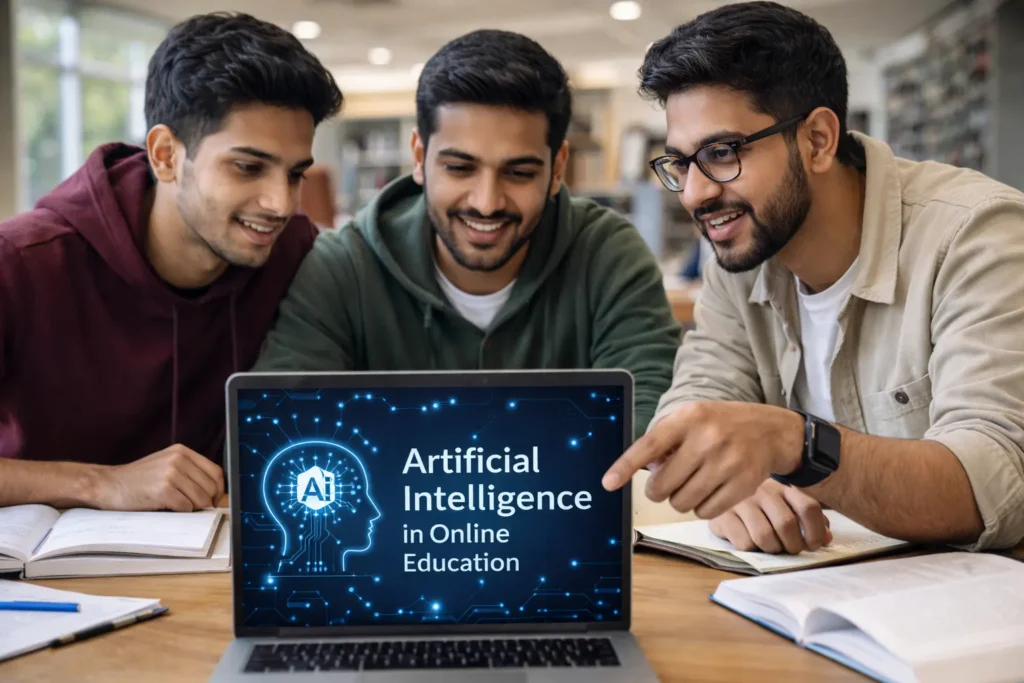
Artificial Intelligence (AI) is transforming online learning by making it smarter, more adaptive, and more engaging. AI tools help analyze how students interact with content, then tailor lessons and materials to their pace and style. Platforms are now using intelligent tutors, automated feedback systems, and real‑time progress tracking to enhance outcomes. As machine learning models evolve, these capabilities will expand, offering deeper personalization and support that feels intuitive and human.
AI‑Powered Personalized Learning
AI‑powered personalization focuses on tailoring the learning path for each student. This means adapting content based on skills, weaknesses, and learning speed. Learners receive recommendations, adjusted difficulty levels, and suggestions that fit their style. This keeps engagement high and improves retention because students aren’t stuck on content that’s too hard or bored by material that’s too easy.
AI Tutors and Intelligent Feedback Systems
AI tutors offer on‑demand support by answering questions, clarifying concepts, and guiding practice. Intelligent feedback systems automatically assess performance and suggest next steps. These tools reduce delays in learning and help students stay motivated. They also free up educators to focus on higher‑impact instruction and mentoring rather than repetitive tasks.
Virtual Reality (VR) and Augmented Reality (AR)
VR and AR are reshaping online learning by creating immersive, interactive environments. Students can explore complex concepts hands-on, from virtual science labs to historical site tours. AR overlays digital information onto the real world, while VR fully immerses learners in simulations. These technologies increase engagement, improve retention, and allow experiential learning that was previously impossible online. As costs decrease and hardware becomes more accessible, VR and AR are set to become standard tools in online classrooms and corporate training programs.
Immersive Learning Experiences
Immersive learning with VR/AR allows students to “experience” content, making abstract ideas tangible. For example, medical students can perform virtual surgeries, and history students can walk through ancient cities. This hands-on interaction deepens understanding and encourages active participation, which is harder to achieve in traditional online lectures.
👉 You might also like: The Future of Smart Learning
VR Simulations in Education
VR simulations replicate real-world scenarios safely and affordably. From flight training to engineering projects, students can experiment, make mistakes, and learn without real-life consequences. This builds confidence and practical skills faster than conventional learning methods.
Machine Learning and Predictive Analytics in Education
Machine learning and predictive analytics help educators anticipate learning gaps and intervene before students fall behind. By analyzing performance data, platforms can recommend content, group learners strategically, and optimize outcomes. This data-driven approach improves retention, personalizes study paths, and enables institutions to make informed decisions about curriculum and resource allocation. Predictive analytics is becoming a critical component of next-generation online education.
Blockchain for Credentials and Certifications
Blockchain technology ensures the security, authenticity, and transparency of academic credentials. Digital certificates on a blockchain can be easily verified by employers, eliminating fraud and simplifying hiring processes. Students benefit from portable, verifiable records of skills, and institutions can track lifelong learning. As online education expands, blockchain will be increasingly vital for managing qualifications in a decentralized, trustworthy manner.
Internet of Things (IoT) Transforming Classrooms
IoT connects devices to collect and analyze data in real time, creating smarter, more responsive learning environments. Smart classrooms can track attendance, monitor engagement, and adjust resources based on student activity. IoT also enables remote learners to access lab equipment, collaborative tools, and adaptive devices, bridging the gap between physical and virtual education. This connectivity enhances both teaching efficiency and learning experiences.
5G and High-Speed Connectivity in Education
High-speed 5G networks are enabling smooth streaming of high-quality video lectures, real-time collaboration, and cloud-based interactive learning tools. Students in remote areas can access rich educational content without latency issues. As connectivity improves, digital platforms can support larger virtual classrooms, immersive experiences, and AI-driven features, further leveling the playing field for learners worldwide.
Adaptive Learning Technologies for Every Student
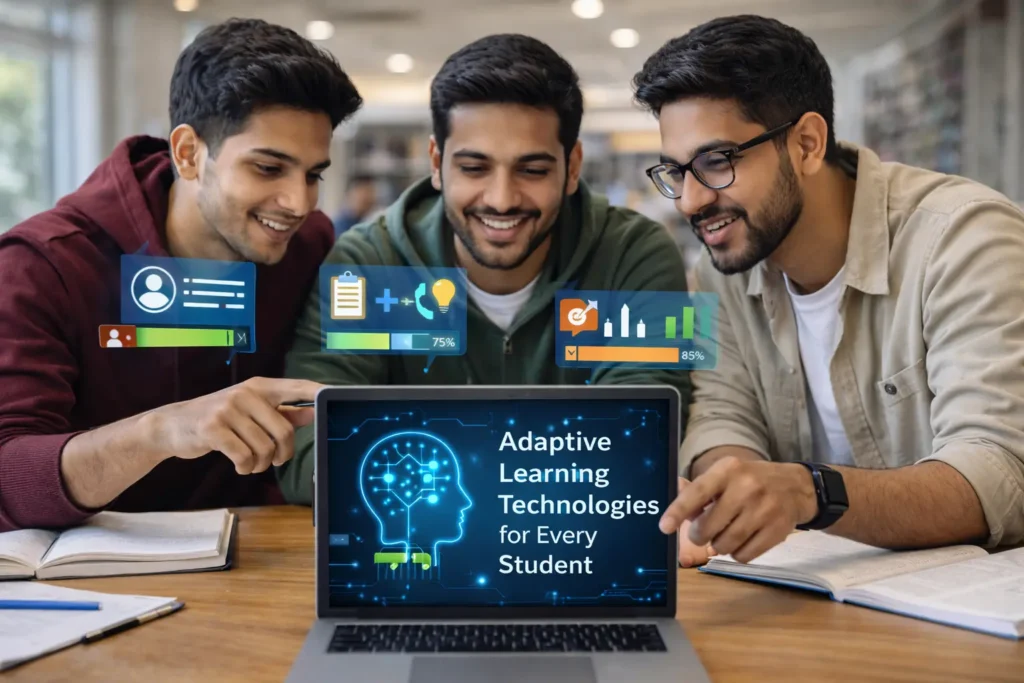
Adaptive learning platforms adjust content based on a student’s strengths, weaknesses, and engagement patterns. This approach ensures learners progress at an optimal pace, reduces frustration, and maximizes understanding. Schools and online providers increasingly rely on adaptive systems to deliver personalized, competency-based education that aligns with individual goals and skill levels.
Gamification and Interactive Learning Tools
Gamification incorporates game elements like points, badges, and challenges into education, making learning more engaging and motivating. Interactive tools, such as quizzes, simulations, and collaborative exercises, increase retention and foster active participation. These techniques appeal to digital-native students and encourage consistent practice, turning learning into an enjoyable and rewarding experience.
Evolution of Learning Management Systems (LMS)
The latest LMS platforms have converted into simple content delivery. They integrate analytics, social collaboration, AI tutoring, and adaptive learning to create a complete digital learning ecosystem. Institutions can track progress, manage assessments, and personalize instruction at scale. The evolution of LMS platforms is central to delivering high-quality, efficient, and engaging online education for students across all levels.
Mobile Learning and App-Based Education
Mobile learning puts education in the palm of students’ hands, offering flexibility for on-the-go learning. Educational apps allow access to interactive lessons, video tutorials, quizzes, and collaboration tools anytime, anywhere. As mobile penetration rises globally, app-based learning ensures inclusivity and convenience, making digital education accessible to wider audiences beyond traditional classrooms.
Microlearning and Bite-Sized Content
Microlearning breaks complex topics into small, focused lessons that learners can complete quickly. This approach fits modern attention spans and allows students to learn on the go. Short, engaging modules improve retention, make review easier, and accommodate busy schedules. Platforms now combine microlearning with interactive quizzes, videos, and AI-based suggestions, making knowledge consumption personalized and flexible. Microlearning is particularly effective for professional skills and continuing education, where learners need to acquire targeted knowledge efficiently without long, traditional lectures.
Blended and Hybrid Learning Models
Blended learning combines online and in-person instruction to provide flexibility while maintaining personal interaction. Hybrid models allow students to participate virtually when needed while attending physical classes for hands-on activities. This approach leverages digital tools for self-paced study and analytics-driven insights, while still fostering community and collaboration. As institutions recognize the benefits of hybrid models, online education technology will increasingly support seamless integration of both learning environments, maximizing engagement and outcomes for students of all ages.
👉 You might also like: How Tech Innovations Are Changing Everyday Life
Competency-Based Education and Skill Credentials
Competency-based education focuses on mastering skills rather than completing set hours or courses. Online platforms can track progress, evaluate mastery, and issue digital credentials that are verifiable by employers. This model aligns education with industry demands and lifelong learning goals. Students gain tangible skills quickly, while institutions ensure measurable outcomes. With the rise of microcredentials and skill-based certifications, competency-focused education is reshaping how learners build careers and how employers recognize talent.
Metaverse and Virtual Campuses
The metaverse introduces immersive, 3D virtual campuses where learners can interact, attend classes, and collaborate in real time. Students can explore environments that replicate real-world experiences, enhancing engagement and social learning. These platforms combine VR, AR, and AI to create fully interactive classrooms online. As technology improves, virtual campuses will complement physical institutions, offering global access to collaborative, experiential learning opportunities that were previously impossible at scale.
Collaborative and Peer-to-Peer Learning Platforms
Peer-to-peer platforms enable students to learn from each other through discussions, projects, and mentorship. Technology facilitates collaboration across geographies, making knowledge exchange faster and more interactive. These platforms encourage teamwork, problem-solving, and critical thinking, while giving learners ownership of their educational experience. When combined with AI-driven insights, peer learning becomes more structured, efficient, and aligned with individual goals.
Social-Emotional Learning Powered by Technology
Technology now supports social-emotional learning (SEL) by tracking engagement, encouraging reflection, and promoting collaboration. Digital tools help students develop empathy, resilience, and interpersonal skills while providing real-time feedback to educators. SEL integration ensures holistic development, preparing learners for both academic success and real-world challenges. Platforms use gamification, virtual communities, and AI monitoring to create supportive, emotionally intelligent learning environments.
Expanding Access for Remote and Rural Learners
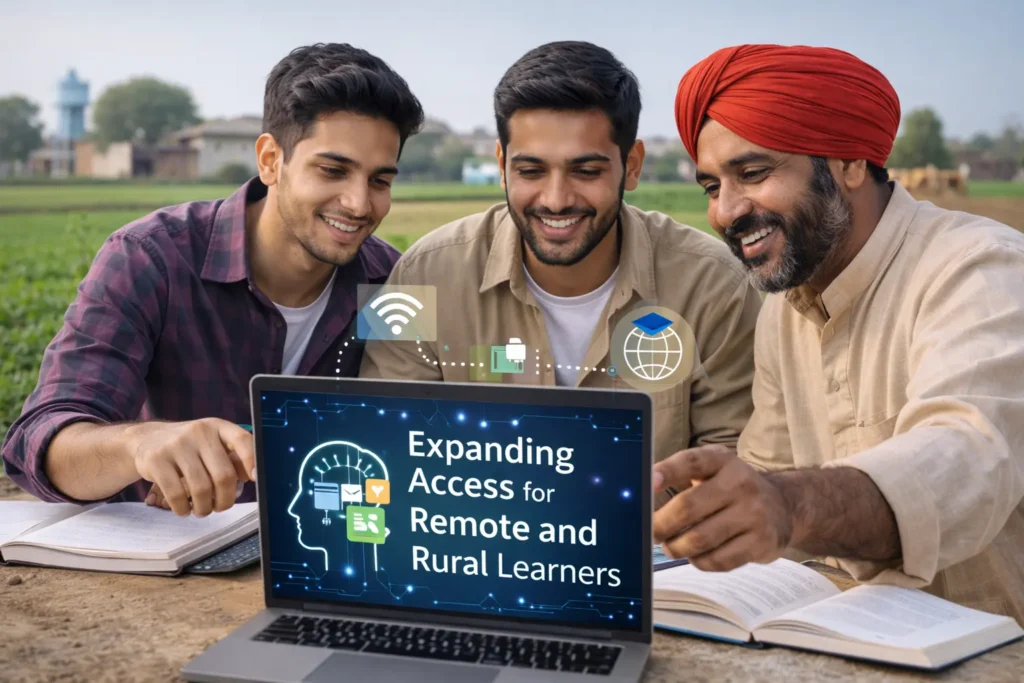
Online education technology breaks down geographic barriers, giving students in remote areas access to quality learning resources. High-speed internet, mobile apps, and cloud-based platforms ensure that even underserved populations can participate in courses, workshops, and global programs. Expanding access reduces inequality and creates opportunities for lifelong learning, while enabling institutions to reach wider audiences without physical limitations. Connectivity and scalable platforms are key to achieving equitable access for learners worldwide.
Multilingual and Inclusive Educational Content
Global learners need content that respects language and cultural differences. Platforms now provide multilingual resources, adaptive interfaces, and accessibility features for students with disabilities. Inclusive content design ensures participation, engagement, and effective learning for diverse populations. AI and machine learning assist by translating materials, recommending culturally relevant examples, and supporting personalized learning paths, making online education truly global and accessible.
Affordable and Open Online Resources
Open Educational Resources (OER) and affordable digital platforms reduce costs for learners and institutions. Free or low-cost materials, combined with online courses, make quality education accessible without heavy financial burdens. Technology enables scalable delivery of these resources while tracking usage, engagement, and outcomes. This approach encourages continuous learning, upskilling, and democratization of education, especially in developing regions where traditional resources may be limited.
Lifelong Learning and Workforce Re-Skilling
Digital platforms support continuous learning, allowing professionals to update skills or pivot careers efficiently. Short courses, microcredentials, and AI-driven recommendations make workforce re-skilling convenient and personalized. Employers benefit from a more adaptable talent pool, while learners gain flexibility to pursue personal and career growth. Online education technology ensures that learning never stops, bridging gaps between academic knowledge and real-world applications.
Increased Personalization and Learner Engagement
Advanced platforms use AI, analytics, and adaptive learning to deliver highly personalized experiences. Learners receive content, feedback, and challenges tailored to their skills, pace, and interests. Personalized experiences increase engagement, motivation, and retention. Students feel supported and challenged appropriately, improving learning outcomes across all subjects and educational levels.
Flexibility and Self-Paced Learning
Self-paced courses give learners control over timing, pace, and learning order. This flexibility suits working professionals, caregivers, and students with varying schedules. Platforms track progress, suggest next steps, and provide feedback to ensure continuous advancement. Flexibility combined with robust digital tools transforms learning from a rigid structure to a dynamic, learner-driven journey.
Real-Time Assessment and Feedback Systems
Online platforms provide instant feedback on quizzes, assignments, and interactive exercises. Real-time assessments help learners identify weaknesses and adjust study strategies immediately. Educators benefit from actionable analytics to support intervention and guide instruction. These systems improve accuracy, motivation, and overall learning efficiency, making education more effective than traditional delayed-feedback models.
Data Privacy and Security Concerns
With digital education comes the responsibility to protect student data. Platforms collect sensitive information, raising concerns about privacy, compliance, and cybersecurity. Institutions must implement strong encryption, secure storage, and ethical data practices. Addressing these issues builds trust with learners, protects intellectual property, and ensures legal compliance. Educators and developers must balance data-driven innovation with robust privacy safeguards.
Equity Gaps in Technology Access
Not all learners have the same access to digital devices, connectivity, or digital literacy. Equity gaps can worsen educational disparities if unaddressed. Solutions include providing affordable devices, infrastructure investment, and digital skills training. Online education technology must prioritize inclusivity, ensuring that remote, rural, or low-income students have meaningful access to learning opportunities.
Maintaining Human Interaction in Digital Learning
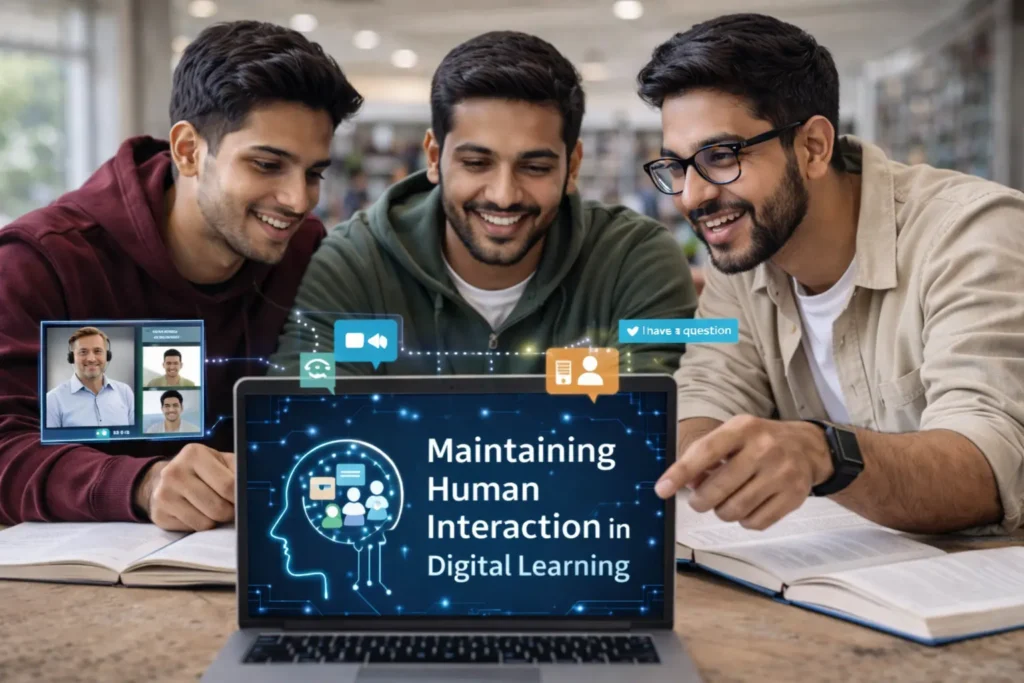
Despite technology, human connection remains vital. Teachers, mentors, and peers provide guidance, motivation, and social development. Platforms that blend digital tools with synchronous interactions, group projects, and virtual office hours maintain this critical human element. Balancing automation with interpersonal engagement ensures learners develop academically and socially.
Quality Assurance in Massive Online Platforms
Scaling online education without compromising quality requires rigorous oversight. Regular content updates, learner feedback, accreditation standards, and monitoring tools are essential. Platforms that maintain quality ensure credibility, learner satisfaction, and positive outcomes. Quality assurance strategies protect the value of digital credentials and enhance trust in online education.
Preparing Teachers for Digital Classrooms
Educators need training to effectively use technology, manage virtual classrooms, and personalize instruction. Professional development programs focus on digital tools, online pedagogy, and engagement strategies. Well-prepared teachers maximize the benefits of online education technology, delivering better learning experiences and improving student outcomes.
Strategies for Future-Ready Institutions
Institutions must adopt digital-first strategies, invest in infrastructure, and embrace flexible curriculum models. Future-ready schools integrate technology into every aspect of teaching, administration, and student support. Strategic planning ensures sustainability, scalability, and adaptability in a fast-changing educational landscape.
Partnerships Between EdTech Companies and Schools
Collaboration between schools and EdTech providers accelerates innovation. Companies offer platforms, analytics, and tools while institutions provide feedback and real-world testing. These partnerships ensure that technology addresses actual educational needs, benefits learners, and scales efficiently.
Online Education in 2030: Trends and Possibilities
By 2030, online education will be more immersive, personalized, and global. AI tutors, VR classrooms, and adaptive content will dominate, enabling lifelong learning at scale. Students will access tailored courses anywhere, anytime, with measurable outcomes. Institutions and employers will rely heavily on digital credentials and skill-based assessments. The landscape will prioritize flexibility, engagement, and accessibility like never before.
AI and Automation in Skill Development and Jobs
Automation and AI will redefine workforce training, predicting skill gaps and delivering targeted courses. Employees can upskill faster while organizations maintain a competitive edge. Platforms will continuously adapt content to job market trends, creating a seamless connection between education and career growth.
Projected Growth of the Global EdTech Market
The global EdTech market is projected to grow exponentially, driven by increasing digital adoption, mobile access, and remote learning needs. Investment in AI, VR, adaptive systems, and mobile platforms will accelerate. Institutions and governments worldwide will rely on EdTech for scalable, cost-effective, and high-quality education.
Summarizing the Future of Online Education
The future of online education blends technology, personalization, and accessibility. AI, VR, mobile platforms, and adaptive learning will create immersive, flexible, and efficient education for all. Institutions, educators, and learners must embrace change, leveraging technology to improve outcomes, reduce barriers, and prepare for a lifelong learning journey.
How Students, Educators, and Institutions Can Prepare
Preparation involves embracing digital tools, acquiring tech skills, and fostering adaptability. Students should explore online platforms, educators must learn virtual pedagogy, and institutions need strategic digital plans. Collaborative efforts, continuous upskilling, and openness to innovation ensure that online education fulfills its potential, empowering learners worldwide and creating a future-ready education ecosystem.
FAQs: Future of Online Education Technology

What is online education technology?
Online education technology includes tools, platforms, and systems that enable learning through digital channels. This includes virtual classrooms, learning management systems (LMS), mobile apps, AI tutors, and immersive tools like VR/AR. It allows learners to access content anytime, anywhere, and supports personalized, scalable, and interactive learning experiences.
How is AI changing online education?
AI enables personalized learning by analyzing student behavior, performance, and preferences. It powers adaptive learning platforms, AI tutors, and real-time feedback systems. AI helps educators identify learning gaps, recommend content, and improve outcomes, making education more efficient and learner-centric.
What role do VR and AR play in online learning?
VR and AR create immersive learning experiences that replicate real-world scenarios. VR offers full simulations, while AR overlays digital content onto physical spaces. These technologies increase engagement, improve retention, and allow students to practice skills safely and interactively.
What is microlearning, and why is it important?
Microlearning breaks down content into small, focused lessons that are easy to complete. It fits modern attention spans, supports on-the-go learning, and improves retention. Microlearning is effective for skills development, professional training, and lifelong learning.
How does online education benefit learners in remote areas?
Online education removes geographic barriers, providing access to high-quality courses, certifications, and collaborative platforms. With mobile devices and reliable connectivity, students in rural or underserved areas can participate in global education opportunities.
What are competency-based education and digital credentials?
Competency-based education focuses on skill mastery rather than time-based learning. Students earn digital credentials, certificates, or badges that verify skills, which are easily shared with employers and institutions for career advancement or further education.
How can educators prepare for digital classrooms?
Teachers need training in online pedagogy, digital tools, virtual classroom management, and student engagement strategies. Professional development ensures educators effectively leverage technology to enhance learning outcomes.
What are the main challenges of online education technology?
Challenges include data privacy, security, technology access gaps, maintaining human interaction, and ensuring content quality. Addressing these issues requires robust infrastructure, inclusive policies, and ongoing support for learners and educators.
How will online education evolve by 2030?
By 2030, online education will be highly personalized, immersive, and globally accessible. AI, VR, and adaptive learning platforms will dominate, providing continuous skill development, interactive learning, and digital credentials for academic and professional growth.
Why is lifelong learning important in online education?
Lifelong learning allows individuals to continuously update skills, adapt to changing job markets, and pursue personal growth. Online education platforms provide flexible, affordable, and scalable solutions to support learning at any age or stage.
✨ Got value? Let’s keep the momentum, follow Milyom.