
How AI Is Changing the Way Startups Build and Scale in 2026
Building a startup in 2026 looks nothing like it did three years ago. What used to require a full team of developers, designers, marketers, and infrastructure engineers can now be handled by a small founding team armed with the right AI tools.
The shift is not just about speed. It is about what is now structurally possible for startups without large budgets or deep technical teams. AI has compressed the gap between having an idea and having a live, working product. It has reduced the cost of building, the time to first customer, and the headcount required to scale.
This guide breaks down exactly how startups are using AI across every stage of the build and growth journey in 2026, and which tools are driving the change.
What Has Changed for Startups in 2026
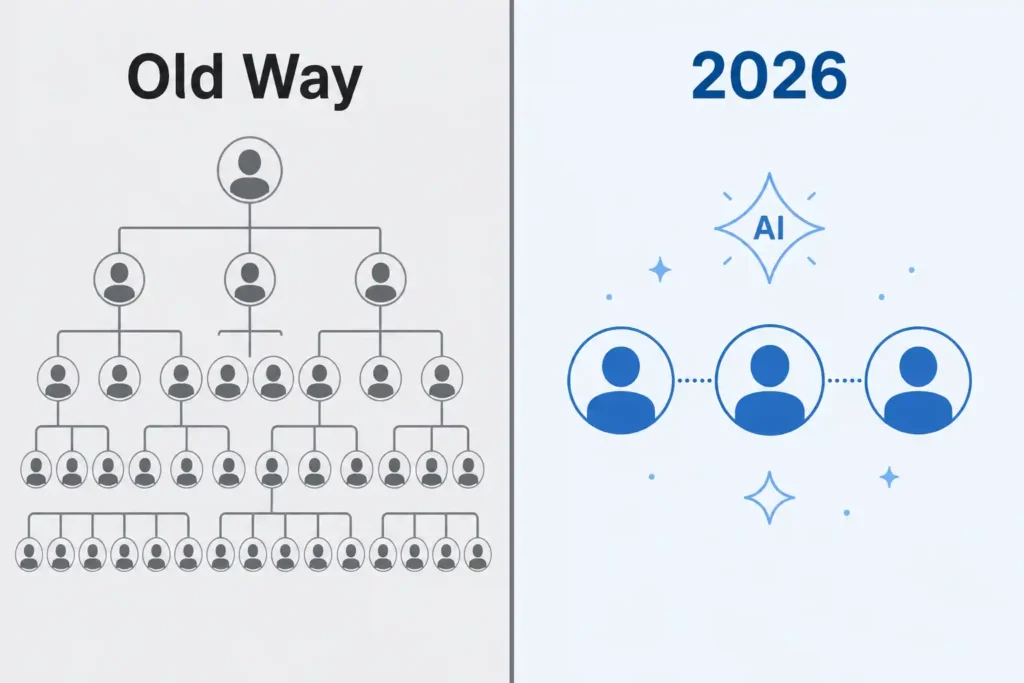
The old startup stack required specialists at every layer. You needed a frontend developer, a backend developer, a DevOps engineer to keep things running, a designer to make it look credible, and a marketing team to get anyone to see it. Each hire added months and cost.
AI has collapsed many of those specialist roles into tools that any founder or small team can use without deep expertise. A technical founder can now handle design. A non-technical founder can ship a working product with minimal or no traditional coding. A solo marketer can produce the volume and quality of content that used to require a team of five.
The result is faster build cycles, lower burn rates, and more time focused on the actual product rather than the infrastructure surrounding it.
AI Tools Startups Are Using to Build Faster
AI Coding and Development Tools
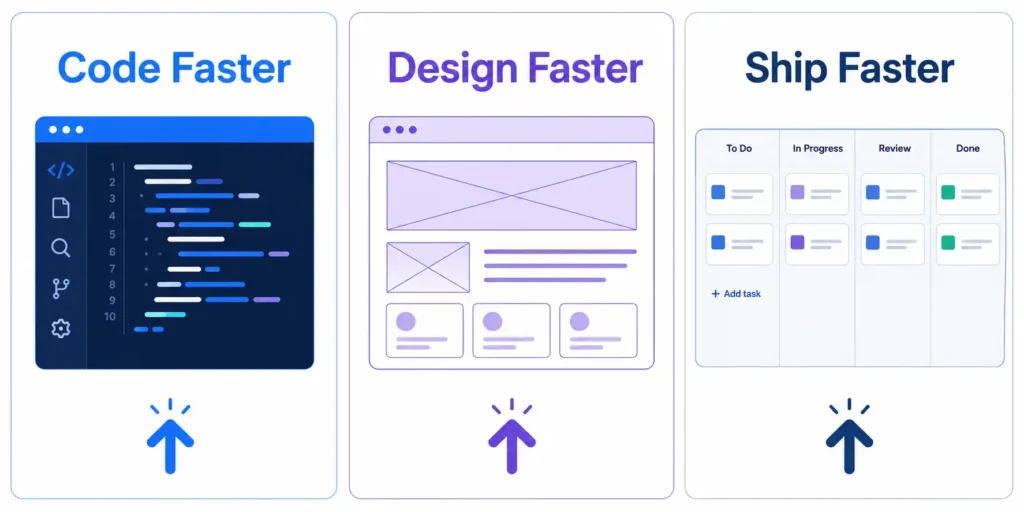
AI coding tools have changed what a small engineering team can realistically ship and maintain. Tools like Cursor, GitHub Copilot, and Windsurf work inside your code editor to suggest completions, generate entire functions, review pull requests, catch bugs, and explain unfamiliar code.
A developer using a cursor in 2026 in an AI ML development company is not just typing faster. They are spending less time on boilerplate, less time debugging, and less time context-switching between writing and researching. The practical outcome is that a two-person engineering team can now maintain a codebase and ship features at a pace that previously required six or eight developers.
For non-technical founders, AI coding tools have lowered the barrier enough that many are building their first working prototypes without hiring a developer at all. The quality ceiling is lower than that of a senior engineer, but it is high enough to validate an idea and get to the first customers.
If you want a full breakdown of the tools developers are actually using day to day, the guide to the best AI tools for developers in 2026 (kuberns.com/blogs/ai-tools-stack-for-developers/) covers the full stack in detail.
Design and Prototyping Tools
Design used to be the bottleneck that stopped non-designers from moving fast. Either you hired a designer and waited, or you built something that looked rough and hurt your credibility with early users.
AI design tools have changed that. v0 by Vercel generates production-ready UI components from a text prompt. Framer AI builds responsive landing pages from descriptions. Figma’s AI features accelerate wireframing, component generation, and design system work.
Founders who previously would have spent two weeks waiting for a designer to produce a landing page are now iterating on the design themselves in a day. The output is not always at the level of a senior product designer, but for early-stage validation, it is more than sufficient.
💚 You might also like: Best Writing Tools for SEO, Bloggers & Students in 2026
Product and Project Management Tools
Startups waste enormous amounts of time on planning overhead. Too many meetings, too many tools, too much time writing documentation that nobody reads. AI has started to remove that friction.
Tools like Linear, Notion AI, and Height bring AI into the workflow for sprint planning, task generation from conversations, meeting summaries, and documentation. Notion AI can turn a raw brainstorm into a structured product spec in minutes. Linear keeps engineering focus tight without requiring a dedicated project manager.
For small teams juggling multiple workstreams, these tools mean less time spent in coordination and more time spent building.
AI Tools Startups Are Using to Scale
Marketing and Content Tools
Content is one of the highest-leverage growth channels for early-stage startups, and it is also one of the most time-intensive. AI has shifted that equation significantly.
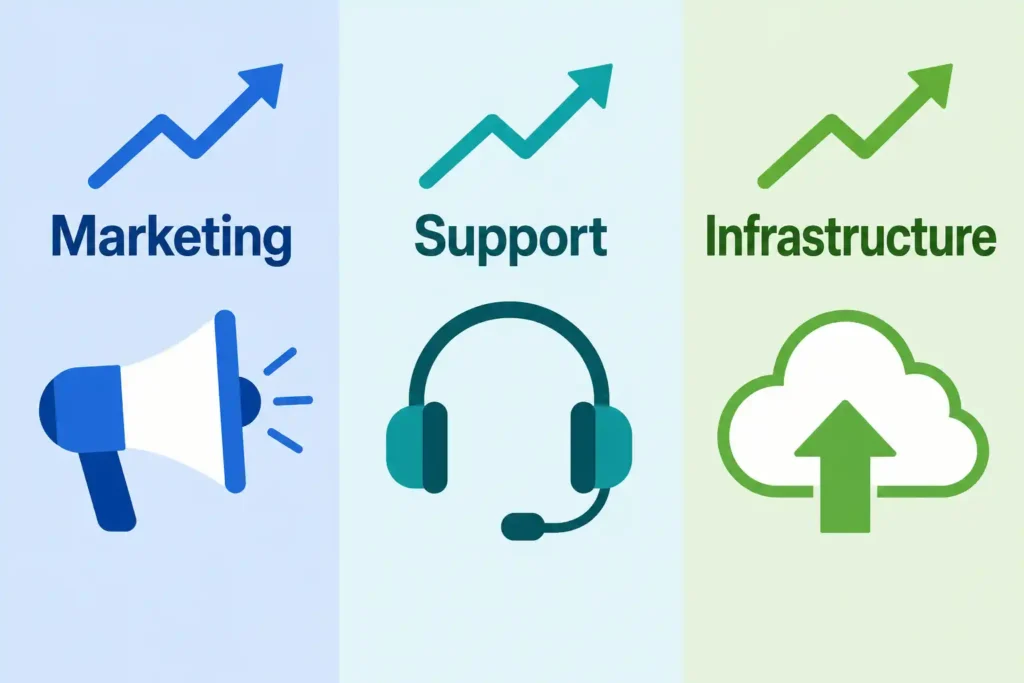
Tools like ChatGPT, Jasper, and Surfer SEO allow small marketing teams or founder-led marketing efforts to produce research, first drafts, SEO-optimised articles, social copy, and email sequences at a pace that previously required a full content team. The quality of AI-assisted content in 2026, when guided by a clear strategy and strong editorial judgment, is competitive with what a mid-level content writer produces.
The startups winning at content in 2026 are not just using AI to write more. They are using it to research better, iterate faster, and stay consistent without burning out a small team.
Customer Support and Engagement Tools
For startups with a growing user base and no support team, customer responsiveness is a constant tension. AI-powered support tools like Intercom AI, Crisp, and Tidio resolve that tension by handling tier-one queries automatically, drafting responses for human review, and routing escalations before they become complaints.
The practical impact is that a startup can maintain 24/7 responsiveness to hundreds or thousands of users without a dedicated support function. That is a structural advantage that compounds as the user base grows.
Deployment and Infrastructure Tools
This is where the operational shift is most significant for technical startups.
Until recently, going from working code to a live, scalable production environment required a DevOps engineer or significant manual configuration. You needed to manage servers, configure CI/CD pipelines, handle SSL certificates, set up auto-scaling, and monitor uptime. For startups without a dedicated infrastructure person, this was a constant drag on engineering time.
Modern deployment platforms have removed most of that overhead. Platforms like Vercel, Railway, and agentic AI deployment platforms handle the entire pipeline from code commit to live deployment automatically. They detect your stack, configure the build, manage scaling based on real traffic, and maintain uptime without manual intervention.
For a deeper look at the tools handling automated cloud deployment in 2026, the guide to the best AI tools that deploy apps to the cloud in one click covers the leading options and how they compare.
The result for startups is that a two or three-person engineering team can now run a production environment that would have required a dedicated DevOps hire just a few years ago.
The Real Advantage: Speed Compounds

The startups pulling ahead in 2026 are not just using AI in one area. They are running it across every function simultaneously, and that compounding effect is what creates a durable competitive advantage.
Each week, a startup moves faster than a larger, slower competitor, and gains ground that is difficult to close. A big company can adopt the same AI tools, but it cannot shed the process overhead that slows decision-making. Committee approvals, change management, cross-functional alignment. These are structural constraints that AI tools do not remove for large organisations.
A small startup with AI across coding, design, marketing, support, and infrastructure is not just cheaper to run. It is structurally faster, and faster compounds.
What to Watch Out For?
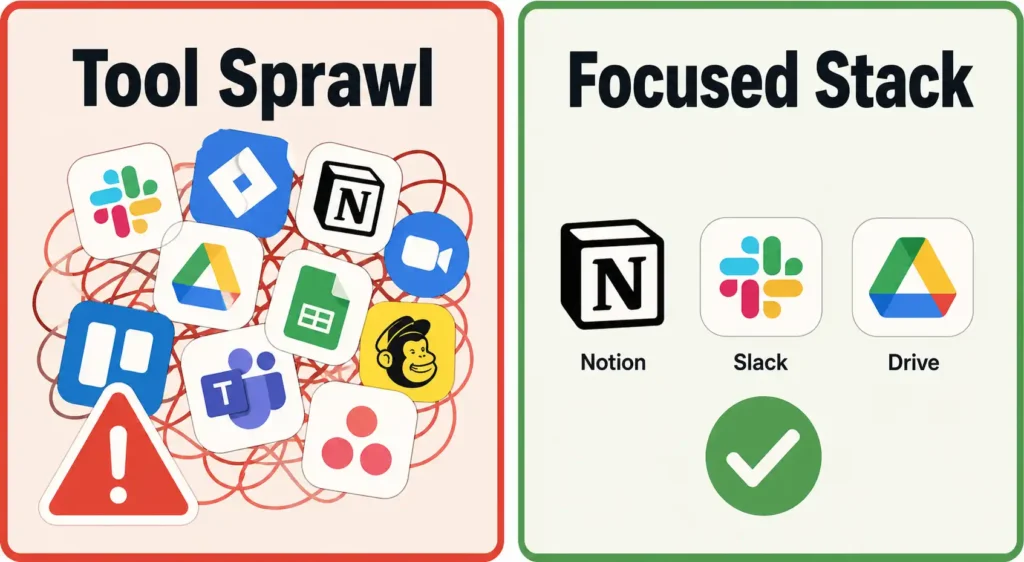
AI amplifies decisions, good and bad. The most common mistake startups make is tool sprawl: collecting every AI tool that looks useful without integrating any of them deeply into the workflow.
The most effective founding teams are selective. They pick fewer tools, go deeper on each one, and build clear internal conventions for what AI owns and what humans own. Drafting is a good AI task. Strategic judgment is a human task. Generating infrastructure configuration is a good AI task. Deciding what to build next is a human task.
Getting that division right is more valuable than having access to every tool available.
Conclusion
The startup stack in 2026 has been fundamentally restructured by AI. The specialist headcount required to build and scale has dropped. Build cycles are shorter, burn rates are lower, and first-customer timelines have compressed significantly.
The founders who understand which tools to use, where to apply them, and how to integrate them into a coherent workflow are building faster than anyone thought possible three years ago. The tools are available to anyone. The advantage goes to the founders who use them deliberately.
✨ Stay ahead of the curve. Follow Milyom.