
The Ultimate Guide to Data Management Tools in 2026
If you run a business today, you’re already dealing with data, whether you realize it or not. Every click, every customer interaction, every transaction generates information. The real challenge isn’t collecting data anymore. It’s managing it properly. That’s where data management tools come in.
In simple terms, data management tools are software solutions designed to collect, organize, store, and analyze data in a way that actually makes it useful. Instead of scattered spreadsheets and messy databases, these tools give you a clear, structured system to work with.
Think of it like this: data is your raw material, but without the right tools, it’s just noise. Data management software turns that noise into insights you can actually use to make decisions.
Today, businesses are no longer asking if they need data management tools. The real question is which tools can handle their growing needs. From startups to large enterprises, everyone is looking for smarter ways to manage data efficiently. And the reason is simple.
Better data management leads to better decisions. When your data is clean, organized, and accessible, you can understand your customers, improve operations, and scale faster. Without it, you’re just guessing.
That’s why modern data management solutions have become a core part of business strategy, not just a technical add-on.
The Rise of Data Management in the Digital Era
Not too long ago, managing data meant working with spreadsheets, manual entries, and basic storage systems. It worked, until it didn’t.
As businesses grew, so did their data. Suddenly, those simple systems started breaking down. Files got duplicated. Data became inconsistent. Teams struggled to find the right information at the right time. That’s when the shift began.
Companies started moving from manual processes to more advanced data management platforms. Databases became more powerful. Cloud technology changed everything. Instead of storing data in one place, businesses could now access it from anywhere.
This evolution didn’t just improve efficiency; it changed how decisions were made.
Modern data management tools now offer real-time data processing, automation, and advanced analytics. Instead of looking at old reports, businesses can now see what’s happening right now. Another big change is integration.
Earlier, different departments used different tools that didn’t communicate with each other. Today, data integration platforms connect everything, marketing, sales, and operations into one unified system.
The result? A single source of truth. And that’s what businesses need today. Not more data, but better-connected data.
Types of Data Management Tools You Should Know
When people talk about data management tools, they often think it’s just one thing. In reality, it’s a complete ecosystem of different tools working together. Let’s make this simple.
First, you have data integration tools. These tools help you bring data from multiple sources into one place. Whether it’s your CRM, website, or third-party platforms, integration tools make sure everything is connected.
Then there are data storage solutions. This is where your data actually lives. Modern businesses mostly rely on cloud-based storage because it’s flexible, scalable, and easy to access.
Next, you have data quality tools. These are extremely important but often overlooked. They clean your data, remove duplicates, fix errors, and ensure consistency. Without good data quality, even the best tools won’t help.
Another category is master data management systems. These tools focus on creating a single, accurate version of your core business data, like customer or product information. This helps avoid misunderstandings and keeps things clear.
And finally, there are data analytics tools. These tools help you understand your data. They turn raw numbers into insights through dashboards, reports, and visualizations.
The best data management tools don’t just do one of these things. They combine multiple capabilities to give you a complete solution.
✔️ You might also like: Best AI Tools to Automate Business Tasks
Key Features That Define a Powerful Data Management Tool
Not all data management software is built the same. Some tools look good on the surface but fail when your data starts growing. So what actually makes a tool worth using? The first thing is scalability.
Your data will grow. That’s guaranteed. A good data management tool should grow with you, not slow you down. Whether you have thousands or millions of records, the system should handle it smoothly. Next comes security.
Data is a valuable asset for your business. A reliable tool should offer strong security features like encryption, access control, and compliance with data protection standards. Without this, you’re taking a big risk. Another key feature is real-time processing.
In today’s fast-moving environment, waiting hours or days for reports doesn’t make sense. Modern tools allow you to access and analyze data instantly, helping you make faster decisions. Automation is also a game-changer.
Instead of manually updating records or running reports, automation handles repetitive tasks for you. This enhances efficiency while minimizing human error. And finally, ease of use.
A powerful tool is useless if your team can’t use it properly. The best data management platforms come with simple dashboards, clean interfaces, and user-friendly controls. At the end of the day, the goal is simple.
You don’t just want a tool that stores data. You want a system that helps you use that data to grow your business. And that’s exactly what the right data management tool should do.
Top Data Management Tools Businesses Are Using in 2026
When you look at how modern businesses handle data today, one thing becomes clear. They don’t rely on random tools. They choose systems that solve real problems.
Some companies need better data organization. Others want deeper insights. And many are simply trying to bring all their scattered data into one place. That’s why the best data management tools in 2026 are not just powerful, they’re practical.
For example, platforms like Snowflake have become popular because they make handling large-scale data simple. Businesses can store, process, and analyze data without worrying about infrastructure.
Then you have tools like Tableau, which focus on turning raw data into clear, visual insights. Instead of looking at spreadsheets, teams can understand trends through dashboards that actually make sense.
Another strong player is Apache Hadoop. It’s widely used for managing massive datasets, especially by companies dealing with complex data environments.
For integration, tools like Talend help businesses connect different data sources into one system. This removes the chaos of disconnected tools.
And for customer-focused data, platforms like Salesforce play a major role by combining data management with customer relationship insights.
The reason these tools stand out isn’t just their features. It’s how they fit into real business workflows. They don’t just manage data, they make it usable.
How to Choose the Right Data Management Tool for Your Needs
Choosing the right data management software is where most businesses get stuck. Not because there aren’t enough options, but because there are too many. The mistake many people make is chasing “the best tool” instead of finding the right fit.
The truth is, the right tool varies based on your requirements. If you’re a small business, you don’t need a complex system built for enterprises. You need something simple, affordable, and easy to manage. On the other hand, larger businesses with complex operations need tools that can handle scale and integrations.
Another factor is your data type. Are you dealing with customer data, financial data, or operational data? Different tools are optimized for different use cases. Understanding this makes your decision much easier.
Budget also plays a big role. Some data management tools come with high upfront costs, while others operate on subscription models. The key is value over price. A slightly expensive tool that saves time and improves accuracy will always be worth it.
Integration is another critical point. Your data management platform should work smoothly with your existing systems. If it doesn’t connect well, you’ll end up creating more problems instead of solving them.
And finally, think long-term. Don’t choose a tool just for today. Choose something that can support your growth over the next few years.
Because switching tools later is always more expensive than choosing the right one from the start.
Benefits of Using Data Management Tools for Business Growth
When businesses invest in the right data management tools, the impact is immediate and long-term. The first benefit is better decision-making.
Instead of relying on assumptions, you start making decisions based on real data. You can see what’s working, what’s not, and where to focus your efforts.
Then comes efficiency. Manual processes slow everything down. Data management tools automate repetitive tasks, reduce errors, and free up your team to focus on more important work. Another major benefit is improved data accuracy.
When your data is clean and organized, you avoid costly mistakes. Whether it’s reporting, forecasting, or customer targeting, accurate data makes a huge difference. Scalability is also a big advantage.
As your business grows, your data grows with it. The right tools ensure that you can handle this growth without breaking your systems. And let’s not forget customer insights.
With proper data management, you understand your audience better. You know their behavior, preferences, and needs. This allows you to deliver better experiences and build stronger relationships.
In simple words, data management tools don’t just support growth, they accelerate it.
✔️ You might also like: Classroom 30x
Common Challenges in Data Management and How Tools Solve Them
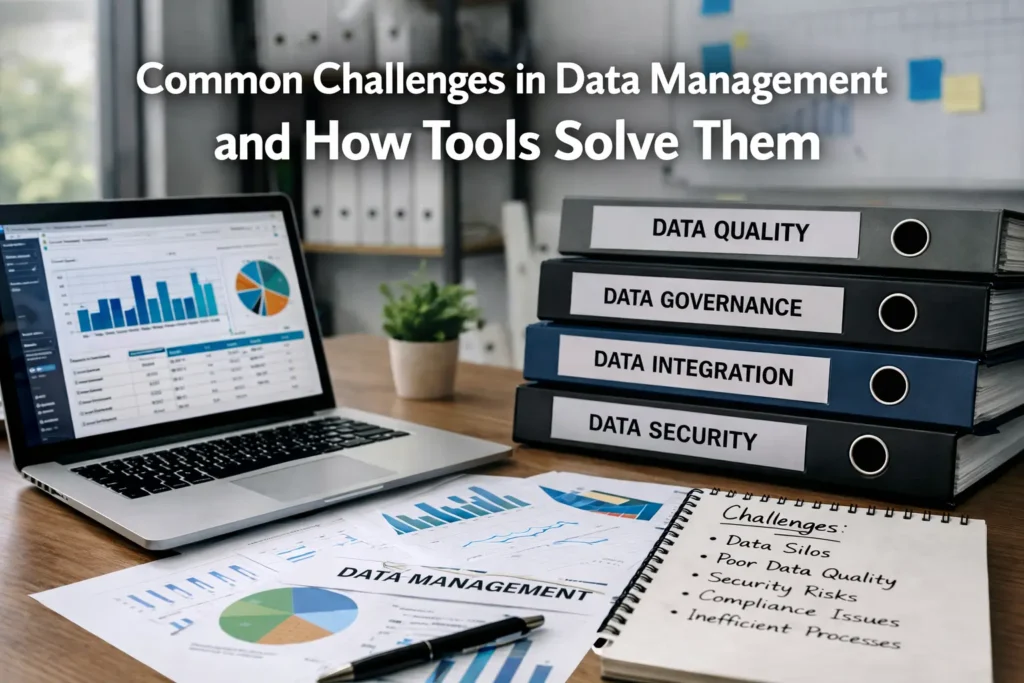
Managing data sounds simple until you actually start doing it. One of the biggest challenges businesses face is data silos.
Different departments use different tools, and their data stays isolated. This creates confusion and limits visibility. Modern data management platforms solve this by integrating all data into a single system.
Another common issue is poor data quality. Duplicate records, missing information, and inconsistent formats can make your data unreliable. Data quality tools fix this by cleaning and standardizing your data automatically.
Security is another major concern. With increasing cyber threats, protecting data has become critical. Advanced data management software includes strong security features like encryption, access control, and monitoring to keep your data safe. Then there’s the challenge of handling large volumes of data.
As businesses grow, managing massive datasets becomes difficult. Scalable tools like cloud-based platforms make it easier to store and process large amounts of information without performance issues. And finally, there’s the problem of slow decision-making.
When data is hard to access or outdated, decisions get delayed. Real-time data processing solves this by giving you instant access to updated information.
At the end of the day, every data problem has a solution. And more often than not, that solution comes down to choosing the right data management tool.
Future Trends in Data Management Tools
Data management is not standing still. It’s evolving faster than most businesses can keep up with.
One of the biggest shifts happening right now is the rise of AI-driven data management. Tools are no longer just storing and organizing data; they’re starting to think with it. Modern platforms can automatically detect patterns, suggest insights, and even predict future outcomes. This changes everything.
Instead of spending hours analyzing reports, businesses can now get instant recommendations based on real-time data. It’s like having a smart assistant working behind the scenes.
Another major trend is automation. Businesses are moving away from manual workflows. Data pipelines are becoming fully automated, from collection to processing to reporting. This not only saves time but also reduces errors that usually happen with human input.
Cloud-first solutions are also dominating the space. More companies are shifting from on-premise systems to cloud-based data management tools. The reason is simple—flexibility. Cloud platforms allow teams to access data from anywhere, scale easily, and reduce infrastructure costs.
Real-time analytics is becoming a standard, not a luxury. Businesses no longer want to look at yesterday’s data. They want real-time updates. This demand is pushing tools to deliver faster processing and instant insights. And finally, there’s a growing focus on data privacy and compliance.
With stricter regulations and increasing awareness, companies are paying more attention to how data is collected, stored, and used. Future tools will prioritize transparency, security, and compliance by default. The direction is clear.
Data management tools are becoming smarter, faster, and more intuitive. Businesses that adapt early gain an advantage.
✔️ You might also like: Fappelo
Why Investing in the Right Data Management Tool Is a Game-Changer
Many businesses still treat data management as a backend task. Something technical. Something optional. That mindset is costing them more than they realize. Because in today’s environment, data is not just support, it’s a competitive advantage.
When you invest in the right data management tool, you’re not just organizing information. You’re building a system that helps you make better decisions, faster than your competitors.
You start seeing patterns others miss. You understand your customers at a deeper level. You respond to market changes quickly instead of reacting late. That’s the real difference.
There’s also a strong return on investment. Yes, good data management software can cost money. But the efficiency it brings, the errors it prevents, and the opportunities it unlocks make it worth every penny. It also improves team productivity.
When your team has access to clean, organized data, they don’t waste time searching for information or fixing mistakes. They focus on execution. And over time, this creates momentum.
Better data leads to better strategies. Better strategies lead to better results. And better results fuel long-term growth. So the question is not whether you should invest. The real question is how long you can afford to wait.
Conclusion
Data management tools are no longer just a technical necessity; they are a business essential. In a world where data is growing every second, the ability to manage it properly is what separates successful businesses from struggling ones.
From improving decision-making to increasing efficiency and unlocking new opportunities, the impact of the right data management software is massive. But the key is not just using any tool. It’s about choosing the right one for your needs, your goals, and your future growth.
Because at the end of the day, data alone doesn’t drive success. What you do with that data does.
Frequently Asked Questions (FAQs)
What are the best data management tools for small businesses?
For small businesses, the best data management tools are those that are simple, affordable, and easy to use. Cloud-based platforms are usually a great choice because they don’t require heavy setup and can scale as the business grows. Tools that combine storage, integration, and basic analytics in one place work best for smaller teams.
How do data management tools improve business efficiency?
Data management tools improve efficiency by automating repetitive tasks, organizing data in a structured way, and making it easy to access information when needed. This reduces time wasted on manual work and allows teams to focus on more important activities like strategy and execution.
Are cloud-based data management tools better than traditional ones?
In most cases, yes. Cloud-based data management tools offer more flexibility, scalability, and accessibility compared to traditional systems. However, the right choice still depends on your business needs, especially if you have specific security or compliance requirements.
What features should I look for in a data management tool?
You should focus on scalability, security, ease of use, integration capabilities, and real-time processing. A good tool should not only manage your current data but also support your future growth without complications.
Can data management tools help with data security?
Yes, modern data management tools come with built-in security features such as encryption, access controls, and monitoring systems. They help keep data secure and control who can access it.
🔔 This is what better content looks like. Follow Milyom for more.