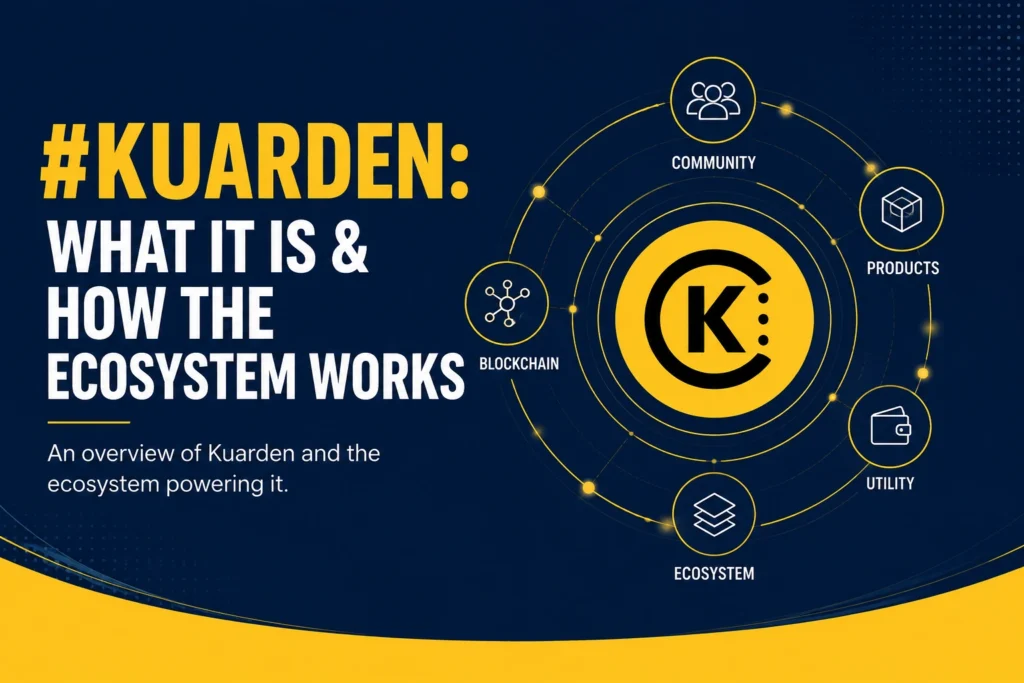

Kuarden: What It Is and How the Ecosystem Works
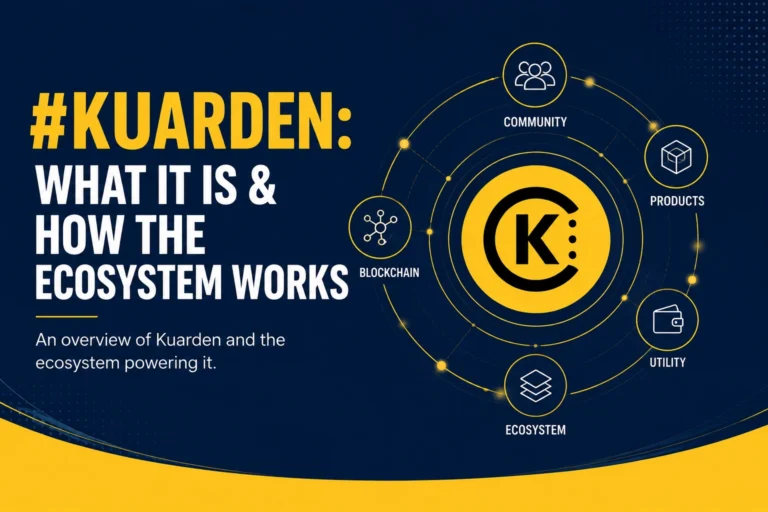
Kuarden is a blockchain-based digital commerce project built around the idea of making online transactions more flexible, transparent, and accessible. Its ecosystem combines cryptocurrency payments with digital marketplace concepts, while newer descriptions of the project also emphasize artificial intelligence and personalized online shopping.
At the center of the ecosystem is the KRN token, which is intended to support transactions and participation across the platform. Rather than positioning KRN as a cryptocurrency with no use beyond trading, Kuarden presents it as a utility asset connected to its broader commerce infrastructure.
The idea is relatively straightforward: users should be able to interact with digital and real-world commerce while using blockchain-based payments in the background. For merchants, this could mean accepting crypto without having to build separate systems for every supported asset. For users, it aims to create a smoother way to pay, exchange digital assets, and access marketplace services.
What Is Kuarden?
Kuarden is designed as a blockchain-powered commerce ecosystem that connects digital payments, cryptocurrency exchange, and online retail. Its underlying concept goes beyond simply creating another token. The project describes a system where merchants and users can interact through blockchain-based infrastructure while maintaining greater control over transactions.
One of the core ideas in Kuarden’s documentation is the use of decentralized payment technology. Its whitepaper describes an on-chain protocol capable of exchanging digital assets and supporting payment APIs for merchants. This would allow a customer to pay using one cryptocurrency while the merchant receives another preferred asset, reducing the need to manually handle different tokens.
This approach is particularly relevant to international commerce. Traditional payment systems often involve several intermediaries, currency conversions, processing fees, and settlement delays. A blockchain-based system can potentially simplify some of these steps by handling asset conversion and settlement through smart contracts.
Kuarden’s more recent positioning expands this concept into a broader digital commerce environment. The project has been described as combining AI, blockchain, and e-commerce to create a more personalized shopping experience. Its proposed ecosystem includes features such as Kuarden Pay, a digital marketplace, and the Currency Exchange Protocol known as KCEP.
It is important, however, to distinguish between the project’s proposed functionality and independently verified adoption. Many of Kuarden’s features are presented as part of its ecosystem vision, so readers should review the latest project documentation before treating planned capabilities as fully operational products.
How Does Kuarden Work?
The basic concept behind Kuarden revolves around connecting users, merchants, cryptocurrencies, and blockchain-based payment infrastructure.
Instead of requiring every merchant to accept every cryptocurrency directly, Kuarden’s proposed payment architecture can handle conversion between supported digital assets. The original whitepaper explains that a merchant could use Kuarden APIs to accept payments in different crypto tokens while receiving the asset of its choice. The conversion is handled through the protocol rather than requiring the merchant to manage each cryptocurrency separately.
This creates two important layers within the ecosystem. The first is the transaction layer, where blockchain and smart contracts handle asset transfers and conversions. The second is the commerce layer, where these capabilities can be used by merchants, applications, and consumers.
Liquidity is another important part of the model. The Kuarden documentation describes reserve entities that provide liquidity for token conversions. When a user requests an exchange, the protocol can determine a conversion rate and execute the transaction through its on-chain infrastructure. This structure is intended to reduce reliance on centralized intermediaries.
The KRN token also has a specific role within this model. According to the Kuarden documentation, reserves participating in the network are required to hold KRN and pay network-related fees in the token. A portion of those fees was designed to be removed from circulation, creating a connection between network activity and the token economy.
More recent Kuarden material places additional emphasis on AI-powered commerce. The broader vision includes using AI to improve product discovery, personalization, and the way consumers interact with digital marketplaces. In this model, blockchain provides the transaction and verification layer, while AI is intended to make the shopping experience more intelligent and responsive.
That combination is what makes Kuarden different from a conventional online store or a standalone cryptocurrency. Its broader goal is to connect payments, cryptocurrency, blockchain infrastructure, AI, and digital commerce within one ecosystem.
The practical value of that approach will ultimately depend on execution, available products, merchant participation, technical development, and real user adoption. For now, Kuarden is best understood through the infrastructure and ecosystem it proposes to build rather than through assumptions about what it may achieve in the future.
What Is the Kuarden KRN Token?
The KRN token is the native utility token associated with the Kuarden ecosystem. Its purpose is to provide the economic layer that connects different parts of the platform, particularly its payment and exchange infrastructure.
According to Kuarden’s whitepaper, KRN is required for reserves that participate in the network. These reserves need to acquire and hold KRN before they can operate, while network-related fees are also settled through the token. The model was designed to connect activity on the platform with demand for the token.
KRN is therefore different from a token that exists purely for trading. Its proposed utility is tied to the underlying network, including payment processing, liquidity participation, and incentives for partners that help bring transactions into the ecosystem.
The whitepaper also describes a fee mechanism in which part of the KRN collected through network activity could be removed from circulation. The original design explains that a significant portion of collected fees would be burned after operating expenses and other distributions.
That mechanism is intended to create a relationship between network usage and token economics. However, the exact implementation and current status of these mechanisms should always be checked against the latest official documentation rather than assumed from the original design.
What Is Kuarden Pay?
Kuarden Pay is designed around the idea of making cryptocurrency payments more practical for online commerce. Instead of asking merchants to build separate systems for every digital currency, the proposed infrastructure allows different assets to interact through the Kuarden network.
The original whitepaper describes payment APIs that merchants can integrate into their businesses. A customer could make a payment using a supported cryptocurrency, while the merchant could receive another asset after conversion through the network.
This is particularly useful when considering international commerce. A merchant selling products to customers in different countries may otherwise need to deal with multiple payment providers, currencies, and conversion processes. A blockchain-based payment layer can potentially bring these functions together.
The value of Kuarden Pay, then, is not simply the ability to pay with cryptocurrency. Its broader purpose is to make cryptocurrency usable within everyday digital commerce without forcing merchants to become experts in managing several different digital assets.
That concept also fits into Kuarden’s wider goal of connecting blockchain technology with real-world and digital marketplaces.
What Is the Kuarden Digital Mall?
The Kuarden Digital Mall is the marketplace component of the ecosystem. The concept is aimed at bringing buyers and sellers together in a digital environment where cryptocurrency can be used as part of the purchasing process.
Rather than treating blockchain as an isolated financial technology, the Digital Mall approach places it directly inside the shopping experience. Users could potentially discover products, interact with merchants, and complete transactions while the underlying payment infrastructure handles the digital-asset side of the process.
Kuarden’s broader material also connects this marketplace concept with artificial intelligence. AI can play a role in areas such as product discovery, recommendations, personalization, and automated interactions between customers and merchants.
This combination is important because a marketplace needs more than a payment method to succeed. It needs useful products, reliable merchants, a convenient user experience, and enough activity to create a healthy network.
For that reason, the Digital Mall should be viewed as part of Kuarden’s larger ecosystem rather than as a standalone online store.
How Does Kuarden Use Artificial Intelligence?
AI is one of the technologies increasingly associated with Kuarden’s current ecosystem positioning. Its proposed role is mainly connected to improving the digital commerce experience rather than replacing blockchain itself.
Blockchain and AI solve different problems. Blockchain can provide a transparent infrastructure for transactions and digital assets, while AI can process information and make interactions more personalized.
In a commerce environment, AI could help users find relevant products more quickly, understand purchasing patterns, improve recommendations, and automate parts of the buying and selling process. For merchants, intelligent tools could potentially reduce repetitive work and help them respond to customer behavior more effectively.
Kuarden-related material describes AI automation as part of its marketplace concept, particularly around buying and selling on digital marketplaces.
The important distinction is that these capabilities represent the project’s intended direction. The existence of an AI-related feature in project documentation does not automatically mean that every described capability is already available at full scale.
➡️ Explore Related Content:: 5 Best Tools to Grow Your Business in 2026
What Is the Kuarden Currency Exchange Protocol?
The currency exchange component is another important part of Kuarden’s infrastructure. Its purpose is to make conversion between digital assets easier within the commerce ecosystem.
The original Kuarden whitepaper describes a decentralized exchange and payment service in which reserves provide liquidity for token conversions. The protocol can use those reserves to facilitate trades between different assets, while smart contracts handle the transaction process.
This matters because cryptocurrency payments can become complicated when the asset a customer owns is different from the asset a merchant wants to receive.
An exchange layer can bridge that gap. Instead of requiring both sides to hold the same cryptocurrency, the network can potentially convert one asset into another as part of the transaction.
For a global marketplace, this could reduce friction and make cryptocurrency payments more flexible. It also gives the Kuarden ecosystem a function beyond simply issuing a token.
Why Does Kuarden Combine AI, Blockchain, and E-Commerce?
The three technologies serve different purposes within the broader concept.
Blockchain provides the foundation for digital transactions, token ownership, and decentralized settlement. AI is intended to make the user and merchant experience more intelligent. E-commerce provides the practical environment where these technologies can be used.
That combination is ultimately what Kuarden is trying to build around.
Instead of creating another cryptocurrency and leaving users to find their own use for it, the project’s approach is to connect the token with a wider commercial infrastructure. KRN becomes part of the payment and network layer, while AI and marketplace technology are intended to make the ecosystem useful to ordinary users.
Whether that model can achieve meaningful adoption depends on execution, technology, merchant participation, regulatory conditions, and real-world demand. Those factors matter just as much as the underlying concept.
For anyone researching Kuarden, the most useful approach is therefore to understand what the ecosystem is designed to do, then evaluate which parts are currently operational and which remain part of its longer-term roadmap.
➡️ Explore Related Content:: Most Profitable Small Business Ideas for Beginners
What Are the Potential Benefits of Kuarden?
Kuarden’s approach could offer several advantages if its proposed ecosystem develops as intended. The biggest is the attempt to bring payments, asset conversion, and digital commerce into one environment instead of treating them as separate services.
For consumers, a blockchain-based payment system could make cryptocurrency more practical for everyday purchases. Users would not necessarily need to hold the same asset preferred by a merchant, while the exchange layer could handle the conversion behind the transaction.
Merchants could also benefit from a more flexible payment infrastructure. Instead of maintaining separate systems for multiple cryptocurrencies, Kuarden’s proposed APIs are designed to simplify how different digital assets can be accepted and converted.
The AI component adds another layer to this model. Personalized recommendations, intelligent product discovery, and automated assistance could make large digital marketplaces easier to navigate. If implemented effectively, AI could help users spend less time searching and more time finding products that actually match their needs.
Kuarden vs Traditional E-Commerce
Traditional e-commerce has already made online shopping convenient, but its infrastructure still depends heavily on centralized payment processors, marketplaces, and financial intermediaries.
Kuarden takes a different approach by placing blockchain closer to the center of the transaction. Payments and asset conversions can be handled through on-chain infrastructure, while the proposed marketplace layer provides the environment for buying and selling.
The difference is not simply that Kuarden uses cryptocurrency. Its broader proposition is the combination of decentralized payments, token utility, digital commerce, and AI-driven experiences.
That does not mean blockchain automatically makes a marketplace better. Traditional platforms have years of experience, established merchants, large customer bases, and mature logistics networks. Kuarden would need to provide a genuinely useful experience before its technology could compete with those advantages.
What Problems Is Kuarden Trying to Solve?
A major problem Kuarden addresses is payment fragmentation. Cryptocurrency users may hold several different assets, while merchants may only want to receive one particular currency. Converting between those assets can introduce additional steps and friction.
Kuarden’s payment and exchange infrastructure is designed to reduce that complexity.
Another challenge is international commerce. Different currencies, payment providers, settlement systems, and transaction requirements can make global purchases more complicated. A blockchain-based payment layer could potentially simplify part of this process.
The project also targets the experience of online shopping itself. By combining AI with digital commerce, Kuarden aims to move beyond basic product searches toward a more personalized marketplace.
Whether these solutions become meaningful in practice will depend on execution and adoption rather than the concept alone.
➡️ Explore Related Content:: Sparx Science
Is Kuarden Legit or Safe?
Anyone researching Kuarden should separate the project’s vision from independently verified results. A detailed whitepaper can explain how a system is intended to work, but it does not by itself prove that every proposed feature is operating at scale.
Before using or purchasing any token associated with the ecosystem, readers should verify the latest official documentation, token contract information, development activity, available products, and supported platforms.
It is also important to understand that project legitimacy and investment potential are two different questions. Even if a blockchain project has a functioning technology, its token can still carry substantial market, liquidity, regulatory, and execution risks.
KRN should therefore not be treated as a guaranteed investment. Cryptocurrency prices can change rapidly, and future plans may not always be delivered according to their original timelines.
What Is the Future of Kuarden?
The future of Kuarden will largely depend on whether it can turn its technical concept into a useful ecosystem with real users and merchants.
Its proposed direction is ambitious. AI could make digital commerce more personalized, blockchain could provide the underlying transaction infrastructure, and KRN could connect different parts of the ecosystem through its utility.
The Digital Mall and payment infrastructure are particularly important to this vision. If they develop into practical products with genuine merchant and consumer adoption, Kuarden could have a stronger foundation than a project based solely around token speculation.
At the same time, the project operates in a highly competitive market. E-commerce, digital payments, AI shopping tools, and decentralized finance are all crowded markets. Kuarden will need reliable technology, security, a simple user experience, and sustained adoption to stand out.
For now, the most sensible way to view Kuarden is as an ecosystem built around the intersection of blockchain and digital commerce, with AI forming an increasingly important part of its proposed direction.
Conclusion
Kuarden brings together several technologies that are changing the digital economy: blockchain, cryptocurrency, artificial intelligence, and e-commerce.
Its KRN token is intended to provide utility within the ecosystem, while Kuarden Pay and its exchange infrastructure are designed to make digital-asset payments more practical. The Digital Mall extends that concept into online commerce, while AI is positioned to improve personalization and user interaction.
The idea is promising, but its long-term success will depend on execution rather than the technology described on paper. Users should look beyond marketing claims, examine current development, and verify important information through reliable sources before making financial or purchasing decisions.
Frequently Asked Questions
What is Kuarden?
Kuarden is a blockchain-focused digital commerce ecosystem designed to connect cryptocurrency payments, asset exchange, e-commerce, and AI-powered experiences. Its ecosystem centers around the KRN token.
What is the KRN token?
KRN is the utility token associated with Kuarden. It is designed to support participation within the network and connect the token economy with the platform’s payment and exchange infrastructure.
How does Kuarden use AI?
AI is intended to improve the commerce experience through areas such as personalization, product discovery, recommendations, and automated interactions between users and digital marketplaces.
Is Kuarden a cryptocurrency?
Kuarden itself refers to the broader ecosystem rather than simply a cryptocurrency. KRN is the token associated with the ecosystem and is intended to provide utility across its network.
Is KRN a good investment?
There is no reliable way to guarantee that KRN will be a profitable investment. Its future value depends on adoption, development, market conditions, liquidity, regulation, and execution. Anyone considering KRN should conduct independent research and understand the risks before investing.
🚀 Build smarter. Follow Milyom.