
How Enterprise Mobile Apps Are Transforming Business Operations in 2026
In today’s fast-paced digital economy, businesses are under constant pressure to improve efficiency, enhance customer experiences, and stay ahead of competitors. As organizations continue their digital transformation journeys, enterprise mobile applications have emerged as one of the most powerful tools for driving operational excellence.
In 2026, enterprise mobile apps are no longer viewed as optional business tools. Instead, they have become strategic assets that help organizations streamline workflows, improve communication, automate processes, and deliver data-driven decision-making capabilities. From healthcare and finance to manufacturing and retail, companies across industries are investing heavily in enterprise mobility solutions to remain competitive.
This growing demand has also increased the need for a reliable mobile app development company capable of building secure, scalable, and feature-rich enterprise applications tailored to specific business requirements.
The Rise of Enterprise Mobility
The modern workforce is becoming increasingly mobile. Employees expect instant access to business systems, collaboration tools, customer data, and operational insights, regardless of their location.
Enterprise mobile applications bridge the gap between traditional office environments and today’s distributed workforce. These applications enable employees to perform critical tasks directly from smartphones and tablets, resulting in improved productivity and faster decision-making.
Organizations that embrace enterprise mobility gain significant advantages, including:
Increased workforce efficiency
Improved employee collaboration
Faster response times
Enhanced customer experiences
Better operational visibility
Reduced administrative overhead
As businesses continue adopting hybrid and remote work models, enterprise mobile apps have become essential for maintaining seamless business operations.
🌟 You might also like: Best Developer Tools
Enhancing Employee Productivity
One of the most significant benefits of enterprise mobile applications is their ability to improve employee productivity.
Traditional workflows often involve multiple systems, paperwork, manual approvals, and communication bottlenecks. Enterprise apps simplify these processes by providing employees with instant access to the tools and information they need.
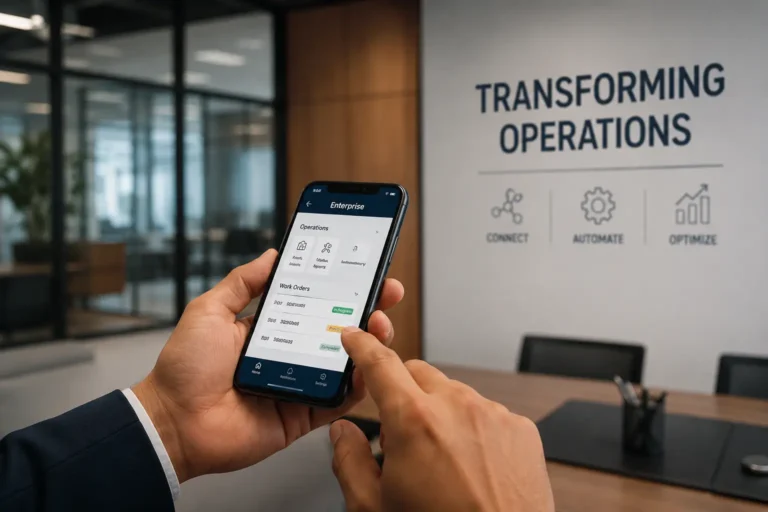
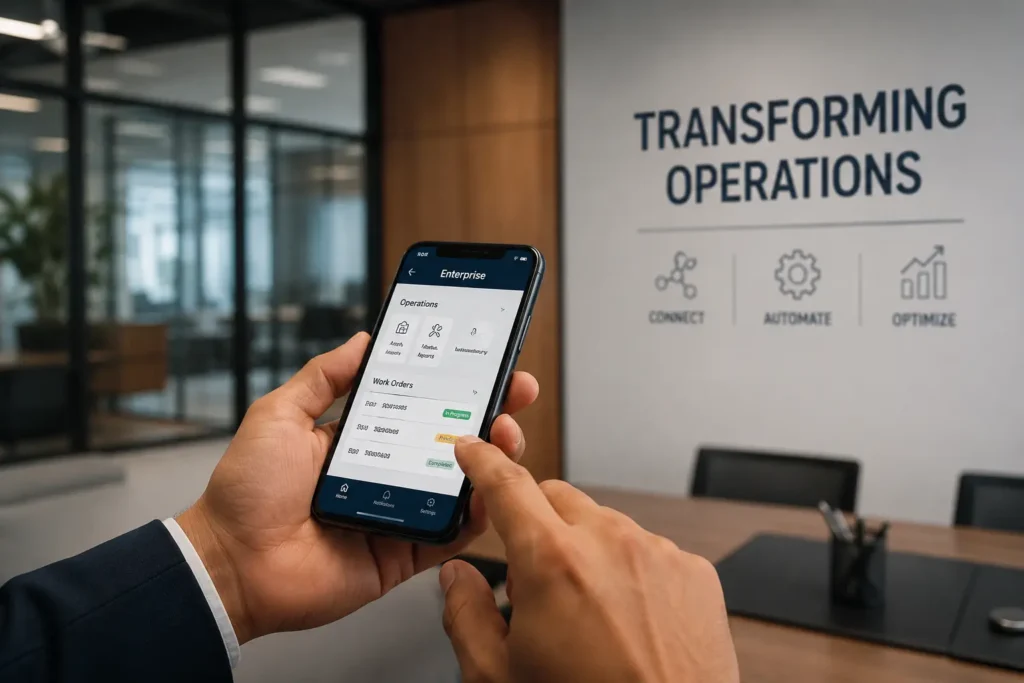
For example, sales representatives can update customer records, generate quotes, and track leads while meeting clients. Field technicians can access service histories, update work orders, and capture real-time data directly from their mobile devices.
By reducing dependency on desktop systems and manual processes, organizations can significantly improve operational efficiency.
A professional mobile app development company can design customized solutions that align with specific business workflows and operational goals, ensuring maximum productivity gains.
Streamlining Internal Communication
Communication plays a critical role in business success. However, many organizations still struggle with fragmented communication systems that slow down decision-making and create information silos.
Enterprise mobile applications provide centralized communication platforms where employees can:
Exchange messages
Share files
Collaborate on projects
Receive real-time updates
Participate in video conferences
These capabilities enable teams to stay connected regardless of location, improving collaboration and reducing delays.
In 2026, organizations are increasingly integrating AI-powered communication features into enterprise apps, allowing employees to receive automated notifications, task recommendations, and intelligent workflow suggestions.
🌟 You might also like: GE Translator
Improving Customer Experience
Customer expectations continue to evolve. Modern consumers expect personalized, seamless, and responsive experiences across every interaction.
Enterprise mobile applications empower businesses to meet these expectations by providing employees with instant access to customer information and operational data.
For example:
Customer support teams can resolve issues faster.
Sales teams can provide personalized recommendations.
Service teams can respond more effectively to customer requests.
Managers can monitor customer satisfaction metrics in real time.
Businesses that invest in enterprise mobility often experience higher customer retention rates, improved satisfaction scores, and increased revenue opportunities.
Partnering with an experienced mobile app development company allows organizations to build customer-centric solutions that enhance engagement and strengthen brand loyalty.
Real-Time Data Access and Analytics
Data-driven decision-making has become a key competitive advantage in 2026.
Enterprise mobile applications provide executives and employees with real-time access to critical business data, enabling faster and more informed decisions.
Modern enterprise apps often include:
Interactive dashboards
Business intelligence tools
Predictive analytics
KPI monitoring
Automated reporting
With real-time visibility into operations, organizations can quickly identify opportunities, address challenges, and optimize performance.
For example, manufacturing companies can monitor production metrics, logistics firms can track shipments, and healthcare providers can access patient information instantly.
A skilled mobile app development company can integrate advanced analytics and reporting features that transform raw data into actionable business insights.
🌟 You might also like: AI Product Recommendations
Automating Business Processes
Automation is one of the biggest drivers of enterprise app adoption.
Manual processes consume valuable time, increase operational costs, and create opportunities for human error. Enterprise mobile applications automate repetitive tasks, allowing employees to focus on higher-value activities.
Common automation use cases include:
Approval workflows
Expense management
Inventory tracking
Employee onboarding
Task assignments
Customer support requests
Automation not only improves efficiency but also ensures consistency and compliance across business operations.
Organizations implementing mobile-first automation strategies often report significant improvements in productivity and cost savings.
Strengthening Data Security
As cyber threats continue to evolve, security remains a top priority for enterprises.
Enterprise mobile applications are designed with advanced security features that protect sensitive business information.
These features often include:
Multi-factor authentication
End-to-end encryption
Secure APIs
Role-based access controls
Biometric authentication
Device management capabilities
A trusted mobile app development company follows industry best practices and security standards to ensure enterprise applications remain protected against emerging threats.
In industries such as healthcare, finance, and government, robust security measures are essential for maintaining compliance and protecting customer trust.
🌟 You might also like: Best Tools to Grow Your Business
Supporting Remote and Hybrid Workforces
Remote and hybrid work environments are now permanent components of modern business operations.
Enterprise mobile applications provide employees with secure access to business systems regardless of location.
Whether team members are working from home, traveling, or operating in the field, mobile apps ensure uninterrupted access to:
Business data
Collaboration tools
Customer information
Workflow management systems
This flexibility enables organizations to maintain productivity while supporting employee work-life balance.
Companies that embrace mobile-first workplace strategies are often better positioned to attract and retain top talent.
Industry-Specific Enterprise Mobile Applications
Enterprise mobility is transforming virtually every industry.
Healthcare
Healthcare organizations use mobile apps for:
- Patient management
- Telemedicine
- Appointment scheduling
- Electronic health records
Financial Services
Financial institutions leverage enterprise apps for:
- Secure transactions
- Customer relationship management
- Compliance monitoring
- Fraud detection
Manufacturing
Manufacturers utilize mobile applications for:
- Inventory management
- Quality control
- Equipment monitoring
- Workforce coordination
Retail
Retail businesses implement enterprise apps for:
- Order management
- Customer engagement
- Inventory tracking
- Omnichannel operations
The versatility of enterprise mobility makes it a valuable investment across diverse business sectors.
🌟 You might also like: Google Tools for Website Owners
The Role of AI in Enterprise Mobile Apps
Artificial intelligence is reshaping enterprise mobility in 2026.
AI-powered mobile applications help businesses:
Predict customer behavior
Automate routine tasks
Improve decision-making
Personalize user experiences
Enhance operational efficiency
Features such as intelligent chatbots, predictive analytics, voice assistants, and automated recommendations are becoming standard components of enterprise applications.
Organizations that combine AI capabilities with enterprise mobility gain a significant competitive advantage in today’s digital marketplace.
Choosing the Right Mobile App Development Company
The success of an enterprise mobile application largely depends on the expertise of the development partner.
When selecting a mobile app development company, businesses should evaluate:
Industry experience
Technical expertise
Security capabilities
Portfolio of enterprise projects
Scalability solutions
Post-launch support
A reliable development partner understands business objectives and creates solutions that align with long-term growth strategies.
Rather than building generic applications, leading development companies focus on delivering customized enterprise solutions that drive measurable business outcomes.
Conclusion
Enterprise mobile applications are transforming business operations in ways that were unimaginable just a few years ago. From improving employee productivity and customer experiences to automating workflows and enabling real-time decision-making, mobile technology has become a critical component of modern enterprise success.
As organizations continue to embrace digital transformation in 2026, enterprise mobility will play an even greater role in shaping business growth, innovation, and competitive advantage.
Businesses looking to maximize these opportunities should partner with an experienced mobile app development company that can design secure, scalable, and future-ready enterprise applications. With the right strategy and technology partner, enterprise mobile apps can become a powerful catalyst for operational excellence and long-term business success.
🔷 One post is never the full picture. Follow Milyom for the rest.