
Introduction
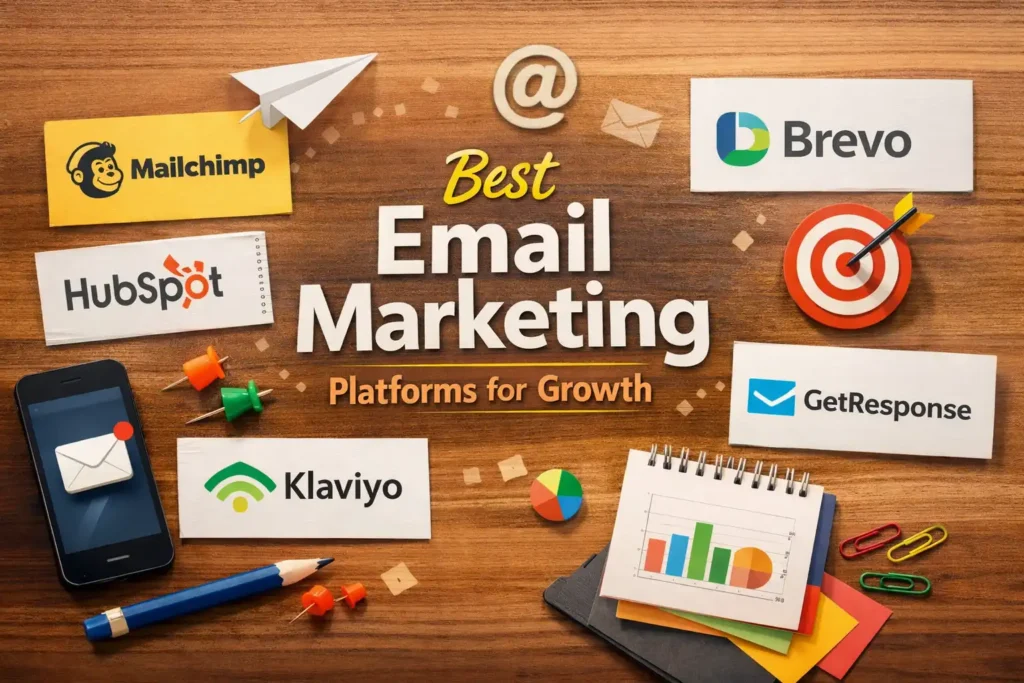
Email marketing remains one of the most effective digital marketing strategies for businesses that want consistent growth. While social media and paid ads change constantly, email provides a direct and reliable way to communicate with your audience. Companies use email campaigns to nurture leads, promote products, and build long-term relationships with customers. Studies often show that email marketing delivers one of the highest returns on investment among digital channels. Platforms like Mailchimp, HubSpot, and Klaviyo help businesses automate campaigns, personalize messages, and analyze performance. In this guide, we will explore the best platforms that help businesses scale their marketing efforts efficiently.
Quick Comparison of the Best Email Marketing Platforms for Growth
Choosing the right email marketing platform can feel overwhelming because so many tools offer similar features. A quick comparison helps you understand which platform fits your needs before diving deeper into each option. Factors such as pricing, automation capabilities, integrations, and ease of use play a major role in selecting the right tool. Some platforms are designed for beginners, while others focus on advanced automation and data analysis for growing companies. In the comparison below, we highlight the five best email marketing platforms for growth, including what they are best for, their starting price, major features, and whether they offer a free plan.
| Platform | Best For | Starting Price | Key Features | Free Plan |
| Mailchimp | Beginners & small businesses | $13/month | Templates, automation, analytics | Yes |
| HubSpot | All-in-one marketing | Free / Paid plans | CRM, automation, segmentation | Yes |
| Klaviyo | E-commerce businesses | Free / Paid plans | Advanced segmentation, automation | Yes |
| Brevo | Budget-friendly marketing | Free / Paid plans | Email + SMS campaigns | Yes |
| GetResponse | Automation & funnels | $19/month | Marketing automation, landing pages | Yes |
What Makes an Email Marketing Platform Good for Growth
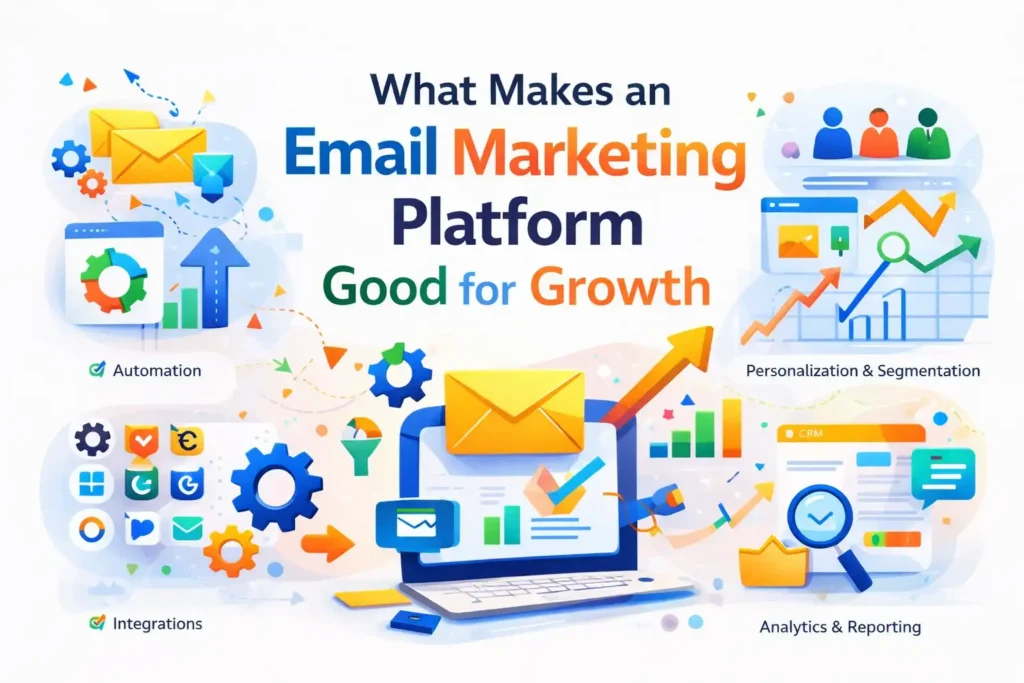
A powerful email marketing platform does more than just send newsletters. Businesses that want to grow need tools that automate campaigns, segment audiences, and analyze performance. The right platform should help marketers save time while improving customer engagement and conversion rates. Features like automation workflows, detailed analytics, and CRM integrations allow companies to build smarter campaigns and scale their marketing strategies. In addition, ease of use and reliable deliverability are critical because even the best campaigns fail if emails never reach the inbox. Below are the key features that define a high-quality email marketing platform designed for long-term business growth.
Automation Capabilities
Automation is one of the most valuable features of modern email marketing platforms. It allows businesses to send targeted messages automatically based on customer behavior, such as sign-ups, purchases, or website activity. Automated workflows help nurture leads and guide them through the sales funnel without manual effort. This improves efficiency and ensures that customers receive relevant messages at the right time.
Email Deliverability and Reliability
Deliverability refers to the ability of an email platform to place messages in the recipient’s inbox instead of the spam folder. Reliable platforms maintain strong sender reputations and follow industry best practices to improve inbox placement. High deliverability rates are critical because even well-written campaigns are ineffective if subscribers never receive them.
Personalization and Segmentation
Modern email marketing focuses heavily on personalization. Platforms that allow advanced segmentation enable businesses to send tailored messages based on demographics, purchase history, or user behavior. Personalized emails feel more relevant to readers, which often leads to higher open rates, better engagement, and stronger customer relationships over time.
Analytics and Reporting
Data plays a crucial role in improving marketing performance. Good email marketing platforms provide detailed analytics, including open rates, click-through rates, conversions, and subscriber growth. These insights help marketers understand what works and what needs improvement. By analyzing campaign data, businesses can refine their strategy and create more effective email campaigns.
Integrations with Other Marketing Tools
Businesses often rely on multiple tools for marketing, sales, and customer management. A strong email marketing platform integrates with CRM systems, ecommerce platforms, and analytics tools. Integrations make it easier to share data between systems and create more targeted campaigns based on real customer behavior and interactions.
Scalability for Growing Businesses
As a business grows, the need for marketing becomes tougher. A scalable email marketing platform supports larger subscriber lists, advanced automation, and deeper analytics. This flexibility allows companies to start small and gradually expand their campaigns without needing to switch platforms as their audience grows.
👉 You might also like: 5 Best Data Analytics Tools for Tech Businesses
5 Best Email Marketing Platforms for Growth
Selecting the right email marketing platform can significantly influence how effectively a business communicates with its audience. The best tools combine ease of use, automation features, and powerful analytics to help marketers build high-performing campaigns. Whether you run a small business, a startup, or a large e-commerce store, the right platform can streamline your marketing process and improve customer engagement. Below, we explore five of the best email marketing platforms that businesses commonly use to drive growth. Each platform offers unique strengths, making them suitable for different types of companies and marketing strategies.
1. Mailchimp – Best for Beginners and Small Businesses
Mailchimp is widely known as one of the most beginner-friendly email marketing platforms available today. It offers a clean interface, ready-to-use templates, and simple automation tools that make it easy for small businesses to launch campaigns quickly. Over the years, the platform has expanded its capabilities to include customer segmentation, analytics, and marketing automation features. Because of its accessible pricing and user-friendly design, Mailchimp is often the first email marketing tool many startups and entrepreneurs choose when building their audience.
Key Features
Mailchimp includes a wide range of features designed to simplify email marketing. These include pre-built email templates, automation workflows, audience segmentation, and campaign analytics. The platform also integrates with many e-commerce systems and CRM tools, making it easier for businesses to manage customer data and run targeted campaigns.
Best Use Cases
Mailchimp works best for startups, bloggers, and small businesses that want a simple yet effective email marketing solution. Companies that are new to email marketing often appreciate its intuitive interface and ready-to-use templates, which make campaign creation quick and straightforward.
2. HubSpot – Best All-in-One Marketing Platform
HubSpot is widely recognized as an all-in-one marketing solution that combines email marketing, CRM, automation, and analytics in a single platform. Unlike many standalone email tools, HubSpot focuses on connecting marketing with sales and customer relationship management. This integration allows businesses to track customer interactions across multiple channels and create highly personalized email campaigns. Because of its advanced capabilities, HubSpot is often used by growing businesses that want a centralized platform to manage marketing activities, nurture leads, and improve customer engagement throughout the entire sales funnel.
Key Features
HubSpot includes advanced automation tools, a built-in CRM, detailed analytics dashboards, and customizable email templates. The platform also offers lead tracking and segmentation features that help marketers create personalized customer journeys and nurture leads through automated workflows.
Best Use Cases
HubSpot is ideal for businesses that want a complete marketing ecosystem rather than just an email tool. Companies focused on inbound marketing, lead nurturing, and sales alignment often benefit most from the platform’s integrated features.
👉 You might also like: What Is Eporer? Complete 2026 Guide
3. Klaviyo – Best for E-commerce Businesses
Klaviyo is widely recognized as one of the most powerful email marketing platforms for e-commerce brands. Unlike many general email tools, Klaviyo focuses heavily on customer data and behavior tracking, allowing businesses to create highly personalized campaigns. Online stores can use the platform to send product recommendations, abandoned cart reminders, and post-purchase follow-ups automatically. Its strong integration with e-commerce platforms makes it easier for businesses to understand customer activity and build targeted email strategies. Because of its advanced segmentation and automation features, Klaviyo is often the preferred choice for growing online stores that want to increase customer lifetime value.
Key Features
Klaviyo provides advanced segmentation, automated email flows, SMS marketing, and detailed analytics. Businesses can create automated campaigns such as abandoned cart emails, product recommendations, and post-purchase follow-ups. The platform also offers deep integrations with e-commerce platforms, making it easy to track customer activity and personalize marketing messages.
Best Use Cases
Klaviyo works best for e-commerce businesses that want to build personalized marketing campaigns using customer data. Online stores that rely on automated product recommendations, abandoned cart emails, and lifecycle marketing campaigns often benefit the most from Klaviyo’s advanced automation capabilities.
4. Brevo – Best Budget-Friendly Email Marketing Platform
Brevo is a very famous email marketing tool known for its affordability and useful marketing features. The platform, previously called Sendinblue, combines email marketing, SMS campaigns, and automation tools in a single dashboard. This makes it a good option for small businesses that want multiple communication channels without paying for several tools. Brevo also focuses on simple campaign management and reliable email delivery. Because of its flexible pricing and useful automation capabilities, many startups and small businesses choose Brevo when they want an affordable platform that still offers professional marketing features.
Key Features
Brevo offers email campaign management, SMS marketing, automation workflows, and detailed reporting tools. The platform also includes a drag-and-drop email editor, contact segmentation, and marketing automation features that allow businesses to send personalized campaigns based on user activity.
Best Use Cases
Brevo is ideal for startups, freelancers, and small businesses that want a cost-effective email marketing solution. Companies that need both email and SMS marketing tools in one platform often find Brevo particularly useful for managing customer communication efficiently.
👉 You might also like: Meaimee 3: AI Productivity Tool for Teams & Creators
5. GetResponse – Best for Automation and Marketing Funnels
GetResponse is a versatile marketing platform that goes beyond traditional email campaigns. In addition to email marketing, the platform includes marketing automation, landing pages, and sales funnel tools. These features allow businesses to manage the entire customer journey from lead generation to conversion. GetResponse is particularly popular among marketers who want to create automated funnels that guide prospects through different stages of the buying process. Because of its powerful automation features and built-in marketing tools, GetResponse works well for businesses focused on scalable digital marketing strategies.
Key Features
The platform includes advanced automation workflows, email campaign management, landing page builders, and webinar hosting features. Marketers can also use GetResponse to build automated sales funnels that guide potential customers through a structured conversion journey.
Best Use Cases
GetResponse is best suited for marketers, online educators, and businesses that want to build automated marketing funnels. Companies focused on lead generation and conversion optimization often benefit from the platform’s integrated marketing tools and automation features.
Key Features to Look for in an Email Marketing Platform
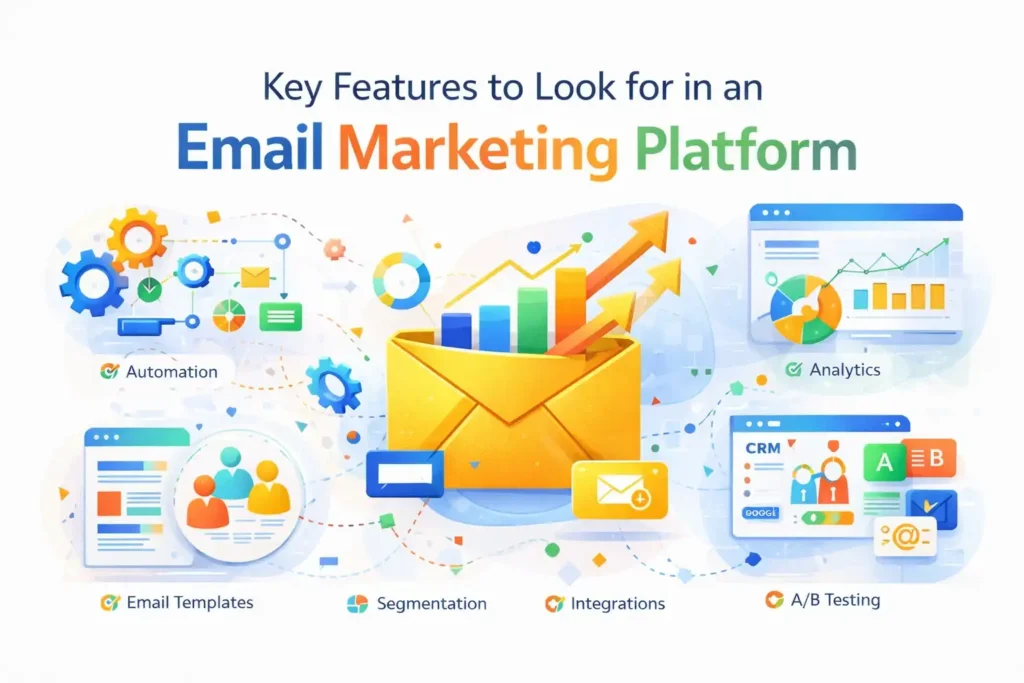
When choosing an email marketing platform, it is important to focus on features that support long-term business growth rather than just basic email sending. Modern marketing tools offer advanced capabilities such as automation, segmentation, analytics, and integration with other platforms. These features help businesses create more personalized campaigns and understand customer behavior more effectively. The right platform should simplify campaign management while providing the flexibility needed to scale marketing efforts. Below are several important features businesses should evaluate before selecting an email marketing platform that aligns with their marketing goals and long-term growth strategy.
Drag-and-Drop Email Builder
A drag-and-drop email builder allows marketers to design professional emails without needing coding skills. These editors typically include customizable templates, visual content blocks, and layout options. This makes it easier for businesses to create visually appealing campaigns quickly while maintaining brand consistency across all marketing emails.
Advanced Marketing Automation
Automation allows businesses to send emails automatically based on customer behavior and predefined triggers. Examples include welcome emails, abandoned cart reminders, and follow-up campaigns. Automation saves time while ensuring that customers receive relevant messages during different stages of their relationship with a brand.
Audience Segmentation
Segmentation helps businesses organize subscribers into groups based on demographics, interests, or behavior. By sending targeted messages to specific segments, marketers can improve engagement and relevance. Personalized campaigns often achieve higher open rates and better conversion results compared with generic email broadcasts.
A/B Testing
A/B testing allows marketers to compare different versions of an email campaign to determine which performs better. Businesses can test subject lines, call-to-action buttons, or design layouts. These insights help marketers refine campaigns and gradually improve performance through data-driven experimentation.
Email Templates and Design Tools
Professional email templates simplify campaign creation by providing ready-made designs that marketers can customize. Good design tools also ensure that emails display correctly across different devices and email clients. This improves user experience and helps maintain a consistent brand image.
CRM and Integration Capabilities
Integration with CRM systems and other marketing tools allows businesses to share customer data across platforms. This helps marketers create more personalized campaigns based on customer interactions, purchase history, and engagement behavior. Strong integrations streamline workflows and improve marketing efficiency.
Benefits of Using Email Marketing Platforms for Business Growth
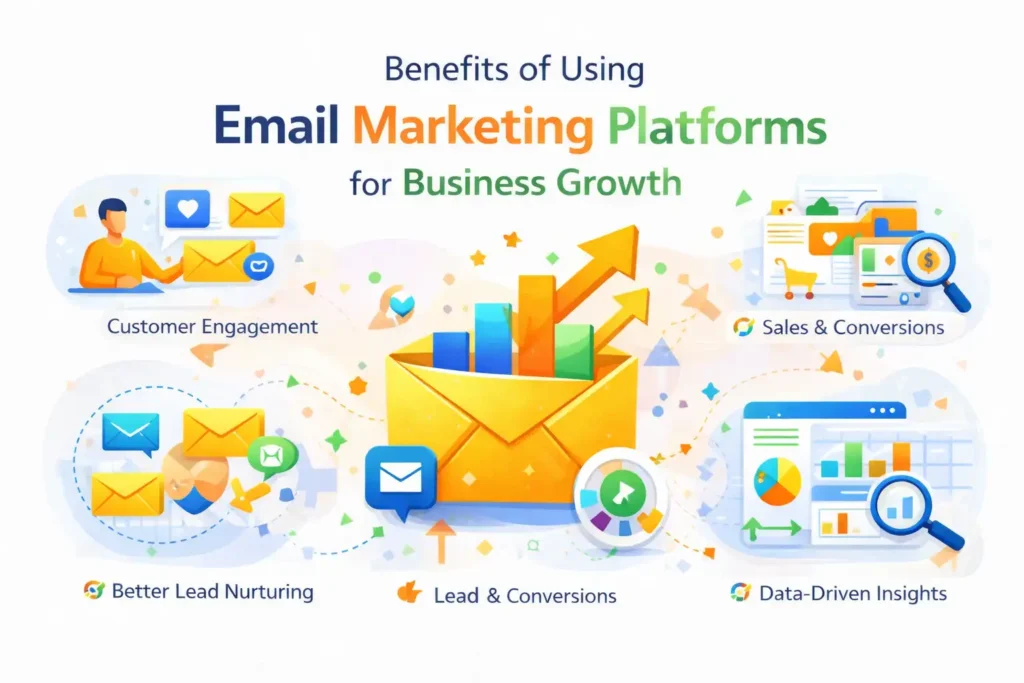
Email marketing platforms provide businesses with powerful tools to communicate with customers, nurture leads, and drive sales. Unlike many marketing channels, email offers a direct connection with an audience that has already shown interest in a brand. Modern platforms also provide automation, analytics, and personalization features that make campaigns more effective. By using the right email marketing platform, businesses can streamline their marketing processes and build stronger relationships with subscribers. Below are several key benefits that explain why email marketing remains a core strategy for companies focused on sustainable growth.
Higher Customer Engagement
Email marketing allows businesses to communicate directly with subscribers who have already shown interest in their brand. Personalized messages, promotions, and updates encourage readers to interact with content more frequently. This consistent engagement helps strengthen relationships between businesses and their customers over time.
Better Lead Nurturing
Lead nurturing involves guiding potential customers through the buying journey with helpful and relevant content. Automated email sequences make it easier to educate prospects, introduce products, and build trust gradually. Well-structured email campaigns can turn interested leads into loyal customers.
Increased Sales and Conversions
Email campaigns often play a major role in driving sales because they deliver targeted offers directly to interested subscribers. Businesses can promote products, share discounts, and recommend items based on customer behavior. These personalized messages frequently lead to higher conversion rates compared with generic marketing campaigns.
Data-Driven Marketing Decisions
Modern email platforms provide detailed analytics that reveal how subscribers interact with campaigns. Metrics such as open rates, click-through rates, and conversions help marketers evaluate performance. By studying these insights, businesses can refine their strategies and continuously improve their marketing results.
How to Choose the Right Email Marketing Platform
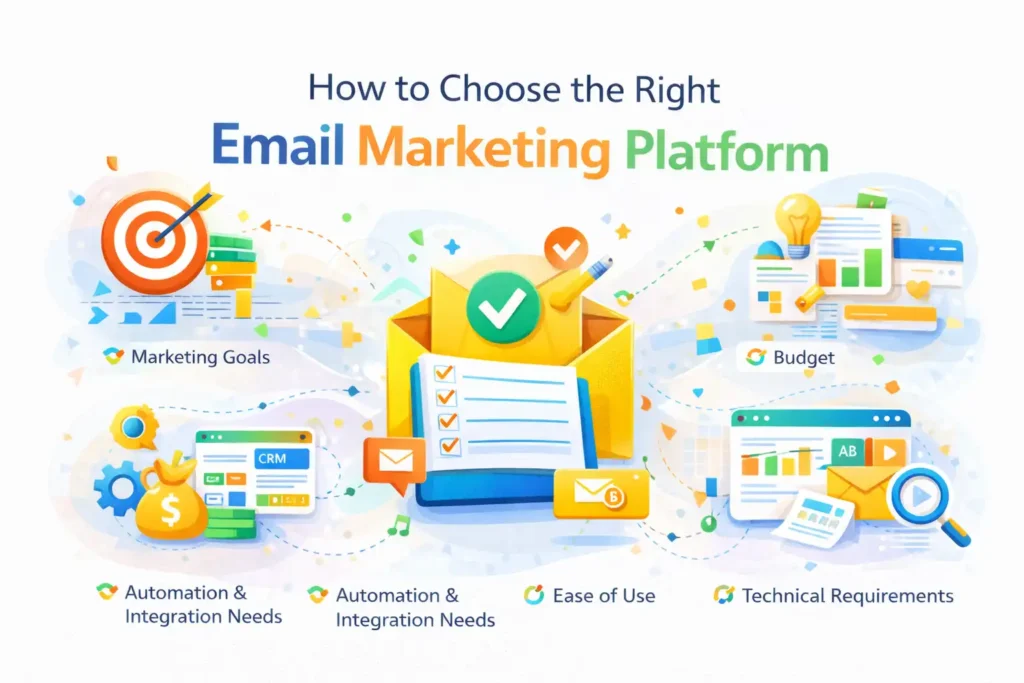
Selecting the right email marketing platform is an important decision that can directly affect your marketing results. Different platforms offer different strengths, so businesses should focus on their specific needs before making a choice. Some companies require advanced automation and CRM integration, while others simply need an easy tool to send newsletters. It is also important to consider factors such as pricing, scalability, analytics, and integration with other marketing tools. Platforms like Mailchimp, HubSpot, and Klaviyo offer different capabilities designed for various types of businesses. Evaluating your goals, budget, and technical requirements can help you choose a platform that supports long-term marketing growth.
Identify Your Marketing Goals
Before choosing an email marketing platform, businesses should clearly define their marketing objectives. Some companies focus on building brand awareness through newsletters, while others prioritize lead generation and sales automation. Understanding your primary goals helps narrow down the available options and ensures the selected platform provides the features necessary to support your marketing strategy.
Consider Your Budget
Budget is an important factor when selecting an email marketing platform. Many tools offer free plans or entry-level packages, but costs can increase as your subscriber list grows. Businesses should review pricing structures carefully and ensure the platform provides good value for the features offered while remaining sustainable as marketing needs expand.
Check Automation and Integration Needs
Modern marketing strategies often rely on automation and integration with other tools. Businesses should evaluate whether a platform supports automated email workflows and connects easily with CRM systems, e-commerce platforms, or analytics tools. Strong integrations help marketers create personalized campaigns based on real customer data and behavior.
Evaluate Ease of Use
Ease of use can greatly influence how effectively a team manages email campaigns. Platforms with intuitive dashboards, drag-and-drop editors, and simple campaign management tools allow marketers to create and send emails quickly. A user-friendly interface reduces the learning curve and improves productivity for marketing teams.
👉 You might also like: Top 5 Google Tools for Website Owners in 2026
Common Mistakes to Avoid When Choosing an Email Marketing Tool
Many businesses make the mistake of choosing an email marketing platform without fully evaluating their long-term needs. While a tool may appear attractive because of pricing or popularity, it may lack features that become important as the business grows. Understanding common mistakes can help marketers avoid costly platform changes later. Factors such as deliverability, automation capabilities, scalability, and pricing transparency should always be considered before committing to a tool. By evaluating these aspects carefully, businesses can select an email marketing platform that supports consistent growth and reliable marketing performance.
Ignoring Deliverability
Deliverability is one of the most critical aspects of email marketing. If emails consistently land in spam folders, even the best campaigns will fail. Businesses should research a platform’s deliverability reputation and ensure it follows industry best practices for maintaining strong sender credibility and inbox placement rates.
Choosing a Tool Without Automation
Automation helps marketers save time and maintain consistent communication with subscribers. Businesses that choose platforms without strong automation features often struggle to manage campaigns manually. Automated workflows such as welcome emails, follow-ups, and promotional sequences make marketing campaigns far more efficient.
Not Considering Scalability
Some platforms work well for small subscriber lists but struggle to support growing audiences. Businesses should ensure that the selected tool can scale as their email list and marketing needs expand. A scalable platform prevents the need for complicated migrations later.
Overlooking Hidden Costs
Pricing structures can sometimes appear simple at first, but include additional costs for advanced features, integrations, or higher subscriber limits. Businesses should review pricing details carefully and consider how costs may change as their marketing efforts grow over time.
Conclusion
Email marketing remains one of the most reliable and cost-effective ways for businesses to communicate with their audience and drive growth. The platforms discussed in this guide each offer unique strengths designed to support different types of marketing strategies. Tools like Mailchimp are well-suited for beginners and small businesses, while solutions such as HubSpot and Klaviyo provide advanced automation and data-driven marketing capabilities. Choosing the right platform depends on factors such as budget, business goals, and required features. By selecting a tool that aligns with your marketing strategy, businesses can build stronger customer relationships and scale their marketing efforts more effectively.
Frequently Asked Questions
What is the best email marketing platform for small businesses?
Many small businesses prefer beginner-friendly platforms that offer simple interfaces and affordable pricing. Tools like Mailchimp are popular because they provide easy campaign creation, automation features, and a free plan that helps startups start email marketing without a large investment.
Which email marketing tool is best for automation?
Businesses that need advanced automation often choose platforms with strong workflow builders and segmentation features. HubSpot and GetResponse are commonly used because they allow marketers to create automated campaigns based on customer behavior and engagement data.
Are there free email marketing platforms?
Yes, several email marketing platforms offer free plans with limited features. Platforms such as Mailchimp and Brevo provide free tiers that allow businesses to send emails to a small subscriber list while exploring basic marketing features.
How much does email marketing software cost?
The cost of email marketing software varies depending on the platform, number of subscribers, and available features. Basic plans may start around $10 to $20 per month, while advanced marketing platforms with automation and CRM integrations can cost significantly more as subscriber lists grow.
Which platform has the best deliverability?
Deliverability depends on several factors, including sender reputation, email content, and platform infrastructure. Well-established tools like Mailchimp and Klaviyo are known for maintaining strong deliverability standards and following industry best practices to help emails reach the inbox.
✨ Got value? Let’s keep the momentum, follow Milyom.