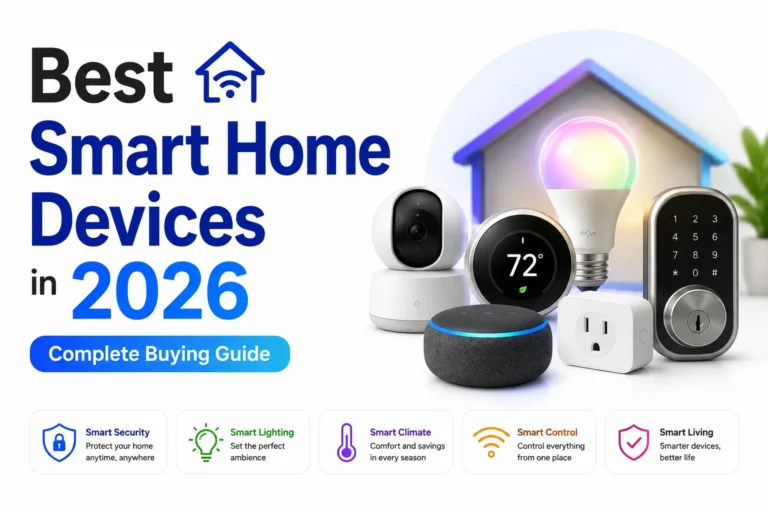
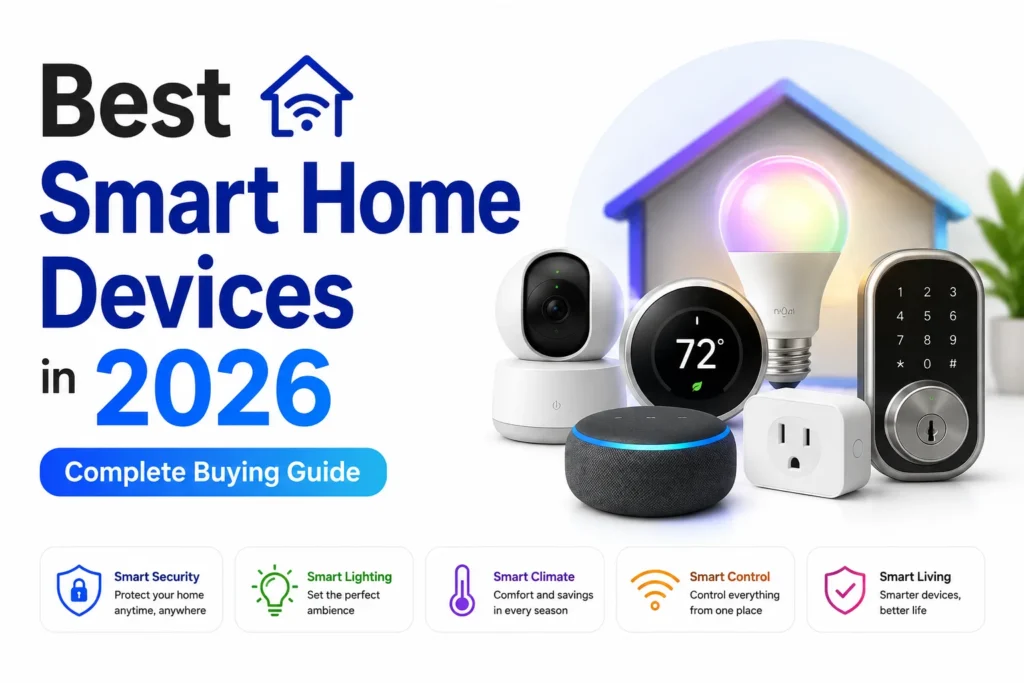

Best Smart Home Devices in 2026 | Complete Buying Guide
Smart home devices are internet-connected gadgets that automate, monitor, and control everyday household tasks through a smartphone app, voice assistant, or central hub. These devices improve convenience, strengthen home security, reduce energy consumption, and create a more personalized living experience. Thanks to AI-powered automation and the Matter connectivity standard, smart homes are more compatible than ever in 2026. According to the Connectivity Standards Alliance (CSA), Matter continues to simplify communication between devices from different brands, making smart home adoption easier for homeowners and first-time users alike.
How Smart Home Technology Works
Smart home technology connects devices through Wi-Fi, Zigbee, Z-Wave, Thread, Bluetooth, or Matter-enabled networks. These devices communicate with a smart hub or cloud service, allowing users to control them using mobile apps or voice assistants like Amazon Alexa, Google Assistant, and Apple Siri.
Key Components of a Smart Home Ecosystem
A complete smart home ecosystem typically includes smart speakers, displays, lighting, security cameras, video doorbells, smart locks, thermostats, plugs, sensors, and automation hubs. These devices work together through a shared platform, allowing centralized control and automated routines. The introduction of Matter has significantly improved cross-brand compatibility, reducing setup complexity and giving users greater flexibility when expanding their smart home systems.
Benefits of Using Smart Home Devices in 2026
Modern smart home devices offer more than convenience. They help improve security with real-time alerts, reduce electricity costs through energy automation, and enhance comfort with personalized routines. AI-driven features can learn user preferences, while smart thermostats and lighting systems optimize energy usage. Research from the International Energy Agency (IEA) shows that smart energy management technologies can contribute to lower residential energy consumption when combined with efficient household practices.
How We Selected the Best Smart Home Devices in 2026
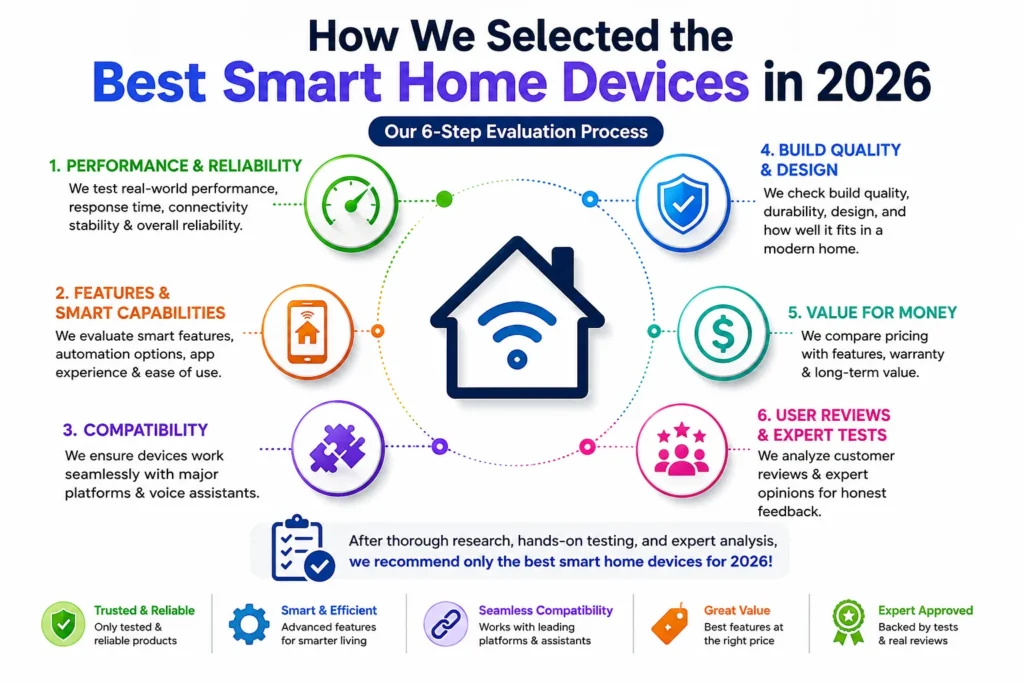
Choosing the best smart home devices requires more than comparing features. We evaluated products based on independent reviews, long-term reliability, real-world performance, security standards, software updates, ecosystem compatibility, and overall value. We also considered customer satisfaction, ease of installation, and future-proof technologies such as Matter support. Our recommendations prioritize devices from trusted brands with consistent firmware updates and strong privacy practices, ensuring every product delivers dependable performance and a better smart home experience in 2026.
Performance and Reliability
We selected devices with proven reliability, fast response times, stable connectivity, and consistent software performance. Products that maintained dependable operation during long-term testing and received positive user feedback ranked higher. Reliable smart devices minimize downtime, respond quickly to commands, and continue receiving firmware updates that improve functionality over time.
Smart Assistant Compatibility
Compatibility is essential for a connected home. We prioritized devices that support Amazon Alexa, Google Assistant, Apple HomeKit, and Matter. Multi-platform compatibility allows users to mix devices from different brands while maintaining a unified experience. Products supporting multiple ecosystems also provide greater flexibility for future smart home upgrades.
Security and Privacy Standards
We favored devices offering encrypted communication, two-factor authentication, secure cloud infrastructure, and regular security updates. Brands with transparent privacy policies and strong commitments to protecting user data received higher rankings because cybersecurity is critical in every connected home.
Ease of Installation and Daily Use
The best smart home devices should work without requiring advanced technical knowledge. We selected products with straightforward installation, intuitive mobile apps, clear setup instructions, and reliable automation features. Simple onboarding helps beginners build a smart home while allowing experienced users to create advanced routines with minimal effort.
Value for Money and Long-Term Support
A great smart device should provide lasting value beyond its purchase price. We compared hardware quality, software support, warranty coverage, feature updates, and ecosystem longevity. Products from manufacturers with strong customer support and regular firmware improvements were prioritized because long-term reliability offers a better overall investment for homeowners.
You might also like: Maximising Revenue with OB/GYN Medical Billing Services in Florida
Best Smart Home Devices in 2026 (Quick List)
The smart home market continues to evolve with faster AI automation, improved interoperability, and more energy-efficient devices. The following categories represent the best smart home devices to consider in 2026 based on performance, reliability, compatibility, and user experience. Whether you’re building your first smart home or upgrading an existing setup, these devices offer practical benefits for security, convenience, entertainment, and energy savings. Each category includes products designed to integrate smoothly with leading ecosystems while supporting the latest connectivity standards like Matter.
Best Smart Speakers
Smart speakers remain the heart of most connected homes. They enable voice control, automation, music streaming, reminders, and smart device management. Modern models feature improved microphones, AI-powered responses, and broader compatibility with Matter-enabled devices, making them ideal for controlling multiple smart home products through simple voice commands.
Best Smart Displays
Smart displays combine voice assistants with interactive touchscreens, allowing users to manage security cameras, calendars, recipes, video calls, and automation routines. Their visual interface simplifies smart home control and provides a central dashboard for monitoring connected devices, making them especially useful for families and busy households.
Best Smart Lighting Systems
Energy-efficient LED technology combined with occupancy detection and AI scheduling improves convenience while helping reduce electricity usage. Many modern lighting systems also support Matter for simplified cross-platform integration.
Best Smart Security Devices for Home Protection
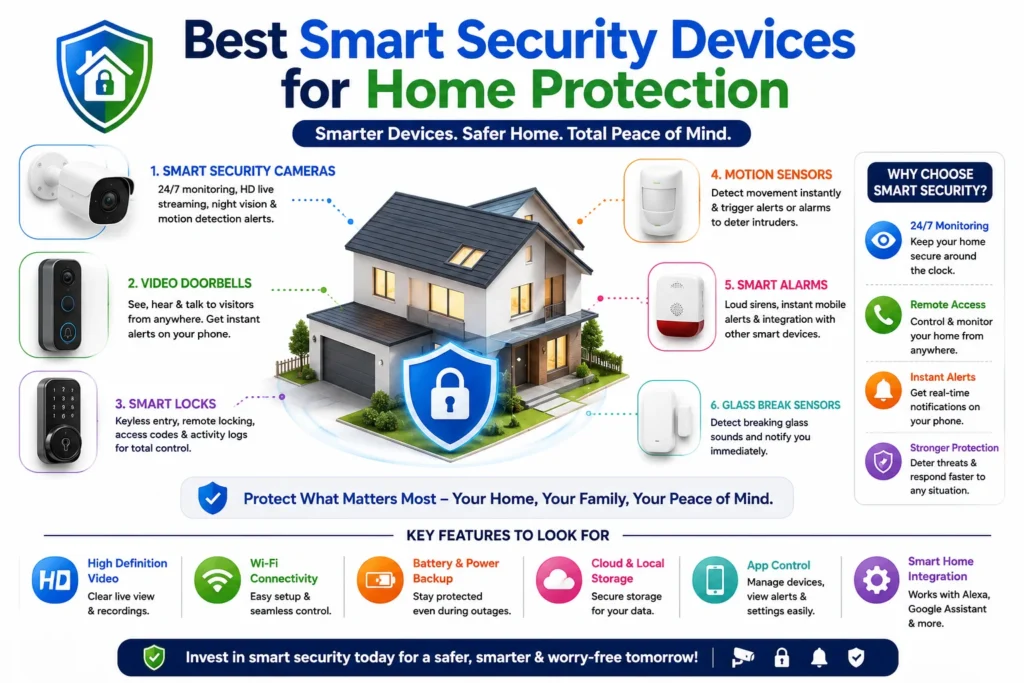
Smart security devices have become essential for protecting modern homes from theft, unauthorized access, and emergencies. Today’s systems use AI-powered detection, real-time alerts, cloud storage, and mobile monitoring to keep homeowners informed wherever they are. According to the FBI Crime Data Explorer, residential burglaries remain a significant concern, making proactive home security more important than ever. The best smart security devices combine reliable hardware, encrypted communication, and seamless integration with major smart home ecosystems, providing peace of mind without requiring professional installation or complicated maintenance.
Smart Security Cameras
Smart security cameras provide 24/7 surveillance with features like 2K or 4K video, color night vision, AI person detection, motion tracking, and cloud or local storage. Many cameras now distinguish between people, pets, vehicles, and packages to reduce false alerts. Choosing cameras with end-to-end encryption and Matter compatibility ensures stronger security and easier smart home integration.
Video Doorbells
Video doorbells let homeowners see, hear, and speak to visitors from anywhere using a smartphone. Advanced models include package detection, facial recognition, HDR video, and customizable motion zones. They improve front-door security while preventing missed deliveries, making them one of the most valuable additions to a modern smart home.
Smart Locks
Temporary digital keys allow secure access for guests, cleaners, or family members without compromising safety. Many models automatically lock when you leave and unlock when you arrive, adding convenience alongside enhanced home security.
Motion Sensors and Alarm Systems
Motion sensors detect unusual movement and instantly trigger notifications, alarms, or automated routines. Modern systems also include door and window sensors, glass-break detectors, and indoor sirens. Combined with smart cameras and lighting, they create a complete security network that responds quickly to potential threats while reducing unnecessary false alarms.
You might also like: 5 Best Job Opportunities in the AI Era
Best Smart Devices for Comfort, Lighting, and Energy Savings
Smart home technology isn’t just about convenience it also improves everyday comfort while helping reduce energy costs. Intelligent lighting, climate control, automated blinds, and connected power management create a more efficient living environment. According to the U.S. Department of Energy, smart thermostats and efficient lighting systems can help lower household energy consumption when used correctly. Investing in these devices allows homeowners to automate daily routines, improve indoor comfort, and support a more sustainable lifestyle without sacrificing convenience or performance.
Smart Light Bulbs and Light Strips
Smart lighting lets users control brightness, color temperature, and scheduling from anywhere. Many systems support millions of colors, voice commands, and automation based on sunrise, sunset, or occupancy. Energy-efficient LED technology helps reduce electricity consumption while creating personalized lighting scenes for work, entertainment, or relaxation.
Smart Thermostats
Smart thermostats automatically adjust heating and cooling based on occupancy, weather conditions, and user preferences. AI learning features optimize temperature schedules to improve comfort while lowering utility bills. Many models also provide detailed energy reports that help homeowners identify opportunities to improve efficiency throughout the year.
Smart Plugs and Power Management
Smart plugs transform traditional appliances into connected devices by enabling remote control, scheduling, and automation. They can monitor electricity usage, reduce standby power consumption, and automatically switch devices on or off based on routines. This simple upgrade offers an affordable entry point into smart home automation.
Smart Blinds and Curtains
Smart blinds automate natural lighting by opening and closing according to schedules, weather conditions, or sunlight intensity. They improve privacy, increase energy efficiency, and reduce heating or cooling costs by managing indoor temperatures naturally. Voice assistant compatibility makes daily operation effortless and convenient.
Best Smart Cleaning and Kitchen Devices
Automation has transformed household cleaning and kitchen management. Today’s smart appliances save time, improve hygiene, and reduce daily effort through AI navigation, intelligent scheduling, and remote control. From robot vacuums to connected kitchen appliances, these devices simplify everyday routines while integrating seamlessly into broader smart home ecosystems. The latest models also use machine learning to optimize performance, making them more efficient and reliable than previous generations while helping homeowners maintain cleaner, healthier living spaces with minimal manual intervention.
Robot Vacuum Cleaners
Robot vacuums use AI mapping, LiDAR navigation, and obstacle detection to clean floors with minimal supervision. Premium models automatically empty dust bins, recognise room layouts, and avoid furniture or pet waste. Scheduled cleaning routines ensure consistent maintenance while reducing the time spent on daily household chores.
Robot Mops
Robot mops complement vacuum cleaners by automatically washing hard floors using intelligent navigation and adjustable water flow. Advanced models identify different floor types, avoid carpets, and return to charging stations when finished. Together with robot vacuums, they provide a nearly hands-free floor cleaning solution.
Smart Air Purifiers
Smart air purifiers monitor indoor air quality in real time and automatically adjust fan speed based on pollution levels. HEPA filtration captures dust, pollen, smoke, and allergens, creating healthier indoor environments. Mobile apps also provide detailed air quality reports and maintenance reminders for filter replacement.
Smart Kitchen Appliances Worth Buying
Smart kitchen appliances include connected coffee makers, ovens, refrigerators, multicookers, and dishwashers that support remote control and automation. Features like recipe guidance, cooking notifications, inventory tracking, and voice control simplify meal preparation while improving convenience and reducing unnecessary energy consumption.
You might also like: Quick and Effective Car Maintenance Tips for Canterbury Drivers
How to Choose the Right Smart Home Devices
Selecting the right smart home devices depends on your budget, lifestyle, compatibility needs, and long-term goals. Rather than buying every gadget available, focus on products that solve everyday problems and integrate well with your preferred ecosystem. Consider software support, security updates, connectivity standards like Matter, and future expansion before making a purchase. Start with devices that provide the greatest everyday value, such as smart speakers, lighting, or security cameras. Expand your setup gradually as your needs grow. Investing in reliable products from trusted brands often reduces maintenance costs and improves long-term satisfaction compared to purchasing cheaper alternatives.
Choose a Compatible Smart Home Platform
Select a platform that matches your existing devices and preferred voice assistant. Amazon Alexa, Google Home, Apple HomeKit, and Matter-supported products offer different strengths. Staying within a compatible ecosystem simplifies automation, improves reliability, and makes future upgrades significantly easier.
Focus on Security and Privacy
Choose devices that receive regular firmware updates, support encrypted communication, and offer two-factor authentication. Reviewing a manufacturer’s privacy policy and security history helps ensure your personal information remains protected while reducing potential cybersecurity risks associated with connected home devices.
Wired vs Wireless Devices
Wireless devices are easier to install and ideal for most homeowners, while wired solutions typically provide greater reliability for permanent installations such as security cameras or alarm systems. Understanding the advantages of each option helps create a balanced and dependable smart home network.
Scalability for Future Upgrades
A smart home should continue growing with your changing needs. Choose devices that support Matter and receive long-term software updates to avoid compatibility problems. Scalable products make it easier to add new automation features, security devices, and energy-saving technologies without replacing your existing ecosystem.
Smart Home Setup Tips and Common Mistakes to Avoid
Setting up a smart home is easier than ever, but careful planning makes a significant difference in performance, security, and long-term reliability. A well-designed system minimizes connectivity issues, improves automation, and ensures all devices work together seamlessly. Before purchasing new gadgets, consider your Wi-Fi coverage, preferred smart home platform, and future expansion plans. Taking the time to build a solid foundation helps avoid compatibility problems, unnecessary expenses, and frustrating setup issues while creating a smart home that remains reliable and easy to manage for years to come.
Planning Your Smart Home Network
Begin by identifying which rooms and devices you want to automate. Choose a primary ecosystem such as Amazon Alexa, Google Home, or Apple HomeKit, then purchase compatible devices. If you’re planning a larger setup, prioritize Matter-enabled products to ensure better cross-brand compatibility and simplify future smart home expansion.
Optimizing Wi-Fi Coverage
A reliable Wi-Fi connection is essential for smooth smart home performance. Position your router centrally, upgrade to Wi-Fi 6 or Wi-Fi 6E if possible, and consider a mesh Wi-Fi system for larger homes. Strong signal coverage reduces delays, prevents disconnections, and improves automation reliability across all connected devices.
Creating Smart Automation Routines
Automation transforms individual smart devices into a truly intelligent home. Create routines that automatically adjust lighting, temperature, security, and appliances based on schedules, occupancy, or sunrise and sunset. AI-powered automation saves time, improves comfort, and reduces energy usage without requiring constant manual control.
Common Buying and Setup Mistakes
Other common mistakes include weak Wi-Fi coverage, overlooking privacy settings, and buying unnecessary gadgets. Planning your ecosystem before shopping helps avoid costly upgrades and ensures every device works together efficiently.
Future of Smart Home Technology in 2026 and Beyond
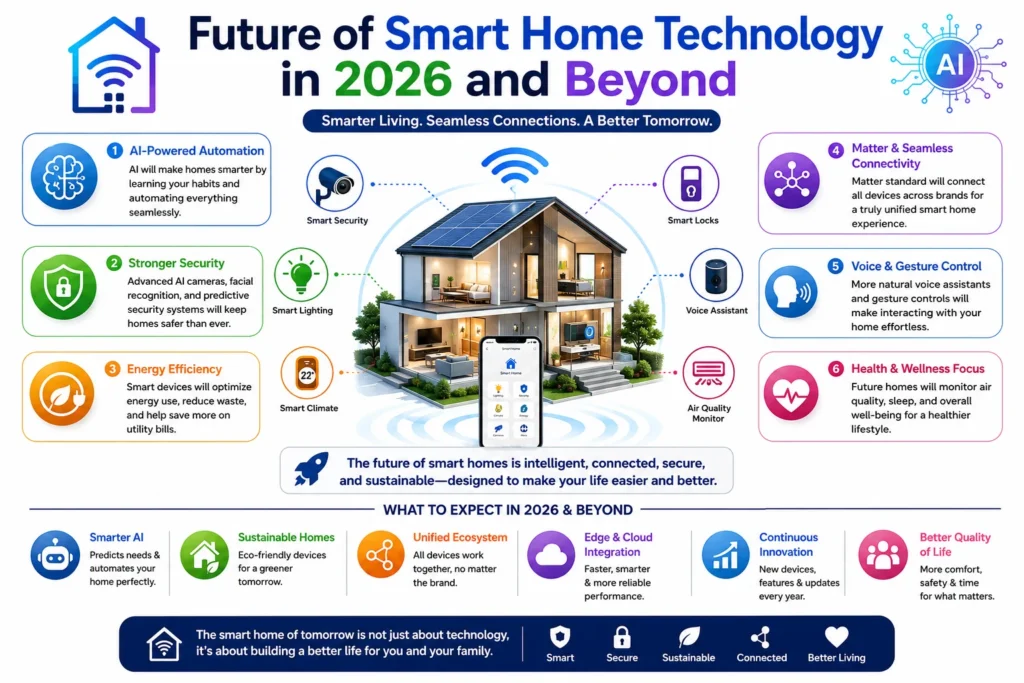
Smart home technology continues to evolve rapidly through artificial intelligence, faster connectivity, and improved interoperability. Future devices will become more proactive, learning user habits and making intelligent decisions with minimal manual input. The expansion of Matter, edge AI, and energy-efficient automation will create smarter, safer, and more sustainable homes. According to the Connectivity Standards Alliance (CSA), Matter adoption is expected to continue growing, enabling greater compatibility across manufacturers and making smart home technology more accessible for consumers worldwide.
AI-Powered Home Automation
Artificial intelligence is making smart homes more intelligent than ever. AI can learn daily routines, predict user preferences, and automatically adjust lighting, climate, security, and entertainment systems. Instead of simply responding to commands, future smart homes will anticipate household needs while improving efficiency and convenience.
Matter and Cross-Platform Compatibility
Matter has become one of the most important advancements in smart home technology. Developed by the Connectivity Standards Alliance, it enables devices from different manufacturers to communicate seamlessly. This universal standard reduces compatibility issues, simplifies setup, and gives consumers greater freedom when choosing products from multiple brands.
Energy-Efficient Smart Homes
Energy efficiency is becoming a top priority for homeowners. Smart thermostats, lighting systems, automated blinds, and connected power management help reduce unnecessary energy consumption. According to the International Energy Agency (IEA), intelligent energy management technologies can support lower household energy usage while improving overall sustainability and reducing utility costs.
Emerging Smart Home Trends
The next generation of smart homes will feature edge AI processing, predictive automation, health-monitoring sensors, advanced robotics, and improved cybersecurity. Voice assistants will become more conversational, while connected devices will rely less on cloud computing, delivering faster responses, enhanced privacy, and more reliable performance.
Final Buying Recommendations for 2026
Start with devices that solve your everyday needs, such as smart speakers, lighting, or security cameras. Choose products from trusted brands that support Matter and receive regular software updates.f
FAQs
Which smart home device is best?
There isn’t a single best smart home device for everyone. Smart speakers are an excellent starting point because they control multiple connected devices through voice commands. Security cameras, smart lighting, and smart thermostats are also among the most popular options, depending on your needs and budget.
Are smart home devices secure?
Yes, most modern smart home devices are secure when purchased from reputable brands. Keeping your devices updated and using strong passwords significantly improves overall security.
Do smart devices save energy?
Yes. Smart thermostats, lighting systems, and smart plugs help reduce unnecessary electricity usage through scheduling, occupancy detection, and automation. Studies from the U.S. Department of Energy show that intelligent energy management can contribute to lower household energy consumption.
Which smart assistant is best?
The best smart assistant depends on your ecosystem. Amazon Alexa offers broad device compatibility, Google Assistant excels at search and voice intelligence, while Apple HomeKit provides strong privacy and seamless integration for Apple users. Matter support now makes switching between ecosystems easier than ever.
Can beginners use smart home devices?
Absolutely. Many smart home devices are designed for beginners and include simple installation guides, user-friendly mobile apps, and automatic setup. Starting with a smart speaker or smart plug is an easy way to build your first smart home without technical experience.
Do smart home devices need Wi-Fi?
Most smart home devices rely on Wi-Fi for remote access and cloud features. However, some devices communicate using Zigbee, Z-Wave, Thread, or Matter through a smart hub. Certain automation features may continue working locally even if your internet connection is temporarily unavailable.
Are smart home devices worth it?
Yes. Smart home devices improve convenience, increase security, automate repetitive tasks, and help reduce energy costs. While the initial investment varies, many homeowners find that the long-term benefits, comfort, and efficiency make smart home technology a worthwhile upgrade.
What should I buy first?
If you’re new to smart home technology, start with a smart speaker or smart display as your central control hub. Then add smart lighting, security cameras, or smart plugs based on your priorities. This gradual approach keeps costs manageable while creating a scalable smart home ecosystem.
✨ Smart minds follow smart pages, hit follow on milyom.co.uk