
10 Proven Mobile App Development Tips That Save Time
Building a successful mobile app is no longer just about writing clean code. It requires smart planning, user-focused design, strong security, and continuous optimization from the very beginning. With millions of apps competing in the Apple App Store and Google Play Store, businesses must make every development decision count. Research from Google shows that users expect fast, secure, and intuitive mobile experiences, while poor performance often leads to app abandonment. This guide shares proven mobile app development tips that help reduce development time, improve app quality, and create better user experiences while following modern industry best practices.
Tip #1: Validate Your App Idea Before Writing Code
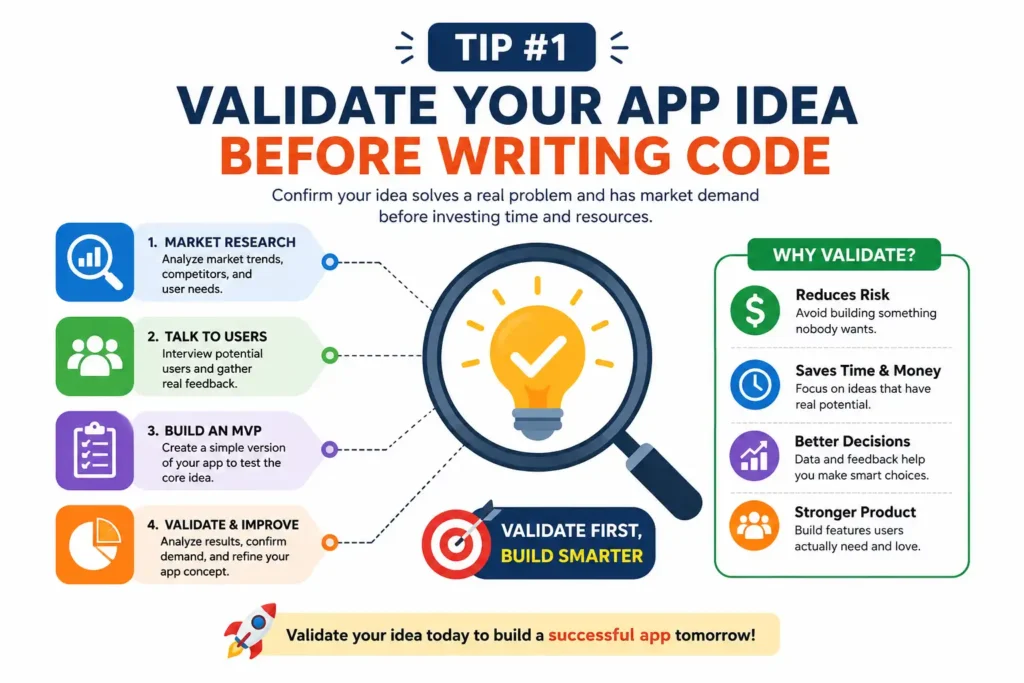
Before investing time and money in development, confirm that your app solves a real problem for a specific audience. Conduct market research, analyze competitors, interview potential users, and create a minimum viable product (MVP) to gather early feedback. According to CB Insights, one of the leading reasons startups fail is the lack of market demand, making validation an essential first step. Testing your concept before development reduces unnecessary revisions, improves product-market fit, and helps prioritize features users actually need. A validated idea creates a stronger foundation for faster, more efficient mobile app development.
Tip #2: Choose the Right Development Approach and Technology Stack
Selecting the right development approach affects both project timelines and long-term maintenance. Native development with Swift or Kotlin offers excellent performance, while cross-platform frameworks like Flutter and React Native can reduce development costs by sharing code across platforms. Evaluate your project goals, budget, scalability requirements, and target audience before deciding. Also consider backend technologies, cloud infrastructure, and database solutions that support future growth. A well-planned technology stack minimizes technical debt, simplifies updates, improves collaboration among developers, and accelerates the entire software development lifecycle.
📖 Read These Next: 5 Best Job Opportunities in the AI Era
Tip #3: Create a User-Centered UI/UX Design
Exceptional user experience plays a major role in app success because people quickly abandon confusing interfaces. Design every screen around user needs by creating clear navigation, readable typography, consistent layouts, and accessible interactions. Build wireframes and interactive prototypes before development to identify usability issues early. According to Google’s Material Design principles, intuitive interfaces reduce user friction and improve task completion. Regular usability testing with real users provides valuable insights that guide design improvements. A user-centered UI/UX increases engagement, customer satisfaction, retention rates, and overall app performance after launch.
Tip #4: Prioritize Performance from Day One
Performance optimization should begin during planning instead of becoming an afterthought. Efficient code architecture, optimized images, lazy loading, caching, and reduced network requests help deliver faster response times. Google research has consistently shown that users expect apps to load quickly, and delays increase abandonment rates. Monitor memory usage, battery consumption, startup speed, and API performance throughout development using reliable profiling tools. Fast applications create smoother user experiences, improve app store ratings, strengthen customer trust, and reduce long-term maintenance costs while supporting higher scalability as your user base grows.
Tip #5: Build Security into Every Stage of Development
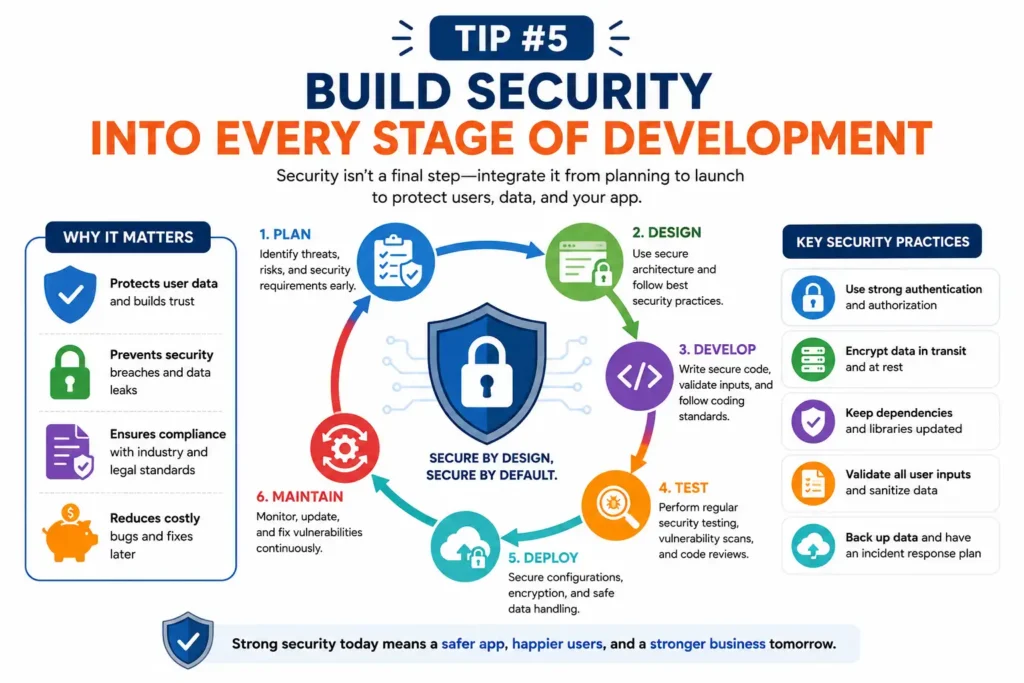
Security should be integrated throughout the software development lifecycle rather than added before release. Protect sensitive user information with strong encryption, secure authentication, role-based access controls, and regular vulnerability testing. Follow the OWASP Mobile Application Security Verification Standard (MASVS) to identify common mobile security risks and implement proven safeguards. Keep third-party libraries updated, validate all user inputs, and monitor for emerging threats continuously. A secure mobile application builds customer confidence, supports regulatory compliance, protects business reputation, and prevents costly security incidents that delay future growth.
Tip #6: Use Agile Development and Automation to Save Time
Agile development helps teams deliver high-quality mobile apps faster by breaking large projects into smaller, manageable sprints. Instead of waiting months for a finished product, developers release incremental updates, gather user feedback, and make continuous improvements. Automating repetitive tasks such as code testing, builds, and deployments further increases efficiency. According to the State of DevOps Report, organizations using continuous integration and continuous delivery (CI/CD) deploy updates more frequently with fewer failures. Combining Agile methodologies with automation improves collaboration, shortens development cycles, reduces costly errors, and accelerates overall project delivery.
📖 Read These Next: Most Profitable Small Business Ideas for Beginners
Tip #7: Test Early, Test Often, and Fix Issues Quickly
Quality assurance should begin as soon as development starts rather than waiting until the final release. Continuous testing helps identify bugs before they become expensive to fix and ensures every feature performs as expected. Combine manual testing with automated unit, integration, and UI testing to improve software reliability. Google’s Android development best practices recommend testing across multiple devices, operating systems, and screen sizes for consistent performance. Regular testing enhances app stability, improves user satisfaction, reduces post-launch issues, and helps maintain higher ratings on both the Apple App Store and Google Play Store.
Tip #8: Integrate Reliable APIs and Third-Party Services Carefully
Modern mobile applications often depend on APIs and third-party services for payments, authentication, maps, analytics, messaging, and cloud storage. Choosing trusted providers improves reliability, security, and long-term scalability. Before integrating any service, evaluate its documentation, performance, uptime history, security standards, pricing, and ongoing support. According to the OWASP API Security Project, insecure API implementations remain one of the leading cybersecurity risks for applications. Monitor API performance continuously, secure authentication tokens, and create backup strategies to minimize downtime if external services experience unexpected failures.
Tip #9: Plan for App Store Success Before Launch
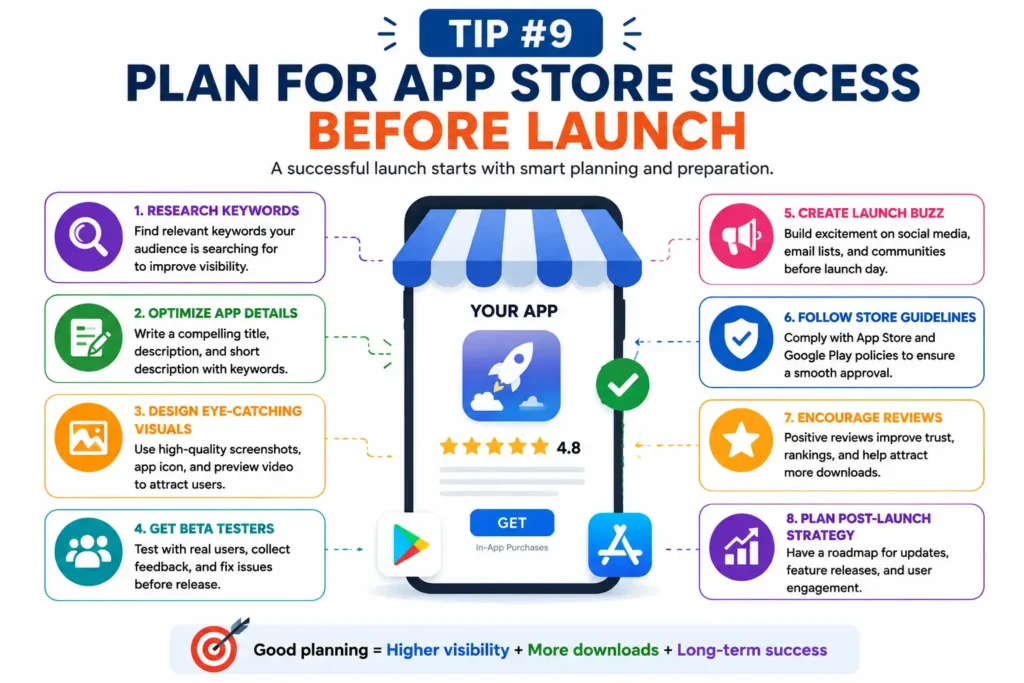
A successful launch begins long before submitting your application for review. Optimize your App Store Optimization (ASO) strategy by researching relevant keywords, writing compelling app descriptions, designing eye-catching screenshots, and creating an engaging preview video. Encourage beta testers to provide valuable feedback before release to identify remaining issues. Apple and Google both recommend following their official design and submission guidelines to improve approval chances. Strong ASO practices increase app visibility, attract qualified downloads, improve conversion rates, and give your mobile application a stronger competitive advantage from day one.
Tip #10: Measure, Improve, and Scale After Launch
Launching your app is only the beginning of its growth journey. Use analytics platforms such as Google Analytics for Firebase to monitor user behavior, engagement, retention, crash reports, and conversion rates. These insights reveal which features users value most and where improvements are needed. Regular updates based on real user feedback keep the application competitive and secure. As your audience grows, optimize infrastructure, improve server performance, and introduce scalable cloud solutions. Continuous measurement and improvement strengthen customer loyalty, increase long-term revenue, and support sustainable business growth.
Frequently Asked Questions
What is the most important step in mobile app development?
The most important step is validating your app idea before development begins. Understanding your target audience, researching competitors, and confirming market demand helps ensure your app solves a real problem. Early validation reduces development risks, prevents wasted resources, and increases the likelihood of building a successful mobile application that users genuinely want.
How can I reduce mobile app development time?
You can shorten development time by using Agile methodologies, automating testing and deployments, selecting the right technology stack, and building a minimum viable product (MVP) first. Reusing reliable APIs, maintaining clear project requirements, and gathering continuous user feedback also help eliminate unnecessary revisions and speed up the overall development process.
Should I choose native or cross-platform app development?
The right choice depends on your business goals, budget, and performance requirements. Native development delivers the best speed and platform-specific experience, while cross-platform frameworks like Flutter and React Native reduce costs by sharing code across iOS and Android. Evaluate your project’s complexity, scalability, and long-term maintenance needs before deciding.
Why is UI/UX important for a mobile app?
A well-designed UI/UX improves usability, keeps users engaged, and encourages them to return. Clean navigation, fast interactions, and intuitive layouts create a positive user experience that increases retention and customer satisfaction. Strong UI/UX design also contributes to better app store ratings, higher conversions, and improved overall business performance.
How often should a mobile app be updated?
Mobile apps should be updated regularly based on user feedback, security requirements, operating system changes, and new feature releases. Many successful apps publish updates every few weeks or months to fix bugs, improve performance, and introduce enhancements. Consistent updates help maintain compatibility, strengthen security, and improve user satisfaction over time.
What tools help speed up mobile app development?
Popular development tools include Flutter, React Native, Android Studio, Xcode, Firebase, GitHub Actions, Jenkins, and Docker. These platforms support faster coding, automated testing, continuous integration, cloud services, and performance monitoring. Using modern development tools improves collaboration, reduces manual work, and accelerates the delivery of high-quality mobile applications.
📖 Read These Next: Email Marketing Best Practices for Higher Conversions
Conclusion
Developing a successful mobile app requires more than technical expertise. It demands careful planning, user-focused design, strong security, continuous testing, and ongoing optimization throughout the development lifecycle. By applying these ten proven mobile app development tips, you can reduce development time, avoid common mistakes, and deliver a faster, more secure, and engaging application. Remember that the most successful apps continue evolving after launch through regular updates, data-driven improvements, and user feedback. Following these best practices will help your mobile app remain competitive, scalable, and valuable in today’s rapidly changing digital marketplace.
✨ Your daily tech edge starts here. Follow Milyom.