
Matte vs Gloss Flat Panel Cabinets: Which Finish Should You Choose?
Flat-panel cabinets are known for their smooth doors, straight lines, and simple appearance. They can give a kitchen a contemporary look without relying on decorative frames, raised panels, or detailed molding. However, selecting the door style is only one part of the decision. Homeowners must also choose between matte, gloss, and other available surface finishes.
Matte and gloss finishes can make the same cabinet design look completely different. Matte cabinets create a softer and more understated effect, while gloss cabinets reflect light and produce a polished appearance. The right option depends on the kitchen’s lighting, size, color scheme, household activity, and cleaning preferences.
This decision is particularly important in Milwaukee, where kitchens range from compact rooms in older homes to spacious open-concept layouts. A finish that looks attractive in a showroom may respond differently to the light and surrounding materials inside the actual kitchen.
What Are Flat-Panel Cabinets?
Flat-panel cabinets have smooth doors without recessed center panels, raised sections, or decorative framing. They are also commonly described as slab-style cabinets because each door appears as one uninterrupted surface.
The term “flat panel” describes the profile of the cabinet door. Matte and gloss refer to the amount of light reflected by its surface. As a result, the same flat-panel door can come in a variety of colors, materials, textures, and finishes.
The simple design makes several construction details more noticeable. Door alignment, edge quality, surface consistency, hardware placement, and the gaps between doors must all be carefully considered. There are fewer decorative features to conceal uneven lines or installation problems.
Why Finish Matters When Choosing Custom Cabinets
The cabinet finish affects more than the kitchen’s appearance. It influences how colors respond to light, how easily fingerprints can be seen, how the cabinets coordinate with countertops, and how frequently the doors may need cleaning.
When planning custom kitchen cabinets, homeowners can coordinate the finish with the door dimensions, hardware, interior storage, lighting, and room layout. This creates a more complete design than choosing the cabinet color and surface sheen separately.
However, sheen does not determine cabinet quality by itself. The cabinet-box construction, door material, edge treatment, surface application, hinges, drawer slides, and installation quality all contribute to long-term performance. Homeowners should compare complete cabinet specifications instead of evaluating products only by their visible finish.
What Is a Matte Cabinet Finished?
A matte finish has a low level of reflection. Rather than creating strong reflections of windows, fixtures, or nearby objects, the surface absorbs more light, resulting in a softer and more subtle appearance.
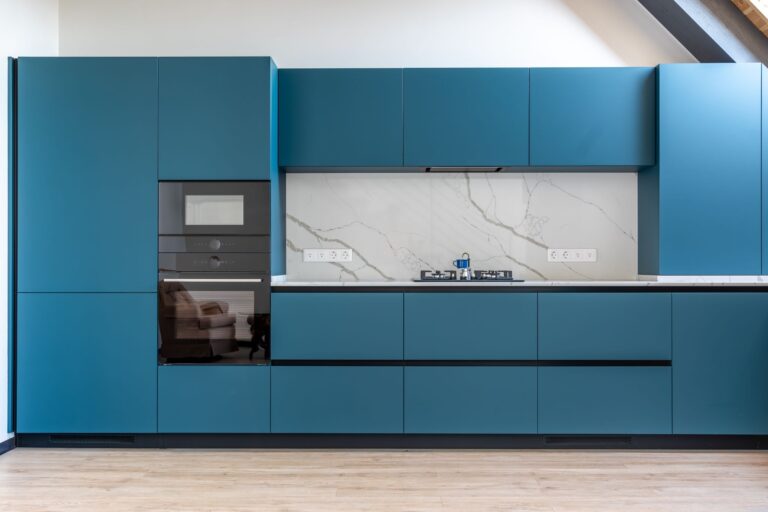
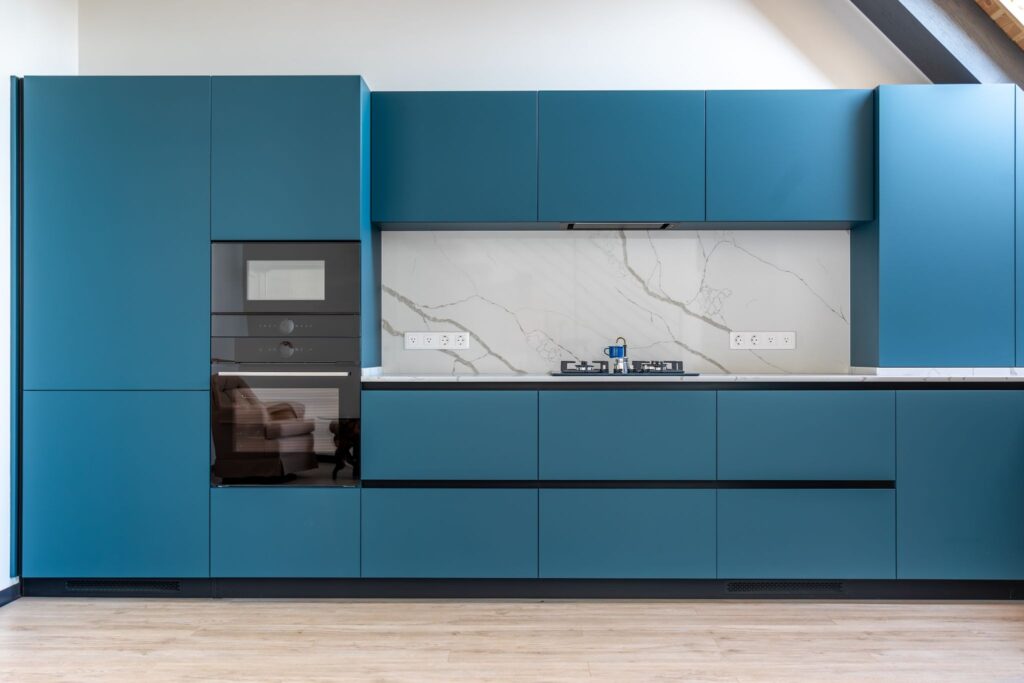
Matte flat-panel cabinets can make a kitchen feel calm, warm, and visually controlled. They often work well in contemporary, minimalist, Scandinavian-inspired, industrial, and transitional interiors. The finished result depends on the cabinet color, surrounding materials, hardware, and lighting.
Matte cabinets are not limited to solid colors. They may also feature visible wood-inspired patterns, subtle textures, or soft-touch surfaces. Because manufacturers use different materials and finishing methods, two products described as matte may have noticeably different appearances and care requirements.
Advantages of Matte Flat-Panel Cabinets
Fingerprints, small smudges, and minor surface irregularities may be less noticeable on many matte finishes. This can make them appealing in busy kitchens where cabinet doors are touched throughout the day. Matte finishes can also give darker colors a rich appearance without producing strong reflections. Navy, charcoal, deep green, and black may look more controlled when used with a low-sheen surface. Lighter matte colors can create a similarly soft effect without appearing overly bright.
These cabinets coordinate naturally with materials that have visible texture. Stone countertops, natural wood flooring, handmade tile, and brushed metal hardware can remain prominent because the cabinets do not compete through strong reflections. Nevertheless, matte does not mean maintenance-free. Cooking oils, spills, food residue, and marks from hands can still collect on the doors. The surface must be cleaned according to the manufacturer’s care instructions.
Possible Drawbacks of Matte Cabinets
Some matte surfaces may hold oily marks or require additional effort to remove grease. Actual cleaning performance depends on the cabinet material and finish technology rather than the word “matte” alone. Very dark matte cabinetry can also make a poorly lit kitchen feel heavier. Since matte surfaces reflect less light, the room may require carefully positioned ceiling fixtures, task lighting, and under-cabinet lighting.
Homeowners should avoid abrasive pads and aggressive scrubbing. Repeated friction can create uneven polished areas on certain matte surfaces. A spot that has been scrubbed too firmly may begin to reflect more light than the rest of the door.
What Is a Gloss Cabinet Finished?
A gloss finish reflects more light than a matte surface. Depending on its sheen level, it may produce a gentle shine or a highly polished, almost mirror-like appearance.
Gloss finishes are especially noticeable on flat-panel doors because there are no frames or decorative profiles to interrupt the reflection. This can create a crisp, streamlined effect when the cabinet doors are correctly aligned.
White, cream, gray, and other light gloss finishes may help distribute light through the room. Darker gloss colors create a stronger visual statement, although they may also show dust, fingerprints, and streaks more clearly.
Advantages of Gloss Flat-Panel Cabinets
Gloss cabinets reflect both natural and artificial light. This can help a room feel brighter, particularly when the kitchen has light-colored cabinets and a balanced lighting plan. The reflective surface also supports a sleek design. Gloss flat panels can work well with concealed hinges, simple pulls, integrated appliances, limited countertop patterns, and clean backsplash materials.
Many smooth gloss surfaces can be wiped with a soft cloth. Their lack of grooves makes it easier to reach the entire door face. However, homeowners should still use cleaning products approved for the specific surface. Gloss cabinets can also become a visual feature. In a minimalist kitchen, a glossy cabinet finish can add visual appeal without the need for ornate door designs or elaborate molding.
Possible Drawbacks of Gloss Cabinets
Fingerprints, dust, water spots, cleaning streaks, and fine scratches can be easier to see on reflective cabinets. These marks may be especially noticeable on dark or highly polished surfaces. Strong sunlight and bright fixtures can create glare. Reflections from windows, pendant lights, polished countertops, and shiny backsplashes may make the room feel busier than expected.
Installation quality also becomes more visible. Reflections can emphasize uneven door gaps, misaligned panels, or inconsistent cabinet surfaces. Accurate adjustment is essential when high-gloss doors are installed in a long, uninterrupted cabinet run.
How Sheen Changes Cabinet Color
The same cabinet color can look different in matte and gloss finishes. Matte may make a shade appear softer, deeper, or slightly muted. Gloss can make the color look brighter because it reflects nearby light and materials. Cabinets also respond to the color temperature of artificial lighting. Warm bulbs may bring out cream, yellow, or brown undertones, while cooler lighting may emphasize blue or gray undertones.
Homeowners should view full-size samples in the actual kitchen. The samples should be positioned vertically and checked during the morning, afternoon, and evening. Small online images cannot accurately show how the finish will react to the room’s changing light.
Which Finish Works Better in a Small Kitchen?
A gloss finish can reflect additional light, but it does not automatically make every small kitchen appear larger. The layout, cabinet color, window position, countertop contrast, and amount of visual clutter can have an equally important effect. A light matte finish can still make a compact kitchen feel open when it is combined with suitable lighting and an efficient cabinet arrangement. Matte may also prevent reflections from making a narrow room feel visually busy.
The better choice depends on how light moves through the space. If the kitchen has limited daylight, carefully placed gloss surfaces may add brightness. If it already has several reflective materials, matte cabinets may create better balance.
Which Finish Is Better for a Busy Household?
Matte finishes often make everyday fingerprints less noticeable. This can be useful for families with children, frequent cooks, or anyone who does not want to wipe cabinet doors constantly. Gloss surfaces may be easy to wipe, but they can show new marks soon after cleaning. Handles and pulls can reduce direct contact with the cabinet face, although they will not prevent every fingerprint.
Surface technology also matters. Certain matte materials include anti-fingerprint properties, while others do not. Homeowners should touch, mark, and clean a sample before making a decision. This simple test provides more practical information than relying on a product photograph.
Cleaning and Maintaining Both Finishes
Both matte and gloss cabinets should generally be cleaned with a soft cloth and a product approved for the surface. Spills and cooking residue should be removed before they remain on the door for an extended period. Abrasive pads, harsh chemicals, and excessive moisture may damage either finish. Fine scratches can become visible on gloss surfaces, while aggressive rubbing can create shiny areas on matte doors.
Painted, laminate, acrylic, and other surfaces may have different care requirements. The manufacturer’s instructions should guide routine cleaning because a method that is safe for one cabinet material may damage another.
Durability Depends on More Than Sheen
Neither matte nor gloss is automatically more durable. Performance depends on the surface material, manufacturing process, edge protection, cabinet construction, and conditions inside the kitchen. Cabinets near sinks and dishwashers may receive more moisture. Doors beside a range may experience additional heat and grease, while cabinets near a busy walkway may face more frequent contact.
Scratch resistance, moisture resistance, heat tolerance, repair options, and warranty coverage should be reviewed for the specific cabinet product. Homeowners should also examine how the door edges are finished because weak edge protection can affect long-term appearance.
Choosing Slab Cabinet Doors for a Modern Kitchen
The smooth surface of Slab Cabinet Doors makes the selected finish a major part of the kitchen’s design. With little decorative detail on the door, the color, sheen, texture, and hardware receive greater visual attention. Door dimensions and spacing also affect the result. Wide doors can create a strong uninterrupted surface, while narrow gaps contribute to a more precise appearance. Poor alignment or unfinished edges may be easy to notice.
Although slab doors are commonly associated with modern kitchens, they are not limited to one design direction. Wood-inspired slab doors can support a warm Scandinavian or mid-century look. Dark matte doors may suit an industrial interior, while soft neutral finishes can work in a restrained transitional kitchen.
Hardware for Matte and Gloss Cabinets
Handles and pulls can reduce the need to touch cabinet faces directly. This is particularly helpful with gloss doors, where fingerprints may appear quickly. Brushed nickel, matte black, brass-toned, and stainless-steel hardware can create different levels of contrast. The selection should connect with appliances, lighting fixtures, faucets, and other metal finishes in the kitchen.
Handleless cabinets create an especially streamlined appearance, but they are not free from maintenance. Push-to-open doors and integrated finger pulls may still require regular contact with the surface.
Coordinating Cabinets With Other Materials
Matte cabinets can provide a calm background for patterned countertops, textured backsplashes, or visible wood grain. Their low reflection allows the surrounding materials to receive more attention. Gloss cabinets usually create a stronger statement. They may work best with simpler countertops and backsplashes that do not compete with the reflective surface.
Balance is important. Combining high-gloss cabinets, polished stone, reflective tile, shiny appliances, and metal fixtures may create more glare than expected. Viewing all samples together helps homeowners understand whether the materials complement or compete with one another.
Can Matte and Gloss Cabinets Be Combined?
Matte and gloss finishes can be used in the same kitchen when their placement has a clear purpose. For example, matte perimeter cabinets may be paired with a gloss island, or gloss upper cabinets may be combined with matte base cabinets. The colors, hardware, countertops, and proportions should connect the two finishes. Without a repeated material or coordinated color, the combination may appear accidental.
Using both finishes works best when one serves as the main surface, and the other provides controlled contrast. This allows the kitchen to have variety without becoming visually inconsistent.
Cost Considerations
The cost of matte and gloss cabinets depends on the door material, finish technology, cabinet construction, customization, manufacturer, and installation requirements. One sheen is not always more expensive than the other. High-gloss acrylic doors may cost more than basic matte laminate products. However, premium matte finishes with soft-touch or anti-fingerprint technology may also have a higher price.
Homeowners should compare full cabinet specifications rather than assuming that shine indicates quality. Construction, hardware, finish performance, installation, and warranty coverage provide a more useful picture of overall value.
Common Finish-Selection Mistakes
Choosing cabinets entirely from online photographs is a common mistake. Screen brightness, camera settings, and professional lighting can make a finish appear different from how it will look in the home. Another mistake is assuming that every matte finish hides fingerprints or that every gloss surface is easy to clean. Performance varies between materials and manufacturers.
Homeowners may also overlook room lighting, combine too many reflective surfaces, or choose a dark finish without considering the available daylight. Focusing only on the door face while ignoring edge quality, hardware, construction, and maintenance instructions can also lead to disappointment.
Choosing Cabinet Finishes in Milwaukee
Milwaukee homeowners should compare cabinet samples in their actual lighting whenever possible. Window direction, seasonal daylight, wall color, flooring, and artificial fixtures can all affect how a cabinet finish appears.
Cabinets MKE can help homeowners compare flat-panel door samples, available finishes, hardware, storage features, and cabinet layouts. Reviewing these elements together makes it easier to choose a finish that supports both the desired appearance and daily kitchen use. Full-size samples should also be viewed beside the preferred countertop, backsplash, and flooring materials. This comparison can reveal undertones, reflection levels, and combinations that may not be obvious when each product is selected separately.
Frequently Asked Questions
Are matte cabinets easier to maintain than gloss cabinets?
Matte finishes often make fingerprints less noticeable. Gloss surfaces may wipe clean easily, but they can show new marks more quickly. Actual maintenance depends on the cabinet material, color, surface technology, and manufacturer’s care instructions.
Do gloss cabinets make a kitchen look bigger?
Gloss cabinets can reflect light and help a room feel brighter. However, they do not guarantee that a kitchen will appear larger. Layout, cabinet color, lighting, countertop contrast, and visual clutter also affect how spacious the room feels.
Do matte black cabinets show fingerprints?
Matte black cabinets may show fewer reflections than gloss black cabinets, but oily fingerprints can still be visible. An anti-fingerprint surface and properly positioned handles may help reduce noticeable marks.
Are slab cabinet doors only suitable for modern kitchens?
No. Slab doors are commonly used in modern kitchens, but their color, texture, hardware, and surrounding materials can also support Scandinavian-inspired, industrial, mid-century, and restrained transitional designs.
Can matte and gloss cabinets be used together?
Yes, both finishes can be combined when their colors and placement create a clear connection. Using a contrasting finish on an island or selected cabinet section can add visual interest without making the kitchen feel inconsistent.
Final Thoughts
Matte flat-panel cabinets offer a soft, understated appearance and may make everyday fingerprints less noticeable. Gloss cabinets reflect more light and create a polished, visually crisp effect.
Neither option is suitable for every kitchen. The best finish depends on the room’s natural and artificial light, cabinet color, household activity, cleaning preferences, surrounding materials, and desired atmosphere. Material quality and installation should receive as much attention as surface sheen.
Milwaukee homeowners can use Cabinets MKE as a local resource when comparing flat-panel cabinet samples, finishes, hardware, storage features, and layouts. Reviewing the complete design before ordering helps ensure that the chosen cabinets are attractive, practical, and suitable for daily use.
✨ Your smarter feed is one tap away. Follow Milyom.