

What Is Web Hosting?
Web hosting is what makes every website you visit accessible on the internet. It is the service that stores your website’s files and makes them accessible to users on the internet. Without hosting, your website cannot be accessed on the internet at all. And it’s not only about getting your site online. The quality of your hosting directly affects your website’s speed, security, uptime, and overall user experience. A reliable hosting provider ensures your site loads fast, stays secure, and remains available 24/7. Choosing the best hosting is not just a technical decision; it is a main business decision.
Types of Web Hosting Explained (Choose the Right One for Your Needs)
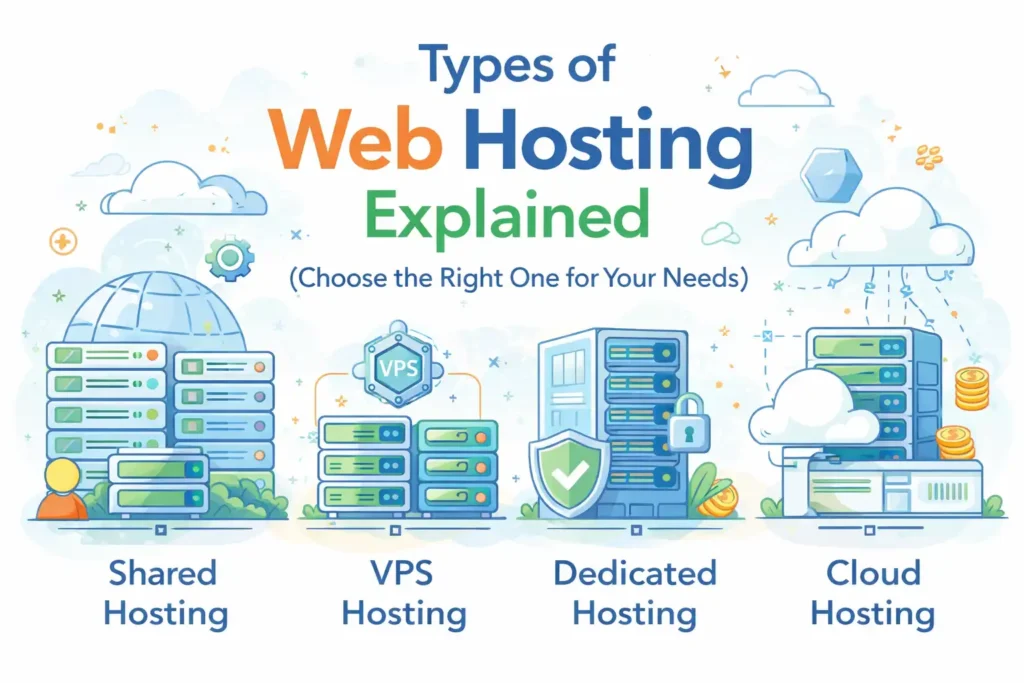
Understanding different hosting types helps you make a smarter decision based on your website’s needs. Each hosting type offers a different level of performance, control, and pricing. Beginners often start with shared hosting, while growing businesses move to VPS or cloud hosting. High-traffic or complex websites may require dedicated servers. Managed hosting is ideal for those who want a hands-off experience. Choosing the right type depends on your traffic, budget, and technical knowledge. Picking the wrong type can limit your growth or increase unnecessary costs.
Shared Hosting – Best for Beginners
Shared hosting is a budget-friendly option where multiple websites use the same server and its resources. It is ideal for beginners, small blogs, and low-traffic websites. While it is cost-effective, performance may be limited if other sites on the server use too many resources at the same time.
VPS Hosting: More Control and Resources
VPS hosting provides a virtual private environment within a shared server. You get dedicated resources and better performance compared to shared hosting. It offers more control and flexibility, making it suitable for growing websites that need improved speed, stability, and customization without the high cost of dedicated hosting.
Dedicated Hosting: Maximum Performance and Control
Dedicated hosting provides you with a full server that is used only for your website. It offers maximum performance, security, and full control over configurations. This option is ideal for large businesses or high-traffic websites that require consistent performance. However, it comes at a higher cost and usually requires technical knowledge to handle properly.
Cloud Hosting: A Scalable and Flexible Option
Cloud hosting uses multiple servers to host your website, ensuring high reliability and scalability. If one server fails, another takes over instantly. It is perfect for websites with fluctuating traffic. You only pay for the resources you use, making it a flexible and efficient solution for modern websites.
Managed Hosting Hassle-Free Solution for Non-Tech Users
Managed hosting takes care of technical tasks like updates, security, and backups for you. It is ideal for users who do not want to handle server management. While it costs more than basic hosting, it saves time and ensures optimal performance, making it a great option for businesses focused on growth.
Key Factors to Consider When Choosing Web Hosting
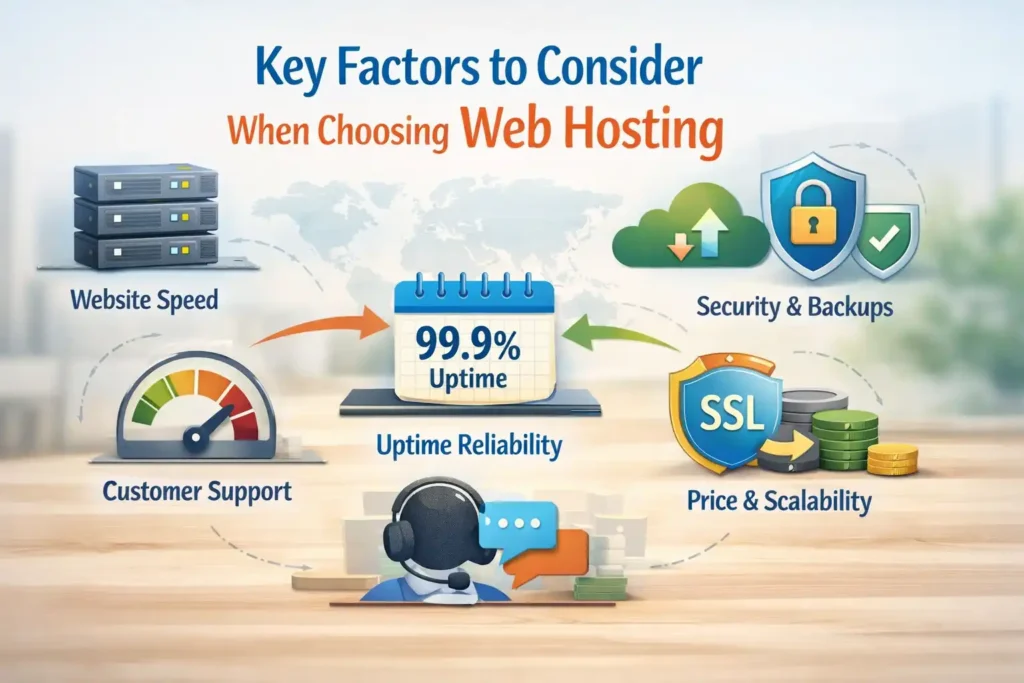
Choosing the right web hosting is not just about price. You need to evaluate several critical factors that affect your website’s performance and long-term success. Speed, uptime, security, and scalability should be your top priorities. A good hosting provider offers reliable support, transparent pricing, and easy-to-use tools. Ignoring these factors can lead to poor performance and unexpected issues later. Taking the time to compare features and understand your needs will help you make a smarter and more cost-effective decision.
Website Speed and Performance
Speed is one of the most important factors for any website. Fast-loading websites improve user experience and reduce bounce rates. A good hosting provider uses optimized servers, caching, and modern technology to ensure high performance. Faster websites also rank better on search engines, helping you gain more visibility and traffic.
Uptime Guarantee and Reliability
Uptime refers to how often your website is accessible online. Trusted hosting providers guarantee a minimum of 99.9% uptime. Frequent downtime can harm your reputation and lead to lost visitors. Choosing a provider with strong uptime guarantees ensures your website remains available to users at all times.
Security Features (SSL, Malware Protection, Backups)
Security is essential to protect your website from threats and data breaches. A good hosting provider offers SSL certificates, malware scanning, firewalls, and regular backups. These features help keep your website safe and ensure you can recover quickly in case of any issues or attacks.
Customer Support Quality
Reliable customer support can save you time and stress when problems occur. Look for hosting providers that offer 24/7 support through live chat, email, or phone. Quick and helpful responses can make a big difference, especially if you are not highly technical or face urgent issues.
Pricing and Renewal Costs (Hidden Fees Explained)
Many hosting providers offer low introductory prices but increase rates during renewal. It is important to check the long-term cost before choosing a plan. Always review what is included in the package and watch out for hidden fees related to backups, migrations, or additional features.
Scalability for Future Growth
As your website grows, your hosting needs will also change. A scalable hosting provider allows you to upgrade your plan easily without downtime. This flexibility ensures your website can handle increased traffic and performance demands without requiring a complete migration.
Ease of Use and Control Panel
A user-friendly control panel makes it easier to manage your website, domains, and hosting settings. Features like one-click installations and intuitive dashboards save time and reduce complexity. This is especially important for beginners who want to manage their website without technical difficulties.
Server Location and Its Impact on Speed
Where your hosting server is located can impact how quickly your website loads. Servers closer to your target audience deliver faster performance. Choosing a provider with multiple data centers or CDN integration helps ensure consistent speed and a better user experience across different regions.
👉 You might also like: 5 Best AI Tools to Automate Business Tasks in 2026
How to Choose Hosting Based on Your Website Type?
Different websites have different hosting needs, and choosing the right one depends on your specific goals. A personal blog does not require the same resources as an e-commerce store or a high-traffic business site. Understanding your website type helps you avoid overpaying or underperforming. The right hosting choice ensures better speed, reliability, and scalability. It also helps you provide a smooth experience to your visitors while supporting your long-term growth without technical limitations.
Best Hosting for Blogs
Blogs usually start with low traffic, so shared hosting is often enough. It is affordable and easy to manage. As your blog grows, you can upgrade to VPS or cloud hosting for better performance. Choosing a provider with good speed and uptime is important to keep readers engaged.
Best Hosting for Business Websites
Business websites need reliable performance and strong security. VPS or managed hosting is often a better choice as it offers more stability and resources. A professional website should always stay online and load quickly to build trust and support customer engagement effectively.
Best Hosting for eCommerce Stores
eCommerce websites require high security, fast loading speeds, and reliable uptime. Cloud or managed hosting is ideal because it can handle traffic spikes and transactions smoothly. Features like SSL, backups, and scalability are essential to ensure a safe and seamless shopping experience.
Best Hosting for Portfolio Websites
Portfolio websites are usually lightweight and do not require heavy resources. Shared hosting or basic cloud hosting works well in most cases. The focus should be on speed and uptime to ensure your work is always accessible and loads quickly for potential clients.
Best Hosting for High-Traffic Websites
High-traffic websites need powerful hosting solutions like dedicated or cloud hosting. These options provide the performance and scalability required to handle large numbers of visitors. Reliable infrastructure ensures your site remains fast and stable even during peak traffic periods.
Key Features You Should Never Ignore
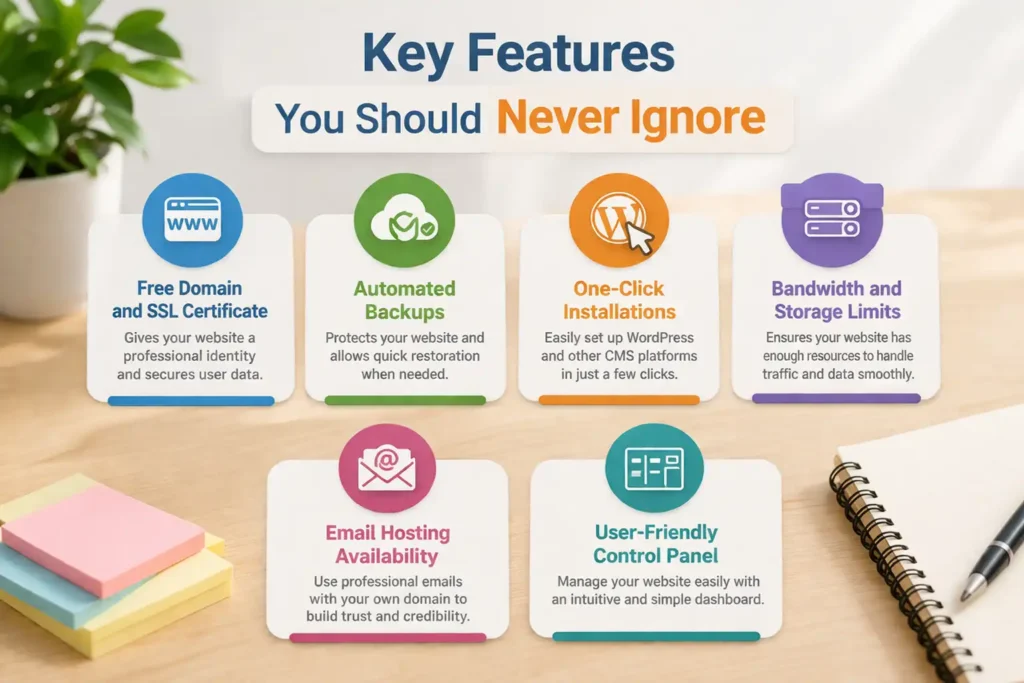
When choosing web hosting, many people focus only on price or brand name, but the real value lies in the features included in the plan. The right set of features can save you time, improve performance, and protect your website from unexpected issues. From security tools to ease of use, every feature plays a role in your website’s success. Ignoring essential features can lead to limitations later, especially as your site grows. That’s why it is important to carefully review what a hosting provider offers before making your final decision.
Free Domain and SSL Certificate
Many hosting providers offer a free domain and SSL certificate as part of their plans. A domain gives your website a professional identity, while SSL secures user data and builds trust. It also helps with SEO rankings. Choosing a hosting plan that includes these features can save costs and simplify your setup process.
Automated Backups
Automated backups protect your website data from unexpected loss. If something goes wrong, you can restore your site quickly without major issues. A good hosting provider offers regular backups and easy restore options. This feature is essential for maintaining your website’s safety and avoiding downtime or data loss.
One-Click Installations (WordPress, CMS)
One-click installation features make it easy to set up platforms like WordPress or other content management systems. This saves time and removes technical barriers for beginners. With just a few clicks, you can launch your website and start building content without dealing with complicated manual setups or configurations.
Bandwidth and Storage Limits
Bandwidth and storage determine how much traffic your website can handle and how much data it can store. Limited resources can slow down your site or cause downtime during high traffic. Choosing a plan with sufficient bandwidth and storage ensures smooth performance and a better user experience.
Email Hosting Availability
Email hosting lets you set up professional email addresses with your own domain name. This improves your brand credibility and communication. Many hosting providers include email services in their plans. Having this feature simplifies management and helps you maintain a consistent and professional online presence.
👉 You might also like: Fappelo: Viral Content Sharing Platform Explained
Common Mistakes to Avoid When Selecting Web Hosting
Choosing web hosting can feel overwhelming, especially with so many options available. Many beginners make common mistakes that lead to poor performance, higher costs, or unnecessary limitations. These mistakes are often avoidable with a little research and understanding. By knowing what to avoid, you can make a smarter decision and choose hosting that supports your website’s growth. Avoiding these errors not only saves money but also ensures better performance, security, and long-term stability for your website.
Choosing Based on Price Only
Many people select hosting based only on the lowest price, which can lead to poor performance and limited features. Cheap hosting often comes with slow speeds and unreliable uptime. Instead of focusing only on cost, consider the value, performance, and features included in the hosting plan.
Ignoring Renewal Costs
Introductory prices can be attractive, but renewal costs are often much higher. Many users overlook this and face unexpected expenses later. It is important to check the long-term pricing before committing. Understanding renewal rates helps you avoid surprises and plan your budget more effectively.
Not Checking Customer Reviews
Customer reviews provide real insights into a hosting provider’s performance and support. Ignoring reviews can lead to poor choices. Reading feedback from other users helps you understand common issues, strengths, and reliability, allowing you to make a more informed and confident decision.
Overlooking Security Features
Security is often ignored until something goes wrong. Without proper protection, your website is vulnerable to attacks and data breaches. Always check for features like SSL, backups, and malware protection. Strong security measures ensure your website stays safe and builds trust with your users.
Picking the Wrong Hosting Type
Choosing the wrong hosting type can limit your website’s performance or increase unnecessary costs. For example, using shared hosting for a high-traffic site can cause slow speeds. It is important to match your hosting type with your website’s needs to ensure optimal performance and scalability.
👉 You might also like: How Classroom 30x Helps Students Learn Faster in 2026
Comparing Popular Web Hosting Providers
With numerous hosting providers to choose from, finding the right one can be difficult. Each provider offers different features, pricing, and performance levels. Comparing them carefully helps you find the best fit for your needs. Instead of focusing only on brand names, you should evaluate speed, reliability, support, and scalability. A proper comparison allows you to identify which provider offers the best value for your specific requirements. This step is essential if you want to avoid regret and choose a hosting service that supports your long-term growth.
How Much Does Web Hosting Cost?
The cost of web hosting varies depending on the type of hosting and the features included. Some plans are very affordable, while others are more expensive but offer better performance and resources. Understanding the pricing structure helps you choose a plan that fits your budget without compromising quality. It is also important to consider long-term costs, not just the initial price. By evaluating what you get for your money, you can make a smarter and more cost-effective decision.
Average Pricing by Hosting Type
Shared hosting is usually the most affordable option, while VPS and cloud hosting cost more due to better performance. Dedicated hosting is the most expensive because it offers full server access. Prices vary based on features, resources, and provider reputation, so it is important to compare options carefully.
Budget vs Premium Hosting: What’s the Difference?
Budget hosting offers basic features at a lower cost, but performance and support may be limited. Premium hosting provides better speed, security, and reliability. While it costs more, it delivers higher value, especially for business or high-traffic websites that need consistent performance and stability.
Are Cheap Hosting Plans Worth It?
Cheap hosting plans can be useful for beginners or small websites with low traffic. However, they often come with limitations like slower speeds and fewer features. If your website grows, you may need to upgrade. It is important to balance affordability with performance and long-term needs.
Step-by-Step Guide to Choosing the Right Hosting
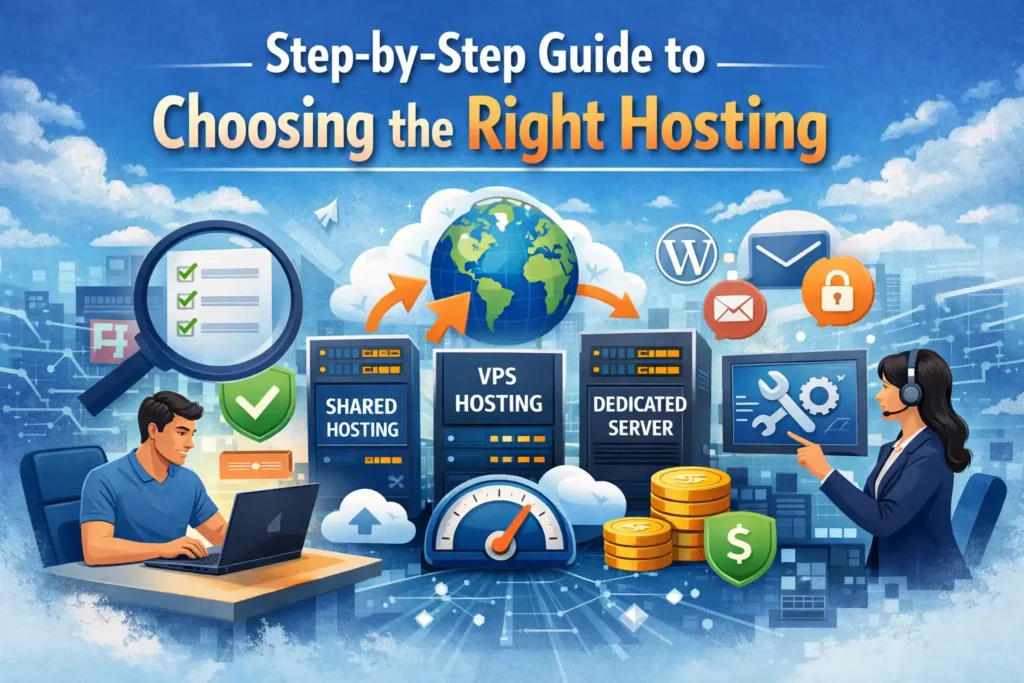
Choosing the right web hosting becomes easier when you follow a clear step-by-step process. Instead of rushing into a decision, you should evaluate your needs, compare options, and understand what each provider offers. This approach helps you avoid common mistakes and select hosting that fits your goals. A structured process also ensures you consider important factors like performance, pricing, and scalability. By following these steps, you can confidently choose a hosting solution that supports your website’s success.
Step 1: Identify Your Website Needs
Start by understanding your website’s purpose, expected traffic, and required features. A simple blog has different needs compared to an e-commerce store. Identifying your requirements helps you narrow down your options and choose a hosting plan that fits your goals effectively.
Step 2: Choose the Right Hosting Type
Once you understand your needs, select the hosting type that matches them. Shared hosting works for beginners, while VPS or cloud hosting suits growing websites. Choosing the right type ensures better performance, scalability, and cost efficiency for your website.
Step 3: Compare Features and Pricing
Compare different hosting providers based on features, pricing, and value. Look beyond the initial cost and evaluate what is included in the plan. This helps you choose a provider that offers the best combination of performance, features, and affordability.
Step 4: Check Reviews and Reputation
Research customer reviews and the provider’s reputation before making a decision. Reviews highlight real user experiences and potential issues. A well-reviewed hosting provider is more likely to offer reliable performance and good customer support.
Step 5: Make the Final Decision
After comparing all factors, choose the hosting provider that best meets your needs. Consider performance, pricing, and long-term scalability. Making a well-informed decision ensures your website runs smoothly and supports your future growth without major issues.
👉 You might also like: 5 Best Email Marketing Platforms for Growth (2026)
FAQs About Choosing Web Hosting
When choosing web hosting, many users have common questions that help them make better decisions. These questions often focus on cost, flexibility, performance, and long-term impact. Understanding these answers can clear confusion and guide you toward the right hosting choice. This section covers the most frequently asked questions to help you make a confident and informed decision based on your website needs and future growth plans.
What is the best hosting for beginners?
The best hosting for beginners is shared hosting because it is affordable and easy to use. It usually comes with simple dashboards and one-click installations. Many providers also offer helpful customer support, making it easier for beginners to set up and manage their websites without technical experience.
Can I change my hosting later?
Yes, you can change your hosting provider at any time. Most hosting companies offer migration services to help you transfer your website بسهولة. While the process may involve some downtime if not handled properly, choosing a provider with migration support makes switching easier and smoother.
How much traffic can shared hosting handle?
Shared hosting can handle low to moderate traffic, usually suitable for new websites and small blogs. However, performance may drop if traffic increases significantly. Once your website starts growing, upgrading to VPS or cloud hosting is recommended to maintain speed and stability.
Is free hosting a good idea?
Free hosting may seem attractive, but it often comes with limitations like slow speeds, ads, and poor security. It is not suitable for professional or business websites. Investing in a reliable paid hosting plan ensures better performance, security, and long-term growth.
Does hosting affect SEO?
Yes, hosting plays an important role in SEO. Factors like website speed, uptime, and security directly impact search rankings. A reliable hosting provider improves loading times and ensures your website stays online, which helps boost your visibility on search engines like Google.
✨ Got value? Let’s keep the momentum, follow Milyom.