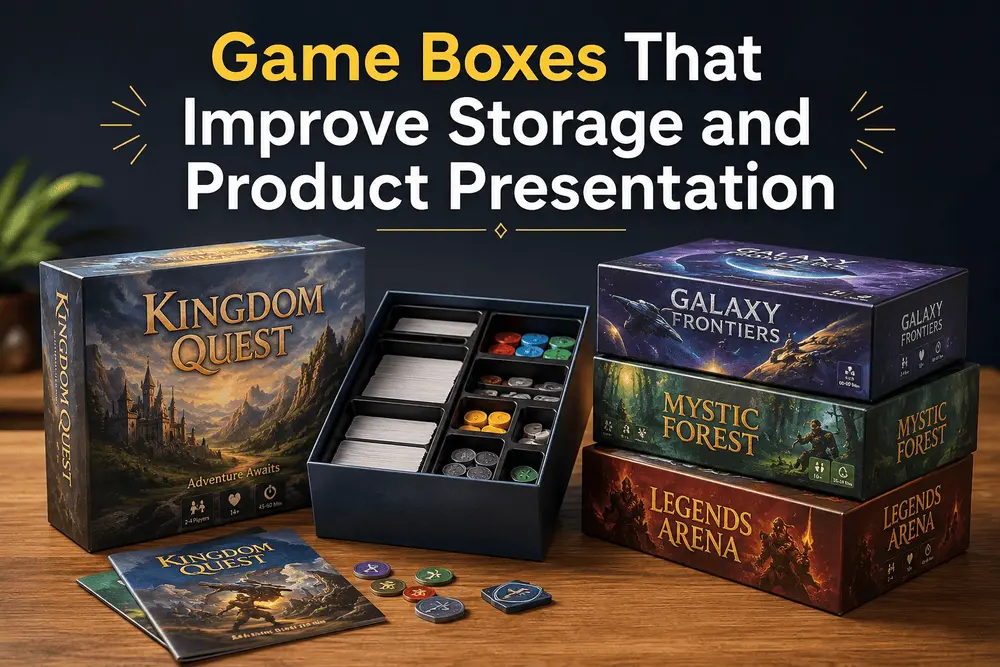

Game Boxes That Improve Storage and Product Presentation
Many games have more than one element that is required to be organized, safeguarded, and readily accessible. If packages are not supported, they can become damaged and lose components such as boards, cards, tokens, dice, manuals, and small accessories, as well as electronic parts. A well-designed box can facilitate keeping these products together from production to the retail shelf to the end-user’s home.
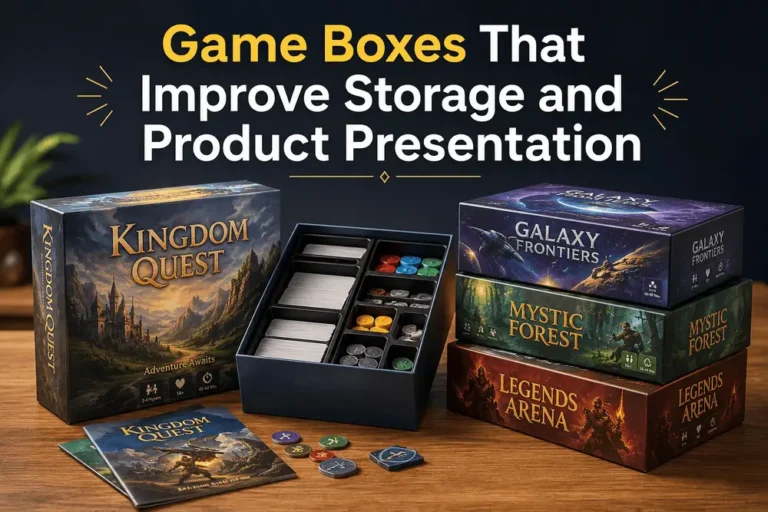
Packaging is also important when it comes to product presentation. Typically, the first thing a customer sees before opening a game is the box. Their size, the information printed, and the images shown, as well as the layout, can give them an idea of the game and the target audience. With clear packaging, the game title, age, number of players, playing time, and other helpful information can be provided, helping with the purchasing decision. Well-designed game boxes can help brands and publishers to store and present their products in a more organized manner.
Why Product Protection Matters for Games
The items used in the making of a game product may be made from cardboard, paper, plastic, wood, or electronic materials. The protection needs are different for each component. Cards may bend, printed boards may have scratches, and the smaller pieces can slip out of the box if the packaging isn’t tightly secured.
The box structure should be proportional in size and weight to the product. A light game card might need a small carton, while a big board game will need a more substantial structure that has sufficient internal volume for several parts. Additionally, packaging can be chosen based on the storage needs and shipping methods of the product.
Different pieces can be separated with custom game boxes by including inserts, dividers, trays, or compartments. This helps customers to put parts back in place after they have been played. Organized storage can also make things more user-friendly, as the player won’t have to waste time looking for missing pieces.
Storage Features That Make a Difference
Effective storage begins with understanding the number and type of items inside the package. A box that is too small can put pressure on the contents, while excessive space may allow items to move during transport.
Internal packaging can be designed for specific components. For example, card sections can keep decks together, while small compartments can store tokens or dice. These features are particularly useful for games with many individual pieces.
Some game box packaging designs also focus on repeated use. Customers may open and close a game box many times over its lifetime. A secure lid and suitable material can help the box remain functional during regular handling. The goal is not simply to place the product inside a carton but to create a practical storage solution that customers can continue using.
How Custom Printing Supports Product Presentation
Printing allows a game publisher to communicate directly with potential buyers. The front of the packaging can display the game name and visual identity, while the back can provide information about gameplay and contents.
Custom printed game boxes can include product images, instructions, barcodes, warnings, age recommendations, and brand information. This information can help retailers and customers identify the product without opening the package. A clear layout is especially important when several games from the same publisher are displayed together.
Printing can also support consistent branding. When the same logo, typography, and visual approach are used across a product range, customers may recognize the publisher more easily. Custom Boxes with Logo can therefore help businesses create consistency across different game products while keeping essential product information visible.
Choosing the Right Size and Structure
Box dimensions should be based on the actual components inside. Measuring the board, cards, accessories, and inserts before production can help reduce unnecessary space and avoid packaging that does not fit properly.
The structure may also depend on how the game will be sold. Products displayed on retail shelves may require a design that stacks efficiently. Games sold through online stores need packaging that can protect the contents during additional shipping and handling.
Common considerations include:
The total weight of the game and its components
The number of individual pieces inside
The need for internal compartments or inserts
How often customers will open and close the box
Available retail shelf space
Shipping and warehouse requirements
A practical design balances these requirements instead of focusing only on appearance.
The Value of Custom Packaging for Game Brands
Custom Packaging gives businesses more control over the way their products are packed and presented. Standard boxes may not provide the correct dimensions or internal organization for a specific game. A custom approach allows the structure to be planned around the actual product.
Custom Packaging can also make product information easier to organize. Publishers can decide where to place instructions, safety information, branding, and gameplay details. This can create a more useful package for customers and retailers.
Custom packaging boxes may be developed for different game categories, including board games, card games, educational games, puzzle games, and promotional products. Each category may have different requirements, which is why packaging decisions should be based on the product rather than using the same format for every item.
For growing brands, Custom Boxes can also help maintain consistency when new products are added to the collection.
Custom Options for Retail and Online Sales
Retail and online sales place different demands on packaging. In a physical store, the box needs to communicate information quickly because customers may compare several products within a short time. Product images and readable information can help them understand the game before making a decision.
Online shoppers rely more heavily on product photos and descriptions, but the physical packaging still matters after delivery. The box should arrive in good condition and protect the game during transportation.
For businesses with several product lines, custom game boxes can be created in different sizes while following a consistent brand format. This can make inventory management and product recognition easier.
The right packaging can also support promotional campaigns. Limited editions, seasonal versions, or special releases may use different artwork while maintaining the same structural requirements.
Cost Considerations for Wholesale Orders
Packaging costs are influenced by several factors, including box size, material, printing requirements, order quantity, and additional components such as inserts. Businesses planning game boxes wholesale should compare these requirements before placing a large order.
Larger quantities can make it easier to maintain consistent specifications across a product range. However, businesses should avoid ordering more packaging than they can reasonably store or use, especially when game artwork or product information may change.
Custom Boxes Wholesale can be useful for publishers and retailers that require packaging for regular production. Planning dimensions and specifications can also help reduce errors during future orders.
A clear packaging specification should include dimensions, material requirements, print details, finishing needs, and internal packaging requirements. This gives manufacturers a more accurate basis for production.
Branding and Product Information Work Together
Packaging should provide useful information without making the design difficult to read. Customers may want to know the recommended age, number of players, estimated playing time, game type, and contents. These details can be arranged in a clear hierarchy.
Branding elements should support this information rather than hide it. A recognizable logo and consistent design can help customers connect different products from the same publisher.
Custom Boxes with a logo can be used to place brand identification on the lid, sides, or other visible areas. For products stored on shelves, printing on the spine can also help customers identify the game when boxes are arranged vertically.
The most effective game box packaging combines product protection, organized storage, and clear communication.
Making Packaging Easier for Customers to Use
Customer experience continues after the purchase. If a box is difficult to open, too fragile for repeated use, or unable to hold all components after the game has been played, customers may find storage inconvenient.
Practical packaging considers the full product lifecycle. This includes manufacturing, transport, retail display, unboxing, gameplay, and long-term storage. Inserts can make it easier to organize components, while suitable dimensions can help customers return everything to the box.
These details may seem small, but they can make a noticeable difference in everyday use. A well-organized package helps customers spend more time enjoying the product and less time managing loose components.
Final Thoughts
Packaging is a useful component of the product, particularly in the case of multiple-component products such as games. The right box can shield goods while they’re being transported, help keep things neat while in storage, deliver vital product information, and ensure uniform brand appearance.
Before choosing a packaging solution, businesses should take into account the dimensions, materials, internal organization, printing, and order quantities. From a new game release to game boxes wholesale for everyday production, good game box planning can work toward the product and the customer.
Taking storage, protection, and presentation into account, the final packaging can be a valuable addition to the product journey long after the initial purchase, which is why game boxes are so useful.