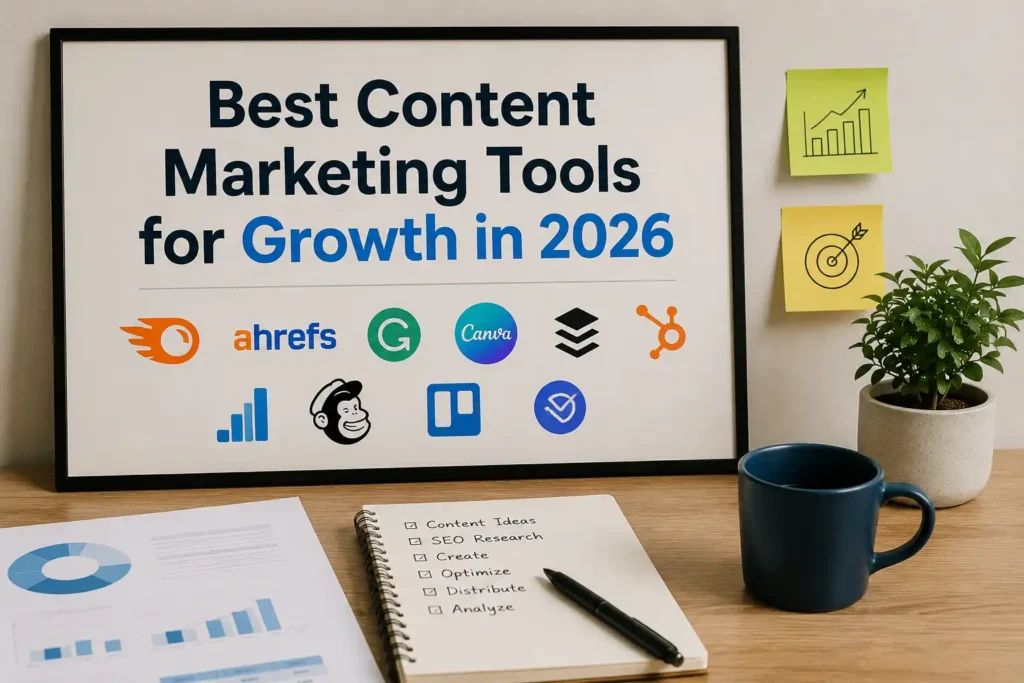

Content marketing tools are digital solutions designed to help marketers plan, create, optimize, distribute, and analyze content more effectively. Instead of relying on manual effort, businesses use these tools to streamline workflows and improve results. From keyword research to performance tracking, each tool serves a specific purpose in the content lifecycle. According to HubSpot, companies that use structured marketing tools are more likely to see consistent growth. The right combination of tools not only saves time but also enhances content quality, boosts ROI, and supports scalable marketing strategies for long-term success.
Why You Need Content Marketing Tools
Managing content marketing without any tools can quickly become tough, especially as your business grows. Manual processes often lead to inefficiencies, missed opportunities, and inconsistent results. Content marketing tools solve these challenges by automating repetitive tasks, improving accuracy, and providing valuable insights. They help marketers save time, create higher-quality content, and make data-driven decisions. Additionally, these tools improve collaboration among teams, ensuring smoother workflows. With the rise of AI, modern tools are becoming even more powerful. Research from McKinsey & Company shows that companies using advanced digital tools achieve significantly better performance and productivity.
Time-Saving
Content marketing tools significantly reduce the time required to complete repetitive tasks such as keyword research, content scheduling, and performance tracking. Automation features allow marketers to focus more on strategy and creativity instead of manual work. According to HubSpot, automation can save teams several hours each week, making workflows faster and more efficient.
Better Content Quality
Using content marketing tools improves overall content quality by ensuring accuracy, readability, and proper structure. Tools like Grammarly help eliminate errors, while SEO tools provide optimization suggestions. High-quality content not only engages readers but also performs better in search rankings, leading to increased visibility and user trust over time.
Data-Driven Decisions
Content marketing tools provide valuable insights into audience behavior, content performance, and engagement metrics. Platforms like Google Analytics allow marketers to track what works and what doesn’t. According to Forrester, data-driven strategies lead to better marketing outcomes, helping businesses refine their content and maximize ROI effectively.
Improved Collaboration
Collaboration becomes easier when teams use content marketing tools that centralize workflows and communication. Platforms like Trello and Slack allow team members to coordinate tasks, share feedback, and stay aligned. This improves productivity, reduces misunderstandings, and ensures that content projects are completed efficiently and on time.
Types of Content Marketing Tools
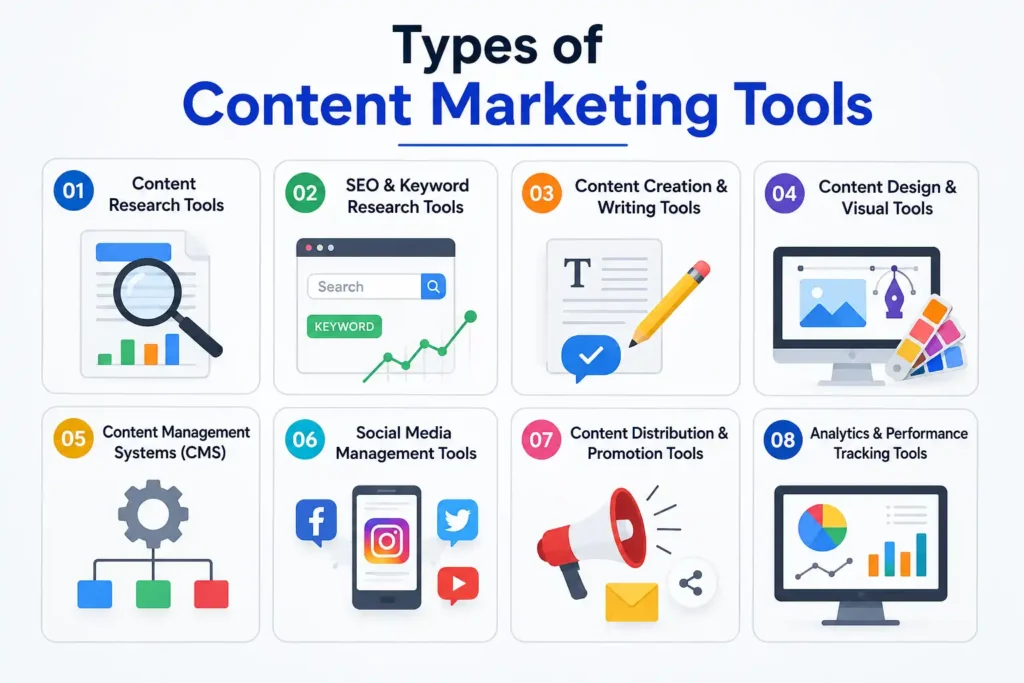
Content marketing tools are not one-size-fits-all; they are designed to support specific stages of the content lifecycle, from ideation to performance tracking. Modern marketers rely on a combination of research, SEO, writing, design, distribution, and analytics tools to stay competitive. According to industry reports by HubSpot, companies using multiple tools in a structured workflow are significantly more likely to achieve positive ROI. Understanding each category helps you build a smarter, more efficient content ecosystem. Below, we break down the essential types of tools every content marketer should know.
Content Research Tools
Content research tools help marketers discover trending topics, analyze audience interests, and evaluate competitor strategies. Platforms like BuzzSumo reveal high-performing content, while tools such as Google Trends highlight real-time demand. Research shows that data-backed content ideas generate up to 3x more engagement, making these tools essential for planning impactful content strategies and staying ahead in competitive niches.
SEO & Keyword Research Tools
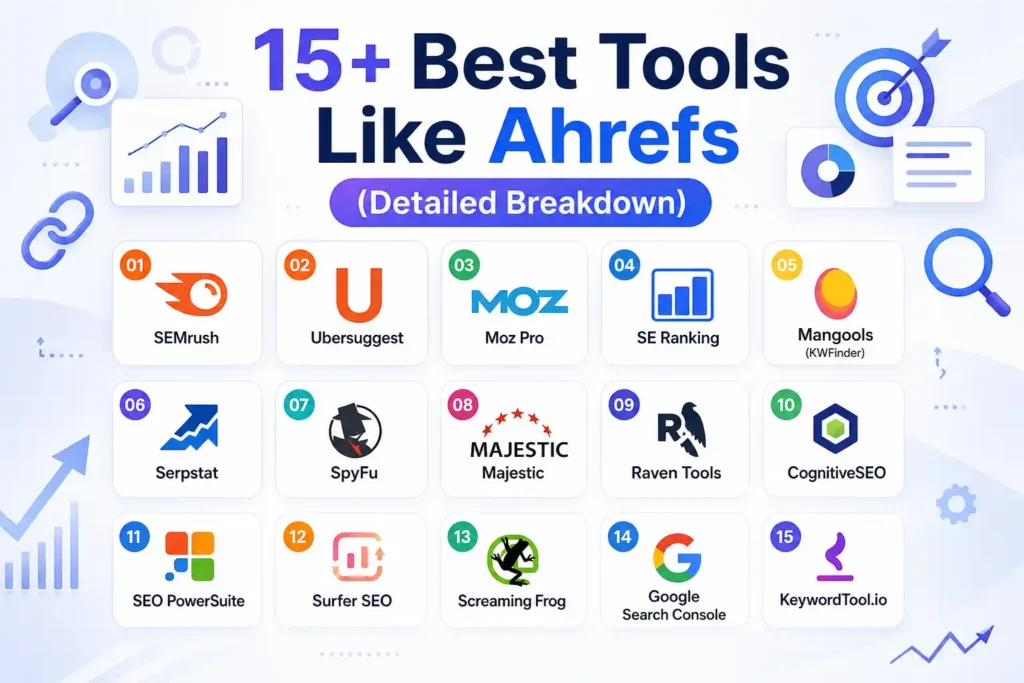
SEO and keyword research tools are critical for aligning content with user intent and search engine algorithms. Tools like Ahrefs and SEMrush provide keyword insights, SERP analysis, and optimization suggestions. According to Backlinko, pages optimized for search intent significantly outperform generic content, making these tools essential for improving rankings, visibility, and organic traffic growth.
Content Creation & Writing Tools
Content creation tools streamline the writing process by improving clarity, grammar, and structure. AI-powered platforms like Grammarly and Jasper AI help writers produce polished content faster. Studies indicate that well-structured, error-free content improves readability and engagement, reducing bounce rates and increasing time on page, which are key factors for both user experience and SEO performance.
💚 You might also like: Tools Like Ahrefs: Best SEO Alternatives 2026
Content Design & Visual Tools
Visual content tools enable marketers to create engaging graphics, infographics, and videos that enhance storytelling. Tools like Canva and Adobe simplify design for non-experts. Research shows that content with relevant visuals receives up to 94% more views, making design tools crucial for capturing attention and improving content shareability across digital platforms.
Content Management Systems (CMS)
Content Management Systems (CMS) allow businesses to create, manage, and publish content efficiently. Platforms like WordPress and Shopify provide scalable solutions for websites and blogs. A reliable CMS ensures smooth workflows, better collaboration, and easy content updates, which are essential for maintaining consistency and supporting long-term content marketing growth.
Social Media Management Tools
Social media tools help marketers schedule posts, track engagement, and manage multiple platforms from a single dashboard. Tools like Hootsuite and Buffer improve efficiency and consistency. According to industry data, consistent posting can increase audience engagement by over 50%, making these tools vital for maintaining an active and responsive social presence.
Content Distribution & Promotion Tools
Distribution tools ensure your content reaches the right audience through channels like email and outreach campaigns. Platforms such as Mailchimp and Outreach help automate and scale promotions. Effective distribution is key, as studies show that creating content is only half the battle—promotion significantly impacts visibility, traffic, and conversions.
Analytics & Performance Tracking Tools
Analytics tools measure content performance, user behavior, and ROI. Tools like Google Analytics and Hotjar provide insights into engagement, conversions, and user journeys. Data-driven decisions are essential, as businesses that rely on analytics are more likely to optimize content effectively and achieve higher returns from their marketing efforts.
Best Content Marketing Tools (Category-wise List)
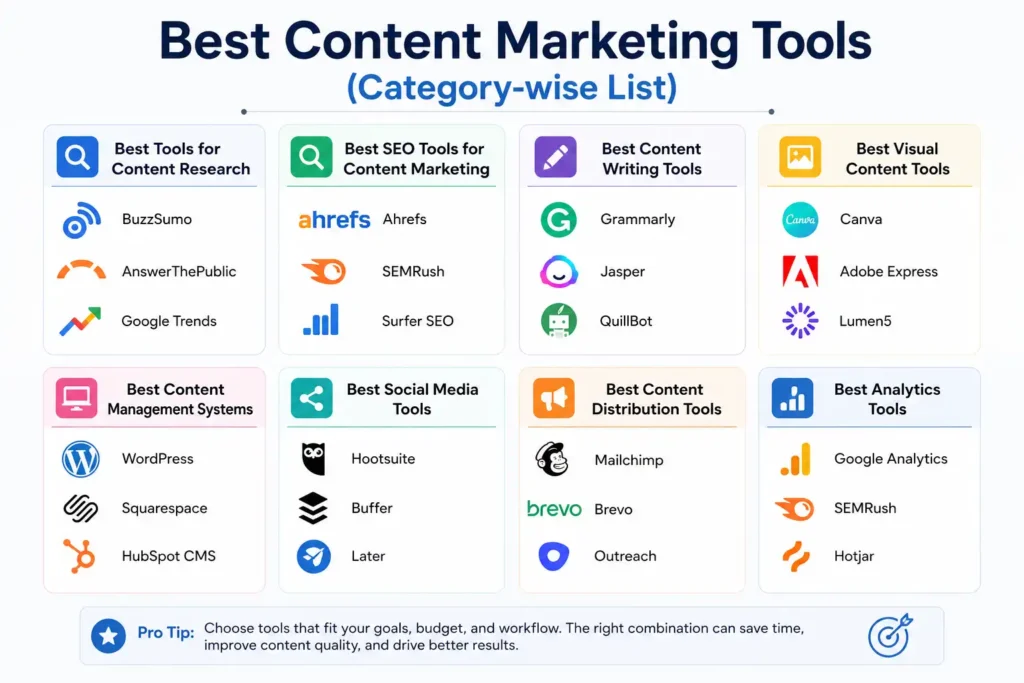
Choosing the best content marketing tools depends on your goals, budget, and workflow requirements. The market is filled with options, but not all tools deliver equal value. According to research by Gartner, marketers who carefully select tools based on use cases see significantly better performance outcomes. Below is a curated breakdown of top tools across different categories, focusing on features, usability, and real-world effectiveness to help you make informed decisions.
Best Tools for Content Research
The best content research tools combine trend discovery, competitor insights, and content performance analysis. BuzzSumo stands out for identifying viral content, while AnswerThePublic helps uncover user questions. These tools allow marketers to create data-driven content that aligns with audience interests and increases engagement potential significantly.
Best SEO Tools for Content Marketing
Top SEO tools provide comprehensive keyword data, backlink analysis, and on-page optimization features. Ahrefs and SEMrush are industry leaders. They help marketers identify ranking opportunities, analyze competitors, and optimize content effectively, leading to improved search visibility and consistent organic traffic growth.
Best Content Writing Tools
Content writing tools focus on improving quality, clarity, and efficiency. Grammarly ensures grammatical accuracy, while Jasper AI speeds up content creation. These tools help maintain consistency and professionalism, which are essential for building credibility and improving audience engagement across digital channels.
Best Visual Content Tools
Visual tools help create compelling graphics and videos that enhance user experience. Canva offers beginner-friendly design features, while Adobe provides advanced capabilities. High-quality visuals increase content attractiveness, making it more likely to be shared and remembered by audiences.
Best Content Management Systems
Reliable CMS platforms are essential for publishing and managing content efficiently. WordPress dominates the market, powering over 40% of websites globally, while Shopify is ideal for online stores. These platforms ensure scalability, flexibility, and seamless content management for businesses of all sizes.
Best Social Media Tools
Social media tools streamline content scheduling, engagement tracking, and analytics. Hootsuite and Buffer are widely used for managing multiple platforms efficiently. These tools help maintain consistency, which is crucial for building a strong online presence and audience loyalty.
Best Content Distribution Tools
Content distribution tools focus on maximizing reach through email campaigns and outreach efforts. Mailchimp is popular for automation, while Outreach helps scale communication. Effective distribution ensures your content reaches the right audience, improving visibility and conversion rates.
Best Analytics Tools
Analytics tools provide actionable insights into content performance and user behavior. Google Analytics tracks traffic and conversions, while Hotjar offers heatmaps and session recordings. These tools enable data-driven optimization, helping marketers refine strategies and achieve better results over time.
💚 You might also like: Complete Guide To Google Search Console Webmaster Tools
Free vs Paid Content Marketing Tools
Free and paid content marketing tools both play an important role, but they serve different purposes depending on your business stage. Free tools are great for beginners, offering basic features like keyword suggestions, simple analytics, and limited automation. However, paid tools provide advanced capabilities such as in-depth data analysis, competitor tracking, and scalable workflows. According to Statista, businesses investing in premium marketing tools often experience higher efficiency and better ROI. Choosing between free and paid options depends on your goals, resources, and the level of growth you aim to achieve.
How to Choose the Right Content Marketing Tools
Selecting the right content marketing tools requires a strategic approach rather than random selection. Start by clearly defining your goals, whether it is traffic growth, lead generation, or brand awareness. Consider your budget, ease of use, and how well the tools integrate with your existing systems. Scalability is also crucial, especially if your team is growing. According to Gartner, businesses that align tools with clear objectives perform significantly better. Additionally, strong customer support and an active user community can make a big difference in long-term success.
How to Build a Content Marketing Tool Stack
Building an effective content marketing tool stack means combining the right tools to cover every stage of your workflow. At a minimum, marketers need tools for research, SEO, content creation, distribution, and analytics. Beginners can start with simple and affordable tools, while advanced teams often use integrated platforms for automation and collaboration. Research from HubSpot shows that structured tool stacks improve productivity and campaign performance. The key is to avoid unnecessary complexity while ensuring your stack supports both current needs and future growth.
Common Mistakes When Using Content Marketing Tools
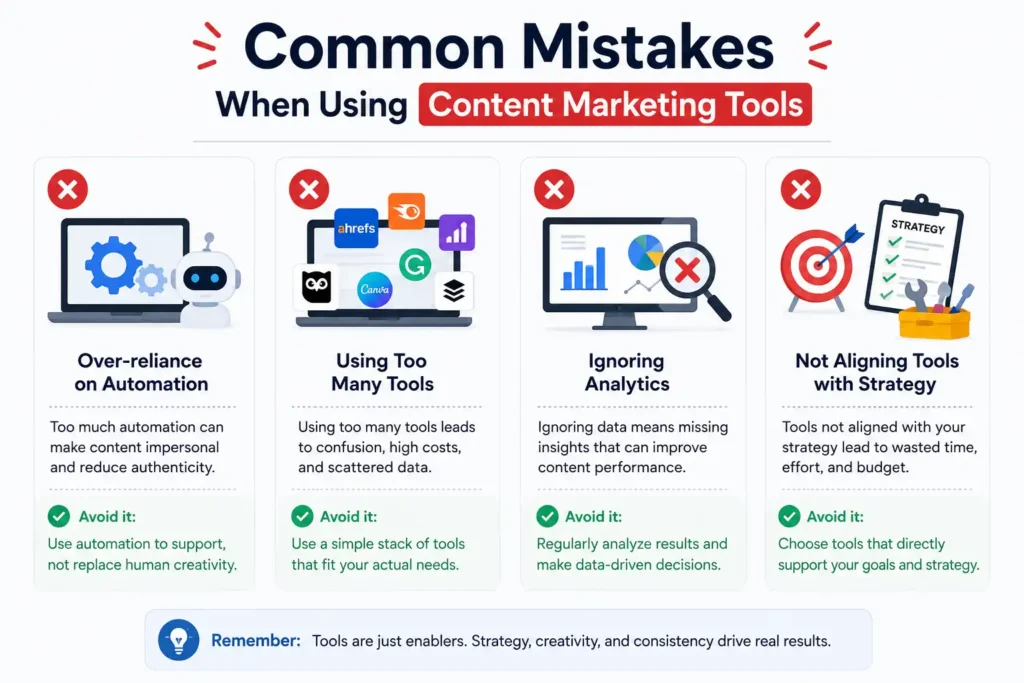
Many marketers fail to get results from content marketing tools due to common mistakes. Over-reliance on automation can reduce authenticity, while using too many tools often creates confusion and inefficiency. Ignoring analytics is another major issue, as it prevents data-driven improvements. Additionally, tools that are not aligned with your strategy can waste both time and money. According to insights from the Content Marketing Institute, successful marketers focus more on strategy than tools. Avoiding these mistakes can significantly improve your content performance and overall marketing success.
Over-Reliance on Automation
Relying too heavily on automation can make your content feel robotic and less engaging for readers. While tools help speed up processes, they cannot fully replace human creativity, storytelling, and emotional connection. According to the Content Marketing Institute, audiences respond better to authentic, human-centered content. Marketers should use automation as support, not a complete replacement.
Using Too Many Tools
Using too many content marketing tools can create confusion, inefficiency, and unnecessary complexity in your workflow. Instead of improving productivity, it often leads to scattered data and poor coordination. Experts suggest focusing on a streamlined tool stack that covers essential needs.
Ignoring Analytics
Ignoring analytics is one of the biggest mistakes in content marketing. Without data insights, marketers cannot measure performance or improve strategies effectively. Tools like Google Analytics provide valuable information about user behavior and engagement. Data-driven marketers are more likely to achieve success, as they continuously optimize content based on real performance metrics.
Not Aligning Tools with Strategy
Using tools without a clear strategy can lead to wasted time and resources. Every tool should support specific business goals, whether it is traffic growth, lead generation, or brand awareness. According to Forrester, companies that align their tools with strategic objectives achieve better results. A clear roadmap ensures tools are used effectively and contribute to overall success.
Tips to Maximize Results with Content Marketing Tools
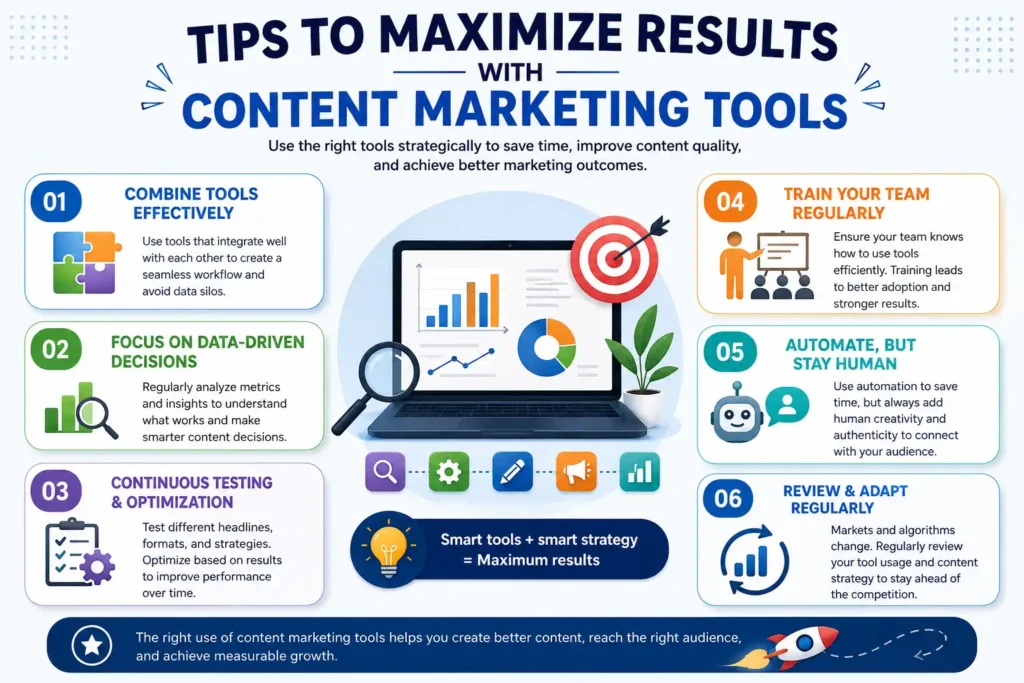
To get the best results from content marketing tools, it is important to use them strategically rather than relying on them blindly. Combining multiple tools effectively can create a powerful workflow that improves productivity.
– Focus on data-driven decisions by regularly analyzing performance metrics.
– Continuous testing helps in improving your strategy over time.
– Training your team is equally important to ensure tools are used efficiently.
According to Forrester, companies that optimize their tool usage achieve better marketing outcomes and higher return on investment.
FAQs About Content Marketing Tools
What are the best content marketing tools for beginners?
Beginners should start with user-friendly and cost-effective tools that cover basic needs. Platforms like Canva for design, Grammarly for writing, and Google Analytics for tracking are excellent starting points. These tools are easy to use and provide essential features for building a strong foundation in content marketing.
Are free tools enough for content marketing?
Free tools can be enough for beginners or small businesses with limited budgets. They offer basic functionality that supports content creation and analysis. However, as your needs grow, free tools may become limiting. Advanced features like automation, detailed insights, and scalability are usually available in paid versions, making them more suitable for long-term growth and competitive markets.
Which tools are best for SEO content?
Tools like Ahrefs and SEMrush are widely recognized for their accuracy and advanced features. They help marketers create content that aligns with search intent and improves ranking potential effectively.
How many tools do you actually need?
The number of tools you need depends on your strategy and team size. Most marketers can manage effectively with 5 to 7 essential tools covering research, SEO, creation, distribution, and analytics. Using too many tools can create complexity, while too few may limit performance. The goal is to maintain a balanced and efficient tool stack.
Conclusion
Content marketing tools are essential for building an effective and scalable digital strategy. From research and creation to distribution and analytics, the right tools can significantly improve efficiency and results. However, success depends on choosing tools that align with your goals and using them strategically. A well-structured tool stack not only saves time but also enhances content quality and performance. As the digital landscape continues to evolve, investing in the right tools and staying updated with trends will ensure long-term success in content marketing.
✨ Don’t stop here, follow Milyom for daily upgrades.