
Introduction
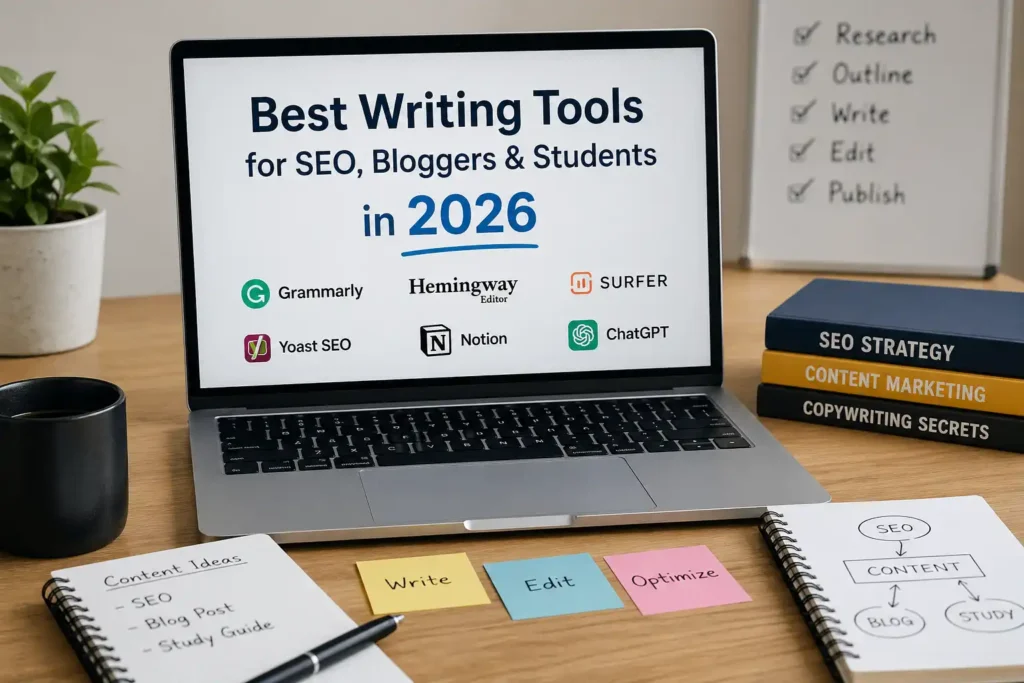
Writing today is no longer limited to pen and paper it has evolved into a highly digital, fast-paced process where the right tools can completely transform how you create content. Whether you are a student drafting essays, a blogger publishing articles, or a marketer producing persuasive copy, writing tools help streamline your workflow and improve output quality. According to a 2024 productivity study by McKinsey, digital tools can increase content creation efficiency by up to 40%. In this guide, you will explore different types of writing tools, their benefits, and how to choose the best ones for your needs.
What are Writing Tools, and why are they crucial?
Writing tools are software, applications, or traditional methods that assist individuals in creating, editing, and optimizing written content efficiently. These tools range from basic grammar checkers to advanced AI-powered platforms capable of generating full-length articles. Historically, writing tools started with manual instruments like pens and typewriters, but today, cloud-based and AI-driven solutions dominate the landscape. Modern writing tools not only help with error correction but also enhance readability, tone, and SEO performance. This evolution reflects the growing demand for faster, smarter, and more accurate content creation in the digital age.
Writing tools have become essential because they significantly improve both the speed and quality of content creation. Studies from Harvard Business Review highlight that professionals using digital writing assistants reduce errors by over 50%, ensuring clearer communication. These tools help writers save time, maintain consistency, and produce polished content without extensive manual editing. Additionally, they play a critical role in SEO by optimizing keywords, improving readability scores, and structuring content effectively. For anyone aiming to produce high-quality, engaging, and search-engine-friendly content, writing tools are no longer optional they are a necessity.
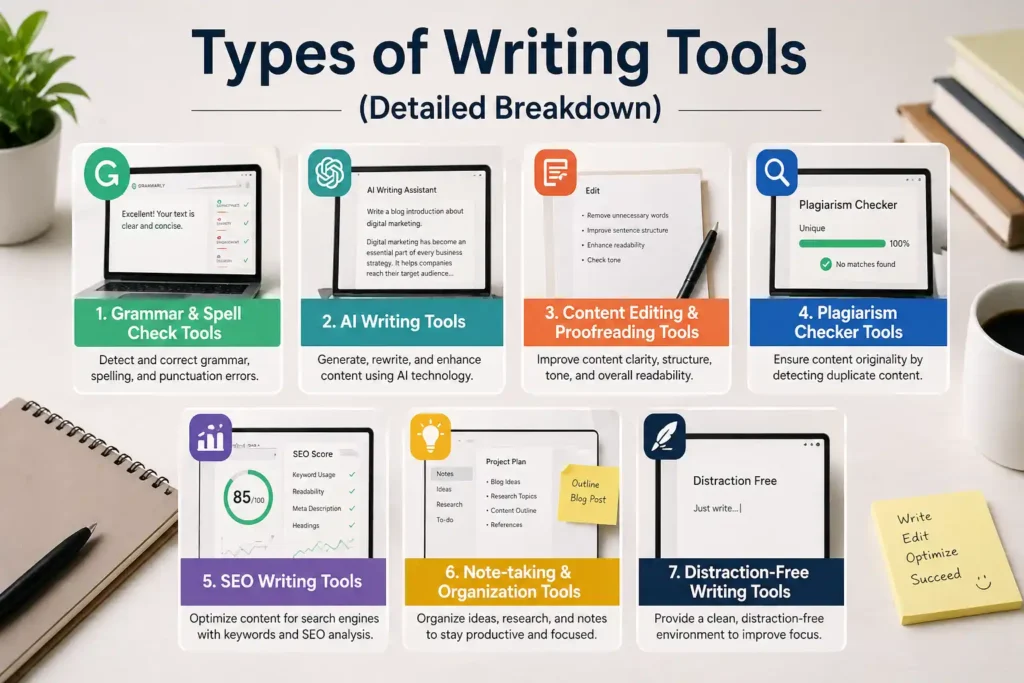
Types of Writing Tools (Detailed Breakdown)
Grammar & Spell Check Tools
Grammar and spell check tools are designed to identify and correct linguistic errors, making writing clearer and more professional. These tools analyze sentence structure, punctuation, and spelling in real time, helping users avoid common mistakes. They are especially useful for students, bloggers, and professionals who want to maintain credibility in their writing. Research by Grammarly indicates that users who rely on such tools improve writing accuracy by nearly 70%, making them a foundational part of any writer’s toolkit.
AI Writing Tools
AI writing tools use machine learning and natural language processing to generate, rewrite, and enhance content quickly. These tools can create blog posts, summarize articles, and even adapt tone based on audience needs. According to OpenAI research, AI-assisted writing can reduce content creation time by up to 60%. They are particularly valuable for marketers, content creators, and businesses looking to scale content production while maintaining quality and consistency.
Content Editing & Proofreading Tools
Content editing and proofreading tools focus on refining text by improving clarity, structure, and readability. While editing enhances the overall flow and tone, proofreading ensures the content is free from grammatical and typographical errors. These tools often provide readability scores and suggestions to simplify complex sentences. Studies show that well-edited content increases reader engagement by over 30%, making these tools crucial for producing polished and professional writing.
💚 You might also like: Best Digital Marketing Tools to Scale Your Business Faster (Full Guide)
Plagiarism Checker Tools
Plagiarism checker tools help ensure content originality by scanning text against billions of online sources. Unique content is essential for both academic integrity and search engine rankings. Google prioritizes original content, and duplicate material can lead to penalties or reduced visibility. These tools are widely used by students, bloggers, and professionals to verify authenticity. Reports suggest that over 25% of online content contains some level of duplication, highlighting the importance of plagiarism detection tools.
SEO Writing Tools
SEO writing tools are designed to optimize content for search engines by analyzing keywords, readability, and structure. They provide recommendations on keyword placement, headings, and meta descriptions to improve rankings. According to Backlinko, pages optimized with SEO tools are significantly more likely to appear on the first page of Google. These tools are essential for bloggers, digital marketers, and businesses aiming to drive organic traffic and increase online visibility.
Note-taking & Organization Tools
Note-taking and organization tools help writers capture ideas, manage research, and structure content efficiently. They allow users to store notes, create outlines, and collaborate seamlessly across devices. Research from Statista shows that organized workflows can boost productivity by up to 25%. These tools are particularly beneficial for writers handling complex projects or large volumes of information, ensuring nothing important gets overlooked during the writing process.
💚 You might also like: Time Management Tools for Students (2026 Guide)
Distraction-Free Writing Tools
Distraction-free writing tools provide a clean and minimal interface that helps writers focus solely on their work. By eliminating notifications and unnecessary features, these tools create an environment that enhances concentration and creativity. Studies in cognitive psychology suggest that reducing distractions can improve writing efficiency by nearly 20%. Such tools are ideal for authors, bloggers, and anyone who struggles with maintaining focus while writing in a digital environment.
Free vs Paid Writing Tools
Choosing between free and paid writing tools depends largely on your goals, workload, and the level of quality you expect. Free tools are a great starting point, offering basic grammar checks, simple editing features, and limited AI capabilities that are sufficient for casual users or beginners. However, as your writing needs grow, especially in professional or business environments, paid tools provide advanced features like deep language suggestions, plagiarism detection, SEO optimization, and tone analysis. According to a HubSpot report, businesses using premium content tools see up to 2x better engagement rates. Ultimately, the decision should align with your writing frequency, complexity, and long-term content strategy.
How to choose good writing tools?
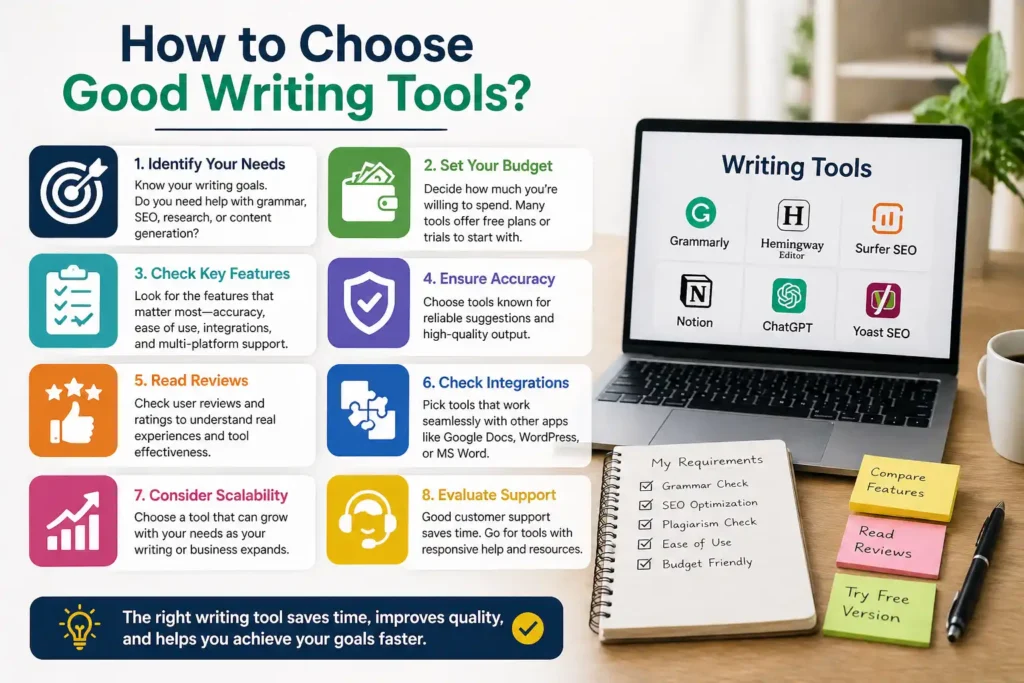
Selecting the right writing tools requires a clear understanding of your specific needs and writing goals. Start by identifying whether you need help with grammar, content generation, SEO, or organization. Budget is another critical factor, as some premium tools can be costly but offer significant value through advanced features. A good checklist includes ease of use, integrations, accuracy, and scalability. Beginners should prioritize simple, user-friendly tools, while advanced users may benefit from AI-powered and SEO-focused platforms. Research from Gartner suggests that choosing the right productivity tools can improve work efficiency by up to 30%, making this decision highly impactful.
How to use writing tools effectively?
Using writing tools effectively is not just about relying on automation but understanding how to combine technology with human creativity. One common mistake is over-dependence on AI-generated content, which can sometimes lack originality or emotional depth. It is essential to review, edit, and personalize the output to maintain authenticity. Human editing remains crucial, as tools cannot fully replace contextual understanding. A smart workflow involves drafting content, refining it with tools, and then performing a final manual review. Studies indicate that combining AI assistance with human editing produces the highest-quality results in content creation.
Pros & Cons of Using Writing Tools
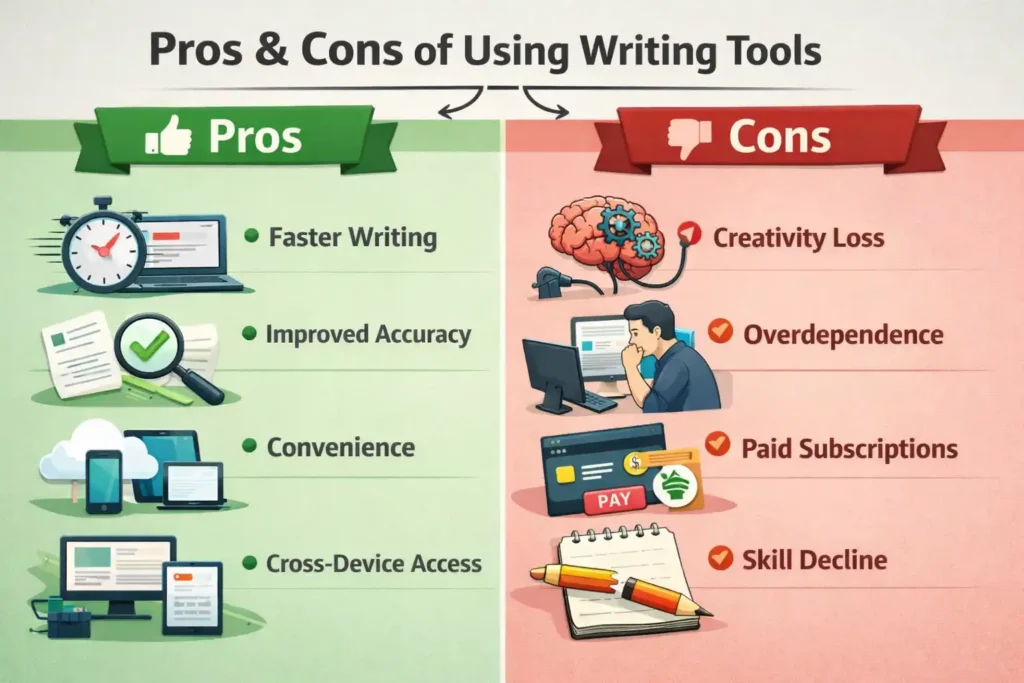
Pros
Writing tools offer significant advantages that make them indispensable for modern content creation. They increase writing speed by automating repetitive tasks such as grammar correction and formatting. Accuracy is another major benefit, as these tools reduce errors and improve clarity. Additionally, they provide convenience by allowing writers to work efficiently across multiple devices and platforms. According to a study by Deloitte, professionals using digital productivity tools report a 25% increase in overall work efficiency, highlighting the value of integrating writing tools into daily workflows.
Cons
Despite their advantages, writing tools also come with certain limitations that users should be aware of. One major concern is the potential loss of creativity when writers rely too heavily on automated suggestions. Dependency on tools can reduce critical thinking and writing skills over time. Additionally, many advanced features are locked behind paid subscriptions, which may not be affordable for everyone. Experts often recommend balancing tool usage with manual writing practices to maintain originality and ensure long-term skill development.
Writing Tools for Different Users
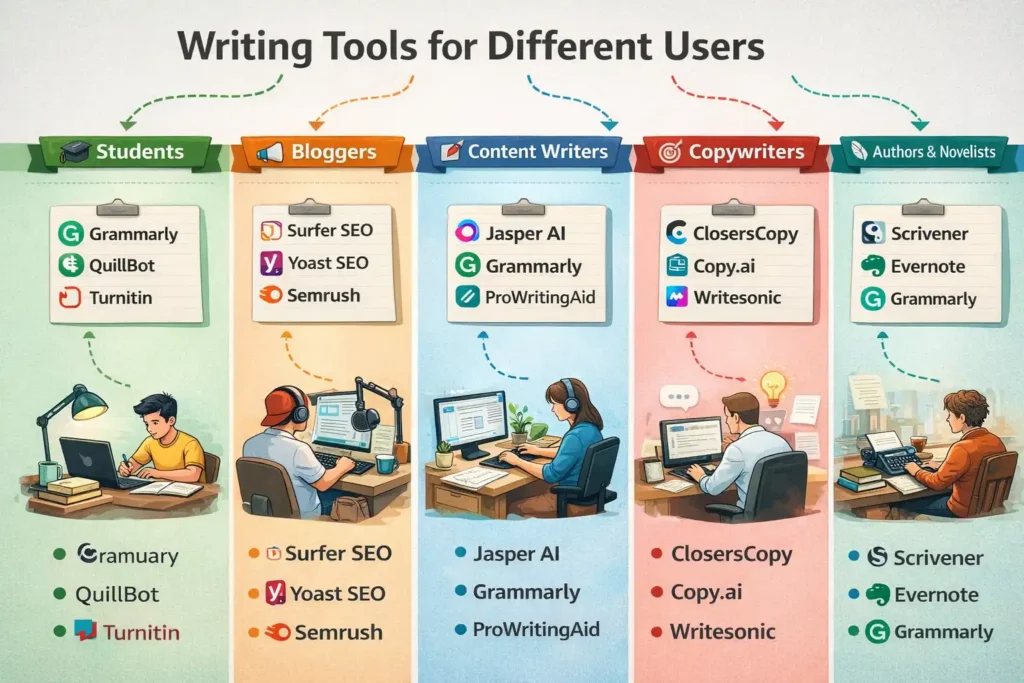
Writing tools are not one-size-fits-all; different users have unique requirements based on their goals and writing styles. Students may need grammar and plagiarism tools, while bloggers focus more on SEO and readability. Content writers often rely on a mix of AI and editing tools to maintain quality at scale. Copywriters prioritize persuasive language and tone optimization, whereas authors and novelists benefit from distraction-free environments and long-form editing tools. Understanding these distinctions helps users select tools that align perfectly with their specific writing needs and professional objectives.
Students
Students benefit greatly from writing tools that improve grammar, structure, and originality in academic work. These tools help ensure essays and assignments are error-free and properly formatted. Plagiarism checkers are especially important in academic settings where originality is critical. Research shows that students using digital writing assistants achieve higher grades due to improved clarity and accuracy, making these tools valuable for academic success.
Bloggers
Bloggers rely heavily on writing tools to create engaging and SEO-friendly content that ranks well on search engines. Tools that provide keyword suggestions, readability scores, and content optimization are particularly useful. Consistency and speed are key in blogging, and writing tools help maintain both. Studies indicate that optimized blog posts generate significantly more traffic, making these tools essential for growth.
Content Writers
Content writers use a combination of AI tools, grammar checkers, and editing platforms to produce high-quality content at scale. These tools help maintain consistency across multiple projects while saving time. They also assist in adapting tone and style based on client requirements. With increasing demand for digital content, writing tools play a crucial role in meeting deadlines without compromising quality.
Copywriters
Copywriters focus on creating persuasive and conversion-driven content, and writing tools help refine messaging and tone. These tools can suggest improvements in clarity, emotional appeal, and readability, which are critical for effective copy. A/B testing and performance insights provided by some tools further enhance results. According to marketing studies, optimized copy can increase conversion rates by over 30%, emphasizing the importance of these tools.
💚 You might also like: The Ultimate Guide to Data Management Tools in 2026
Authors & Novelists
Authors and novelists require tools that support long-form writing, creativity, and organization. Distraction-free writing environments help maintain focus, while advanced editing tools assist in refining manuscripts. These tools also allow writers to organize chapters, track progress, and manage complex narratives. While creativity remains human-driven, writing tools provide the structure and support needed to complete large writing projects efficiently.
FAQs
What are writing tools?
Writing tools are software or applications that help users create, edit, and optimize written content. These tools can range from simple grammar checkers to advanced AI platforms that generate full-length articles. They are designed to improve writing quality, accuracy, and efficiency, making them useful for students, professionals, and businesses alike.
Best free writing tools?
Some of the best free writing tools include Grammarly, Google Docs, and Hemingway Editor. These tools offer essential features such as grammar checking, collaboration, and readability improvements. While they may lack advanced capabilities, they are sufficient for basic writing tasks and are widely used by beginners.
Are AI writing tools safe?
AI writing tools are generally safe when used responsibly and with trusted platforms like ChatGPT or Jasper AI. However, users should avoid sharing sensitive information and always review AI-generated content for accuracy. Experts recommend combining AI assistance with human editing to ensure quality and reliability.
Best Tools for blogging?
For blogging, tools like Surfer SEO, Grammarly, and Yoast SEO are highly effective. They help optimize content for search engines, improve readability, and maintain consistency. Using these tools together can significantly increase blog traffic and engagement.
Grammarly alternatives?
Popular alternatives to Grammarly include ProWritingAid and Hemingway Editor. These tools offer similar features such as grammar checking and readability improvements, with some providing more detailed writing analysis. Choosing the right alternative depends on your specific writing needs and preferences.
Conclusion
Writing tools have become an essential part of modern content creation, offering solutions that enhance productivity, accuracy, and overall writing quality. From basic grammar checkers to advanced AI-powered platforms, these tools cater to a wide range of users and needs. The key to success lies in choosing the right combination of tools and using them effectively without losing the human touch. As technology continues to evolve, writing tools will become even more powerful, but creativity and critical thinking will always remain at the core of great writing.
✨ Stay ahead of the curve. Follow Milyom.