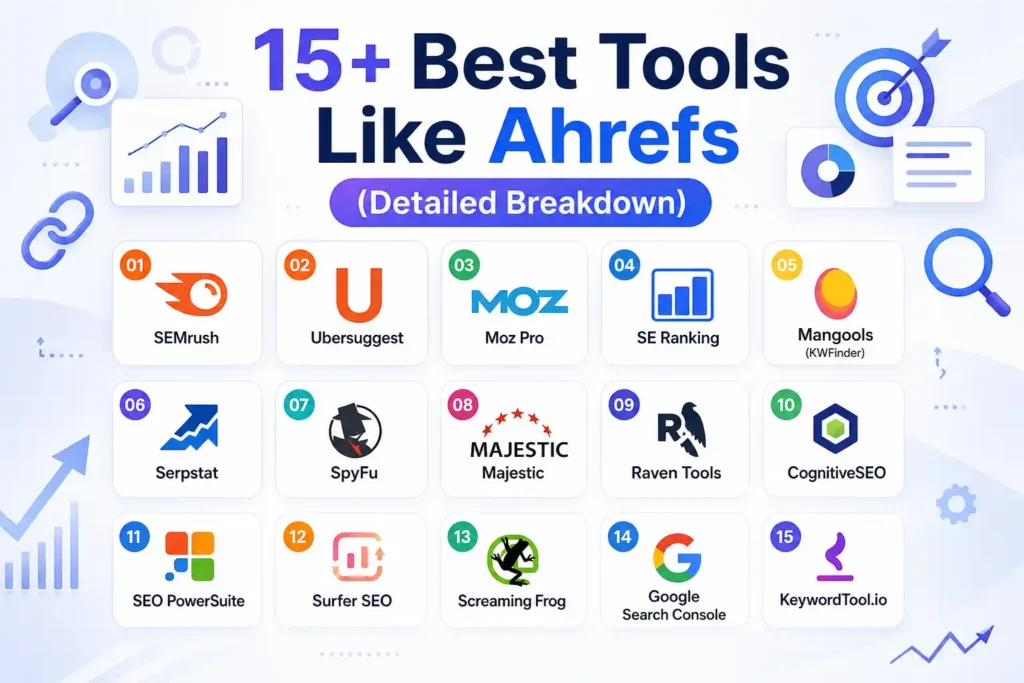

Why Look for Tools Like Ahrefs?
Ahrefs is one of the most powerful SEO platforms in the market, especially known for its backlink database and keyword research features. Many marketers, agencies, and bloggers start looking for alternatives when their needs evolve or budgets become tighter. According to multiple industry surveys, SEO tools pricing and feature limitations are among the top reasons users switch platforms. Whether you want better usability, lower cost, or specialized features, exploring tools like Ahrefs can help you find a solution that aligns more closely with your workflow and growth goals.
What to Look for in Ahrefs Alternatives
Choosing the right Ahrefs alternative is not just about price. It’s about finding a tool that fits your SEO workflow and delivers reliable data. According to industry benchmarks, top-performing SEO tools are evaluated based on keyword data accuracy, backlink index size, and usability. You should focus on tools that balance performance with cost and offer features aligned with your goals. Whether you are doing content marketing, link building, or technical SEO, the right platform should help you make data-driven decisions without unnecessary complexity or limitations.
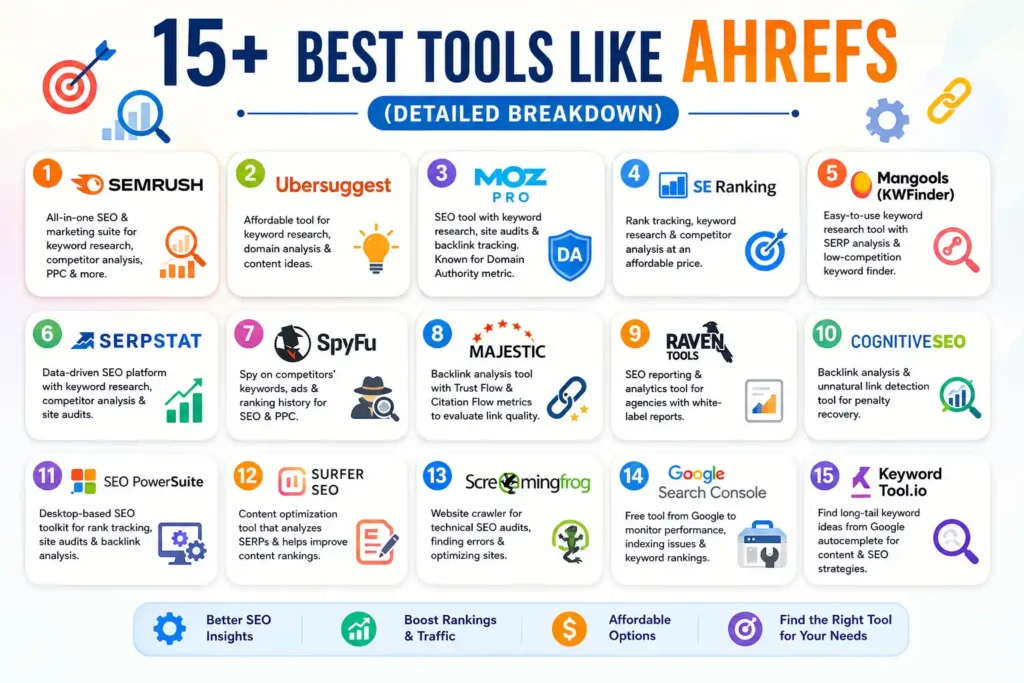
15+ Best Tools Like Ahrefs (Detailed Breakdown)
1. SEMrush
SEMrush is one of the closest competitors to Ahrefs, offering a complete SEO and digital marketing suite. It includes keyword research, backlink analysis, PPC data, and content tools. SEMrush has over 25 billion keywords in its database, making it one of the largest in the industry. It’s ideal for agencies and businesses that need an all-in-one solution.
2. Ubersuggest
Ubersuggest is a cost-effective option popular among beginners and small businesses. Created by Neil Patel, it offers keyword suggestions, domain analysis, and content ideas. While it doesn’t match Ahrefs in depth, it provides solid insights at a much lower price, making it a great starting point.
3. Moz Pro
Moz Pro is known for its simplicity and strong educational resources. It offers keyword research, site audits, and backlink tracking. Moz’s Domain Authority metric is widely used in SEO, making it useful for quick domain comparisons and link-building strategies.
4. SE Ranking
SE Ranking offers a balanced mix of features at an affordable price. It includes rank tracking, keyword research, and competitor analysis. Its flexible pricing model makes it ideal for freelancers and small agencies looking for value without sacrificing essential features.
5. Mangools (KWFinder)
Mangools provides an easy-to-use keyword research tool called KWFinder. It’s especially useful for finding low-competition keywords. The platform also includes SERP analysis and backlink tools, making it a lightweight but effective option.
💚 You might also like: Awius: Complete Guide to This Marketing Tool
6. Serpstat
Serpstat is designed for data-driven marketers. It offers keyword clustering, competitor analysis, and site audits. It’s particularly useful for scaling SEO campaigns and identifying growth opportunities quickly.
7. SpyFu
SpyFu focuses heavily on competitor insights. It allows users to see competitor keywords, ads, and ranking history. This makes it valuable for both SEO and PPC campaigns.
8. Majestic
Majestic specializes in backlink data. Its Trust Flow and Citation Flow metrics help evaluate link quality. It’s a strong choice for link-building professionals.
9. Raven Tools
Raven Tools is ideal for agencies that need detailed reports. It integrates with multiple data sources and offers white-label reporting features for clients.
10. CognitiveSEO
CognitiveSEO focuses on backlink analysis and unnatural link detection. It’s useful for penalty recovery and maintaining a clean link profile.
💚 You might also like: How AI Is Changing the Way Startups Build and Scale in 2026
11. SEO PowerSuite
SEO PowerSuite is a desktop-based tool offering rank tracking, site audits, and backlink analysis. It’s a good option for users who prefer one-time payments instead of subscriptions.
12. Surfer SEO
Surfer SEO helps optimize content based on SERP data. It analyzes top-ranking pages and suggests improvements for better rankings.
13. Screaming Frog
Screaming Frog is a powerful website crawler used for technical audits. It helps identify issues like broken links, duplicate content, and crawl errors.
14. Google Search Console
Google Search Console provides direct data from Google. It helps track performance, indexing issues, and keyword rankings, making it essential for every website owner.
15. KeywordTool.io
KeywordTool.io generates long-tail keyword ideas from Google autocomplete. It’s especially useful for content planning and niche targeting.
Free Tools Like Ahrefs (Best No-Cost Options)
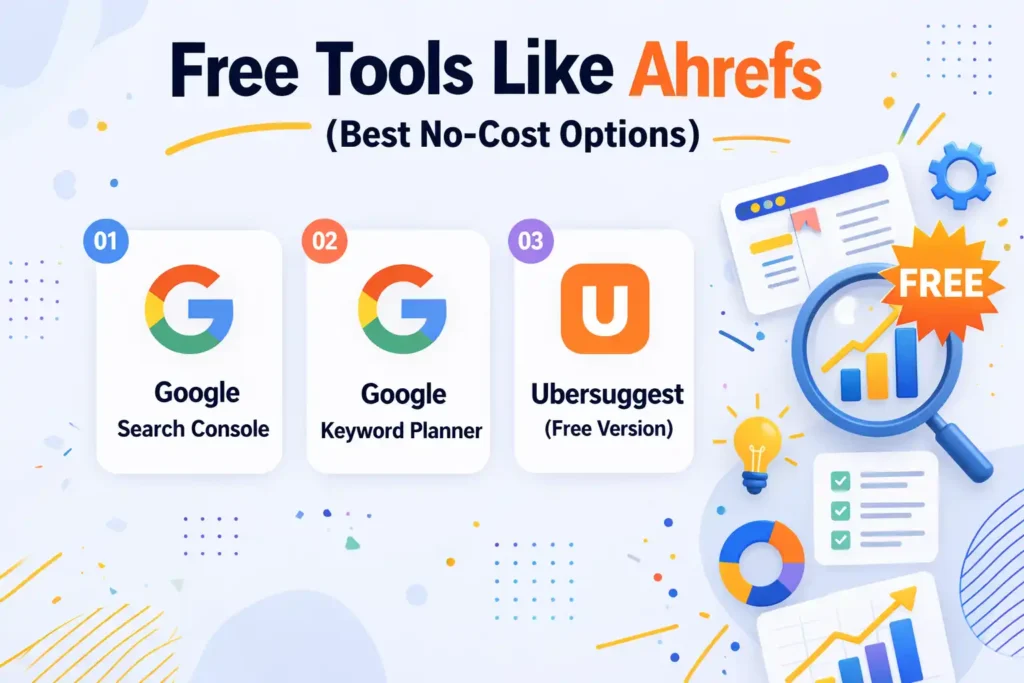
Not everyone needs a premium SEO tool, especially when starting. Several free tools offer valuable insights that can cover a large portion of your SEO needs. While they may not match the depth of Ahrefs, they provide reliable data directly from trusted sources or simplified datasets. In fact, many marketers use a combination of free tools to build a solid SEO workflow. According to industry data, over 60% of small website owners rely on free SEO tools in the early stages. These tools are ideal for keyword research, performance tracking, and basic competitor insights without any upfront investment.
Google Search Console
Google Search Console provides direct data from Google, making it one of the most reliable free SEO tools. It shows keyword rankings, impressions, clicks, and indexing issues. This tool is essential for monitoring site performance and identifying technical problems that may impact rankings.
Google Keyword Planner
Google Keyword Planner is primarily designed for advertisers, but it’s also useful for SEO. It offers keyword ideas, search volume ranges, and competition levels. While the data is less precise without ad spend, it still helps in building keyword strategies.
Ubersuggest (Free Version)
Ubersuggest offers limited daily searches in its free version but still provides useful keyword suggestions, domain analysis, and content ideas. It’s a good starting point for beginners who want basic SEO insights without paying for premium tools.
AnswerThePublic
AnswerThePublic helps discover question-based keywords and search queries. It visualizes what users are searching for, making it perfect for content ideation and targeting long-tail keywords that drive organic traffic.
💚 You might also like: Best Writing Tools for SEO, Bloggers & Students in 2026
Cheap Ahrefs Alternatives (Under Budget Tools)
If Ahrefs feels expensive, several budget-friendly alternatives deliver strong SEO performance at a lower cost. These tools are designed to provide essential features like keyword tracking, backlink analysis, and site audits without overwhelming users. Many of them offer flexible pricing, which is ideal for freelancers and small agencies. Studies show that mid-tier SEO tools can deliver up to 80% of the value of premium platforms at less than half the cost. Choosing the right budget tool depends on your priorities, whether it’s keyword research, rank tracking, or competitor analysis, but these options make SEO accessible without sacrificing quality.
SE Ranking
SE Ranking offers a complete SEO toolkit with rank tracking, keyword research, and competitor analysis. Its flexible pricing plans make it one of the most cost-effective solutions. It’s especially popular among freelancers and small agencies.
Mangools
Mangools is known for its simplicity and powerful keyword research tool, KWFinder. It provides accurate keyword difficulty scores and SERP analysis. The clean interface makes it ideal for users who want an easy-to-use SEO tool.
Ubersuggest
Ubersuggest remains one of the most affordable SEO platforms. Its paid plans unlock more searches and deeper insights, making it a strong low-cost alternative for keyword research and domain analysis.
Best Ahrefs Alternatives for Specific Use Cases
Not all SEO tools are built the same, and choosing the right one depends heavily on your goals. Some tools are better for keyword research, while others specialize in backlinks, content optimization, or reporting. Instead of looking for a one-size-fits-all solution, it’s smarter to pick tools based on your primary use case. Many experienced SEO professionals combine multiple tools to get the best results. This approach helps overcome data limitations and provides a more complete picture of your SEO performance. Below are the best alternatives categorized by specific use cases to help you make a smarter decision.
Best for Keyword Research
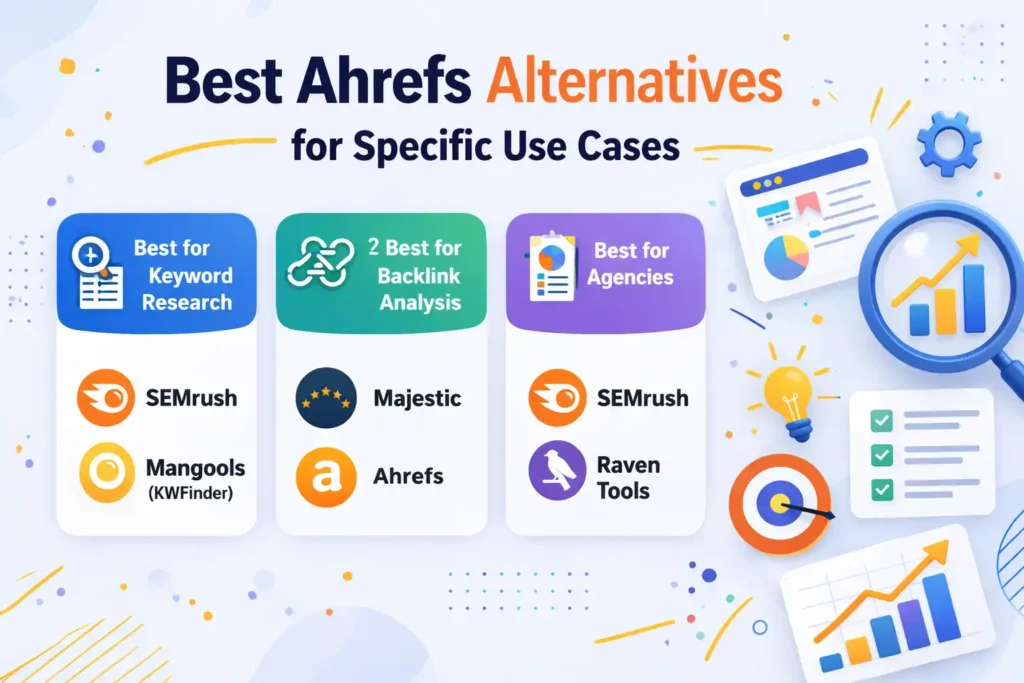
SEMrush and Mangools are excellent for keyword research. They offer large keyword databases, accurate difficulty scores, and long-tail suggestions. These tools help you discover ranking opportunities and build effective content strategies.
Best for Backlink Analysis
Majestic and Ahrefs lead in backlink analysis. Majestic’s Trust Flow metric helps evaluate link quality, while Ahrefs provides one of the largest backlink indexes in the industry.
Best for Agencies
SEMrush and Raven Tools are ideal for agencies. They offer advanced reporting, white-label features, and client management tools, making them perfect for handling multiple SEO campaigns efficiently.
Best for Beginners
Moz Pro and Ubersuggest are beginner-friendly. They provide simple dashboards, educational resources, and easy-to-understand metrics, helping new users get started with SEO quickly.
Best for Content SEO
Surfer SEO is one of the best tools for content optimization. It analyzes top-ranking pages and provides data-driven recommendations to improve on-page SEO and increase rankings.
Ahrefs vs Competitors (Quick Comparison)
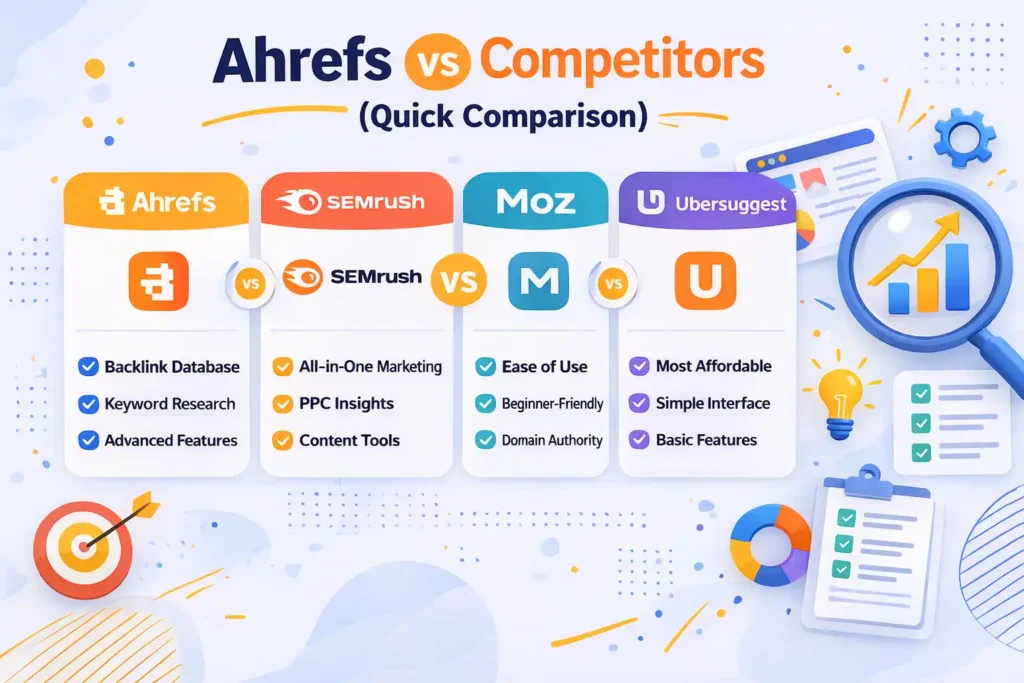
Comparing Ahrefs with its competitors helps you understand where it stands in the SEO ecosystem. While Ahrefs is known for its backlink database and keyword research, other tools bring unique strengths to the table. For example, some platforms offer better PPC insights, while others focus on usability or pricing. According to multiple SEO studies, no single tool dominates every category, which is why many professionals use a combination. Evaluating these differences allows you to choose the right tool based on your priorities rather than blindly following popularity or brand recognition.
Ahrefs vs SEMrush
Ahrefs focuses more on backlinks and organic search, while SEMrush offers a broader digital marketing suite, including PPC and content tools. SEMrush is more versatile, while Ahrefs excels in link data.
Ahrefs vs Moz
Moz Pro is easier to use and beginner-friendly, while Ahrefs provides deeper data and more advanced features. Moz is ideal for learning SEO, while Ahrefs is better for experienced professionals.
Ahrefs vs Ubersuggest
Ubersuggest is significantly cheaper and simpler, while Ahrefs offers more comprehensive data and features. Ubersuggest is suitable for small projects, while Ahrefs is designed for serious SEO campaigns.
Key Differences Summary
Ahrefs stands out for backlink analysis, SEMrush for all-in-one marketing, Moz for ease of use, and Ubersuggest for affordability. Choosing between them depends on your budget and goals.
💚 You might also like: Best Digital Marketing Tools to Scale Your Business Faster (Full Guide)
Which Tool Should You Choose?
Choosing the right SEO tool depends on your goals, experience, and budget. There is no single “best” tool for everyone. Instead, the right choice comes down to how you plan to use it. Some users need deep backlink analysis, while others focus on content or keyword research. Industry experts often recommend starting with a tool that matches your current needs and upgrading as your SEO strategy grows. By aligning your tool with your workflow, you can avoid unnecessary costs and maximize your return on investment while improving your overall search performance.
Based on the budget
If you have a limited budget, tools like Ubersuggest or SE Ranking are great choices. They provide essential SEO features at a lower cost, making them ideal for small businesses and freelancers.
Based on Skill Level
Beginners should consider Moz Pro or Ubersuggest due to their simple interfaces. Advanced users may prefer Ahrefs or SEMrush for deeper insights and more control over data analysis.
Based on Business Type
Agencies benefit from tools like SEMrush for reporting and scalability, while bloggers and niche site owners may prefer simpler tools focused on keyword research and content optimization.
FAQs
What is the best alternative to Ahrefs?
SEMrush is often considered the best alternative due to its all-in-one features, large keyword database, and strong competitor analysis tools.
Are there any free tools like Ahrefs?
Yes, tools like Google Search Console and Google Keyword Planner offer valuable SEO data for free, though they lack advanced features.
Which tool is better than Ahrefs?
No tool is universally better. SEMrush may be better for marketing features, while Ahrefs excels in backlink analysis.
Is Ahrefs worth the price?
Ahrefs is worth it for professionals and agencies due to its data quality and advanced features, but it may be expensive for beginners.
What tool is best for backlink analysis?
Ahrefs and Majestic are among the best tools for backlink analysis due to their large link databases and advanced metrics.
Conclusion
Choosing the best Ahrefs alternative depends on your specific needs rather than chasing a single “perfect” tool. The SEO landscape continues to evolve, and tools are becoming more specialized. While Ahrefs remains a top choice for backlink analysis and keyword research, alternatives like SEMrush, SE Ranking, and Ubersuggest offer strong value in different areas. According to recent industry trends, many SEO professionals now use multiple tools to get more accurate insights. This multi-tool approach helps overcome data limitations and improves decision-making, making it a smarter long-term strategy for scaling organic growth.
✨ Want bite-sized tech wisdom? Follow Milyom.